Flag Printing

Updated On
March 29, 2026
Written by:
Ninety Nine Advertising Technical Team
Why Flag Printing Fails in Abu Dhabi — and How We Prevent It
Flag printing in Abu Dhabi serves event organizers, corporate premises, hospitality venues, and institutional environments where outdoor exposure conditions, formal protocol requirements, and public-facing placement each carry different technical demands.
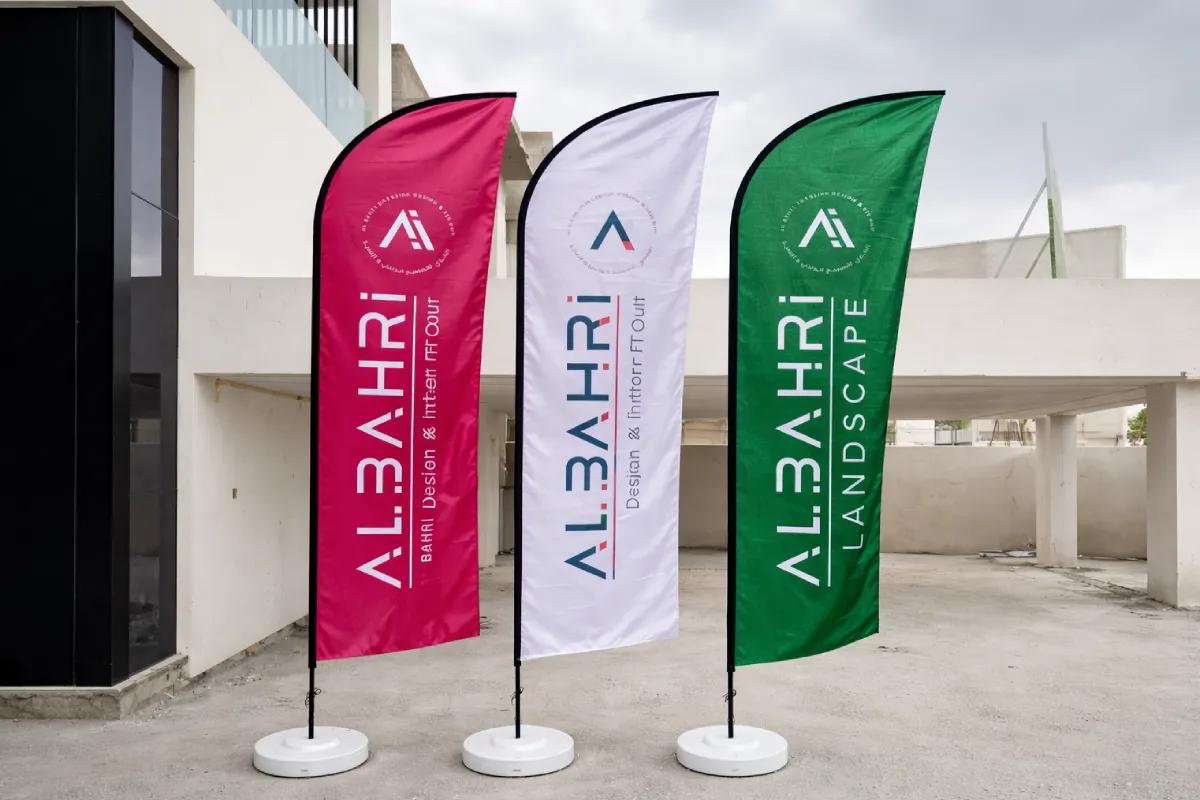
Fabric fading occurs when materials unsuited to UV and heat conditions are specified for outdoor use; UV-suitable knitted polyester flag textile is selected at the material stage, with dye-sublimation specified as the print method. Pole failure under wind load results from rigid hardware that cannot flex in exposed conditions; fiberglass poles are matched to the flag system, with base type and anchoring specified to suit the exposure conditions. On outdoor feather, sail, teardrop, and similar promotional flag systems, fixed spindle fittings increase the risk of wrapping and tangling; rotating spindle hardware is specified where the flag system is designed to pivot with the wind.
Single-sided construction produces a reversed bleed-through on the back face, which affects readability in protocol and bilateral settings; true double-sided builds with blockout liners are specified where front-and-back display is required.
Public-facing outdoor flag and banner placements are reviewed for permit requirements before production begins, including TAMM-related approvals where the installation falls under Abu Dhabi advertising permit controls.
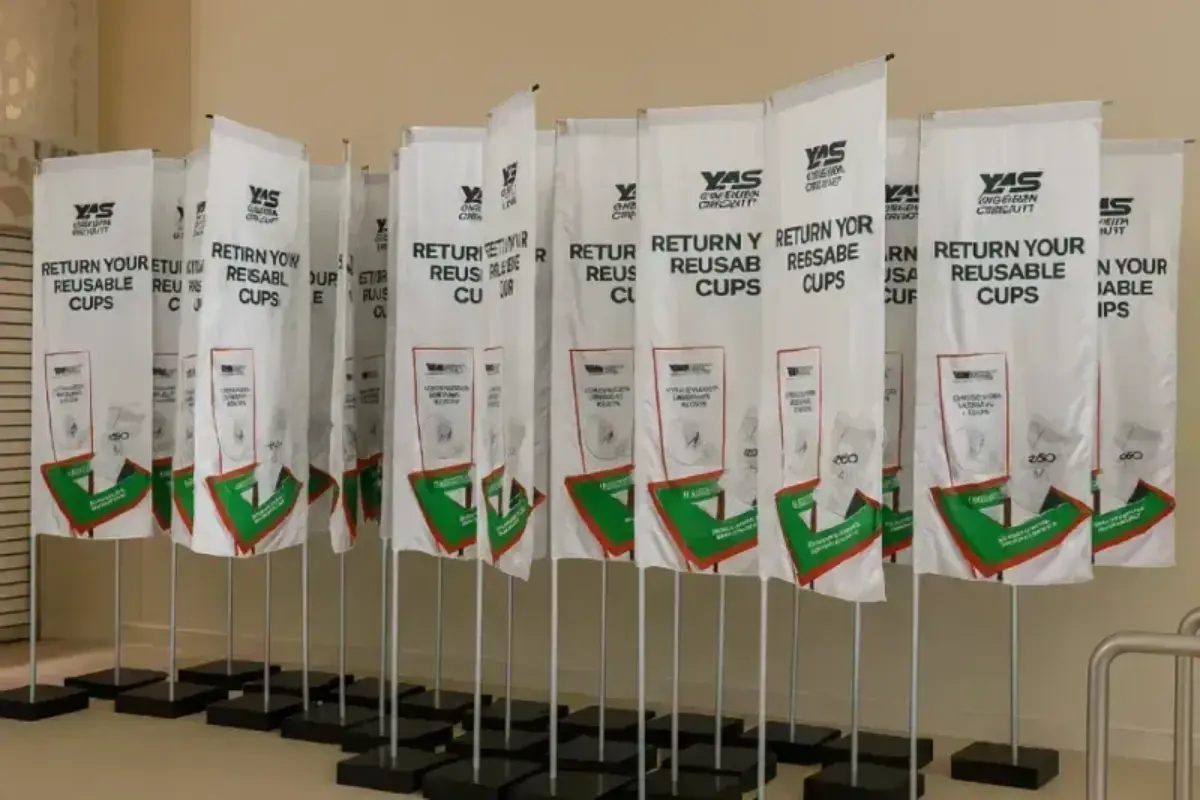
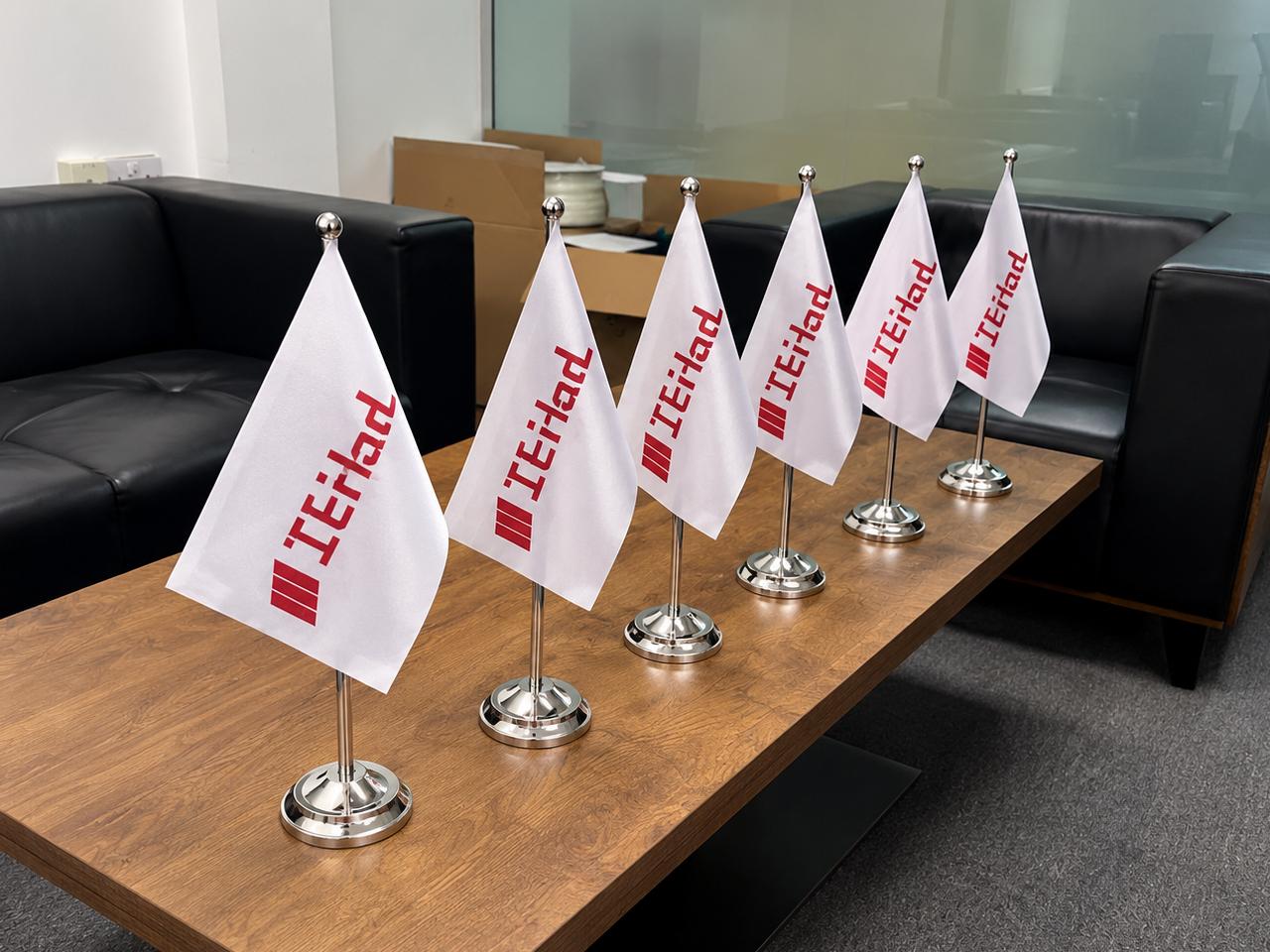
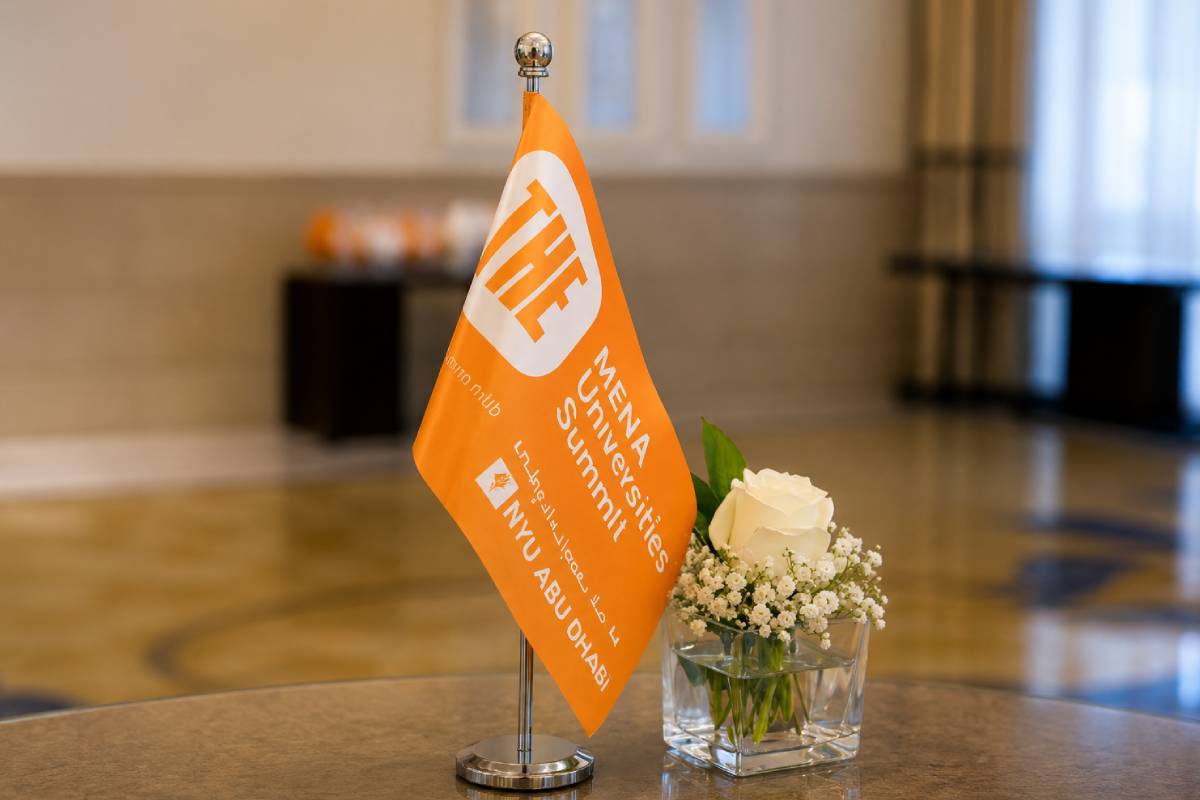
New York University Abu Dhabi commissioned table flags for the MENA Universities Summit to support event branding and brand presence across the venue. Emirates Council for Rural Development deployed an L-shape flag campaign across Abu Dhabi integrated with facade banners to establish complete brand presence. Polygreen used custom flags to mark designated areas within an outdoor environment as part of their Reusable Cups Campaign.


What Flag Printing Covers
Flag printing as a service category covers five distinct flag systems: feather flags, sail flags, L-shape flags, table flags, and conference flags, each matched to a specific display environment and use case.
The category applies across outdoor promotional environments including retail forecourts, beach resorts, and outdoor sporting events, and across formal indoor settings including corporate reception areas, boardrooms, and official meeting rooms. Named deployment zones in Abu Dhabi include the Corniche, Yas Island, Saadiyat, and ADNEC exhibition facilities.
Ninety Nine Advertising produces and deploys each of these flag systems from its Abu Dhabi base.

Who Flag Printing Is For
Event organizers use flag systems for activations and exhibitions where fast deployment, consistent branding, and clean removal are operational requirements. Hospitality venues use outdoor flags to mark entrances and promotional zones where visibility must hold under wind and UV exposure.
Retail operators use feather and L-shape flags at storefronts and forecourts to establish presence at the point of entry. Corporate premises use conference and table flags in reception and meeting spaces where presentation standard matters.
Institutional and government clients use protocol flag systems for signing ceremonies, press conferences, and bilateral meetings where fabric finish and hardware must meet formal display requirements.


.webp)


Compliance & Permits for Flag Printing in Abu Dhabi
Outdoor flag installations that move into production without a compliance review risk redesign costs, wasted production spend, and later modification or relocation that could have been avoided if placement and artwork were checked against approval requirements first.
Public-facing outdoor flag and banner installations in Abu Dhabi fall under TAMM-based permit controls. The approval route can affect placement, format, and required documentation, so the proposed setup may need adjustment before submission. Where an installation interacts with regulated external space around storefronts, event perimeters, or other public-facing outdoor areas, the final arrangement may need to be modified before production is approved. Permit fees and venue- or operator-related charges may also apply depending on the route and site conditions. Submissions must include the documents required by the permit route, including company documentation and any relevant third-party approvals.
TAMM flag and banner permit processing depends on the reviewing authority, so campaign timelines should allow for review periods and clarification requests. Committing production cost before the permit route and documentation are confirmed introduces avoidable programme risk.
Where landlord or developer approval sits alongside the TAMM process, that consent stage is identified and managed within the same pre-production workflow. Ninety Nine Advertising reviews placement, site conditions, and approval requirements before production begins, so artwork and hardware decisions are made against a confirmed approval position rather than revised afterward.


Flag Printing Types and What Each One Does
Outdoor Promotional and Event Flag Systems in Abu Dhabi
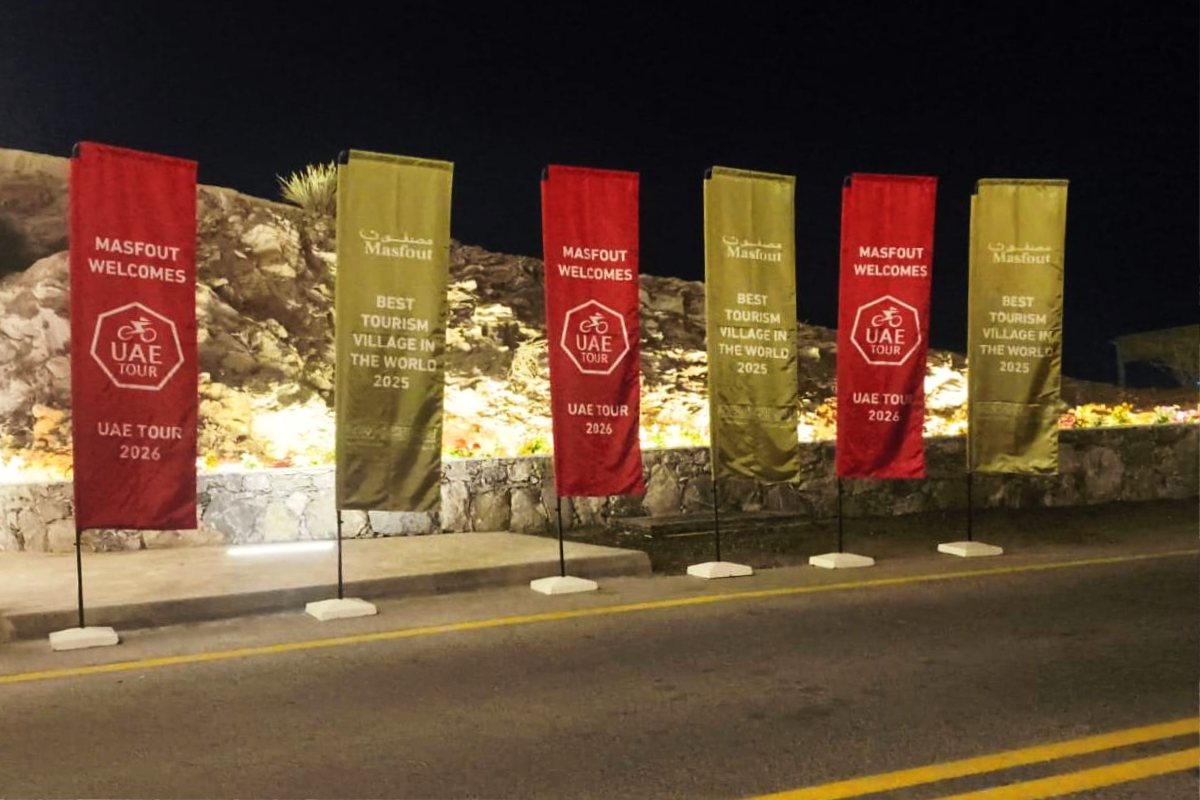
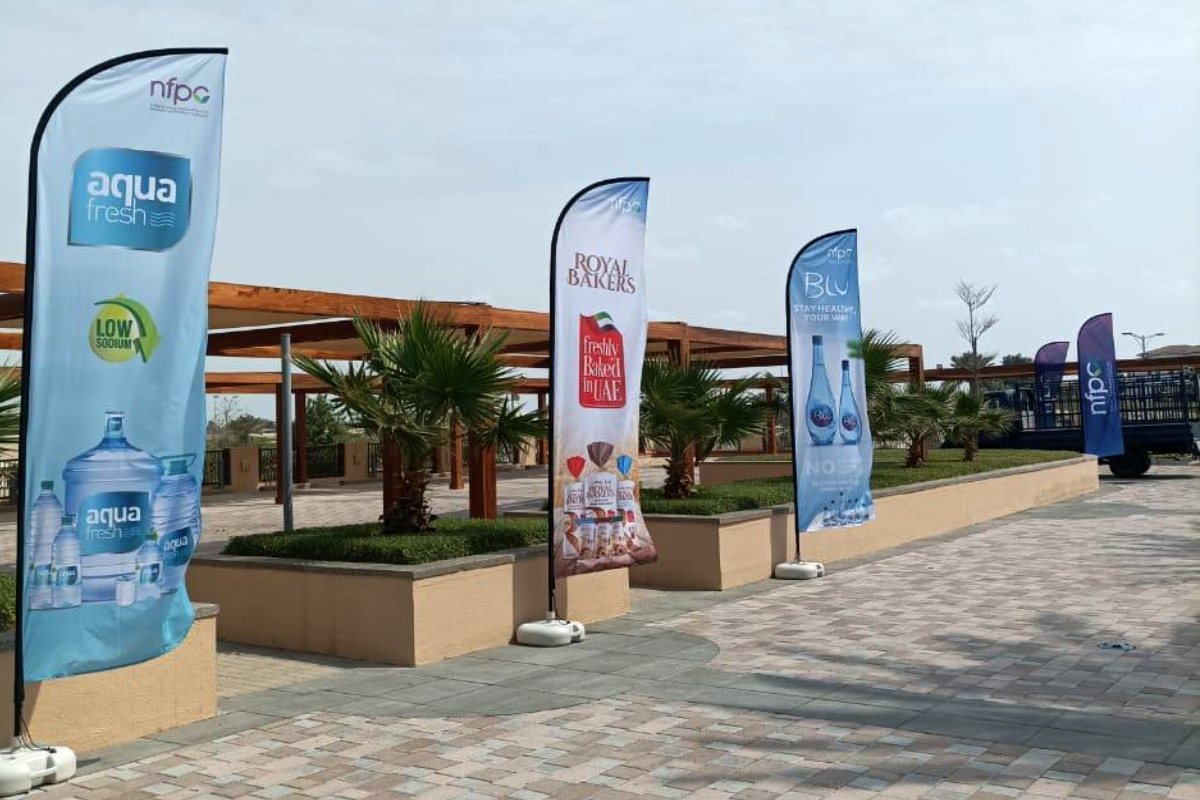
Feather flags, sail flags, and L-shape flags are produced on knitted polyester flag textile with dye-sublimation printing, matched to fiberglass or fiberglass-aluminium hybrid pole systems and site-appropriate base options selected for UV exposure, wind conditions, and outdoor use across Yas Island, the Corniche, Saadiyat, ADNEC perimeters, beach resorts, and retail environments in Abu Dhabi.
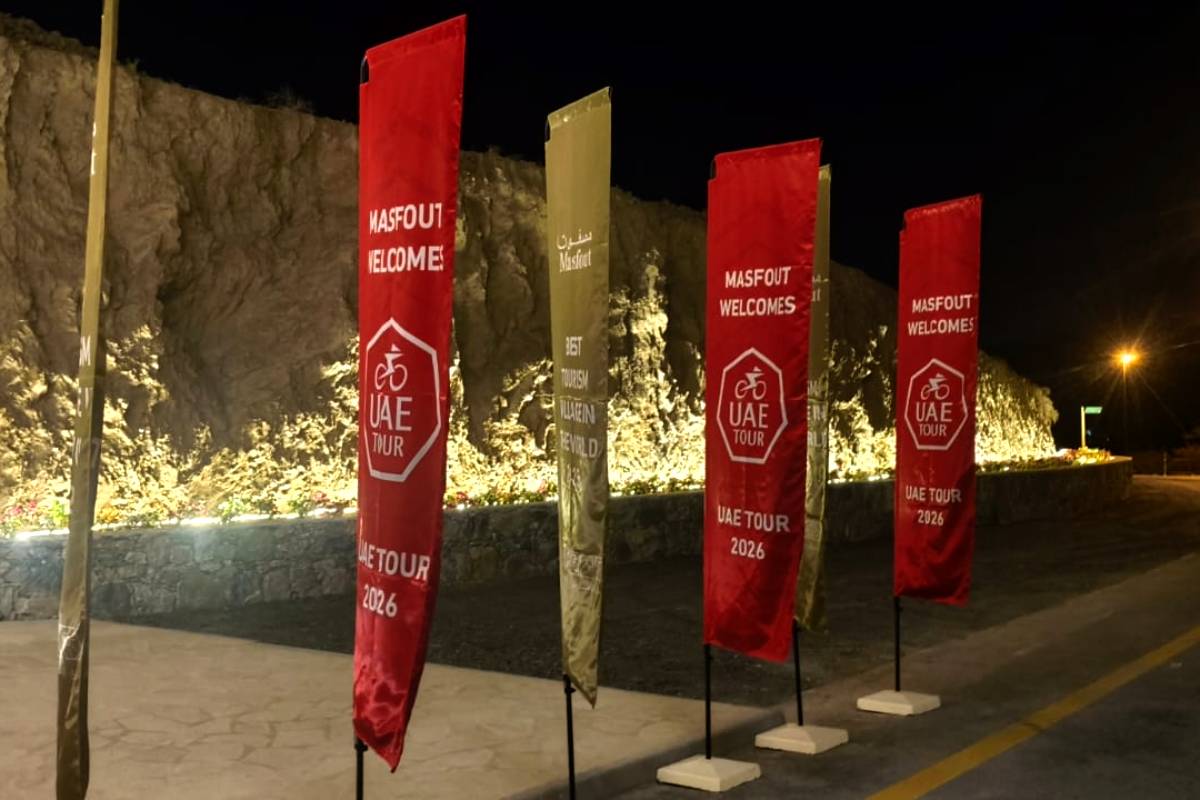
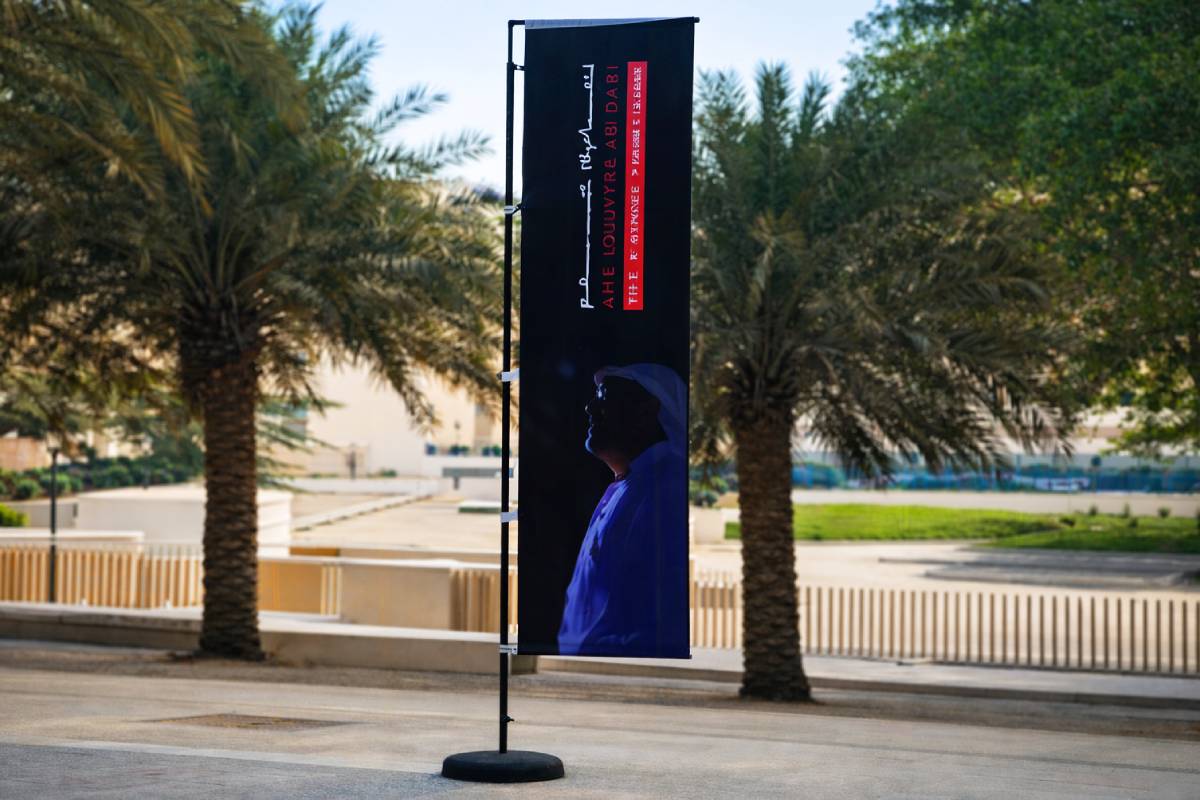
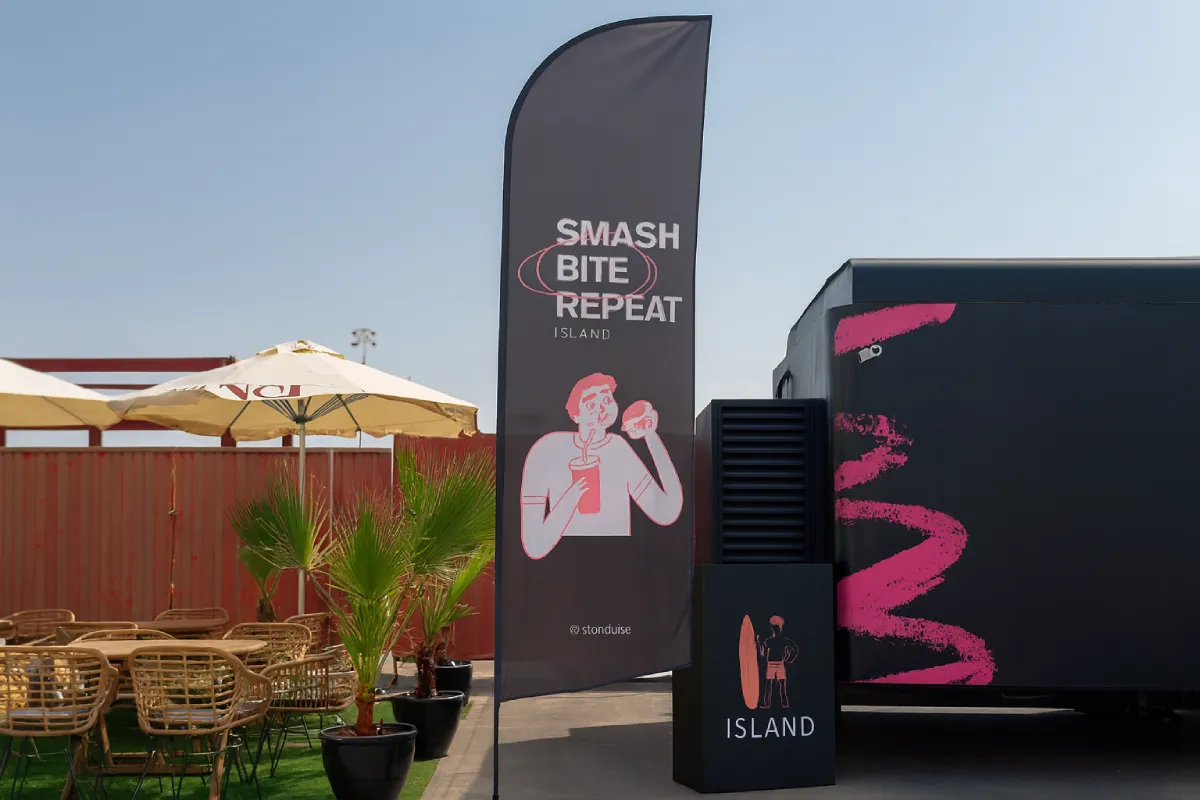
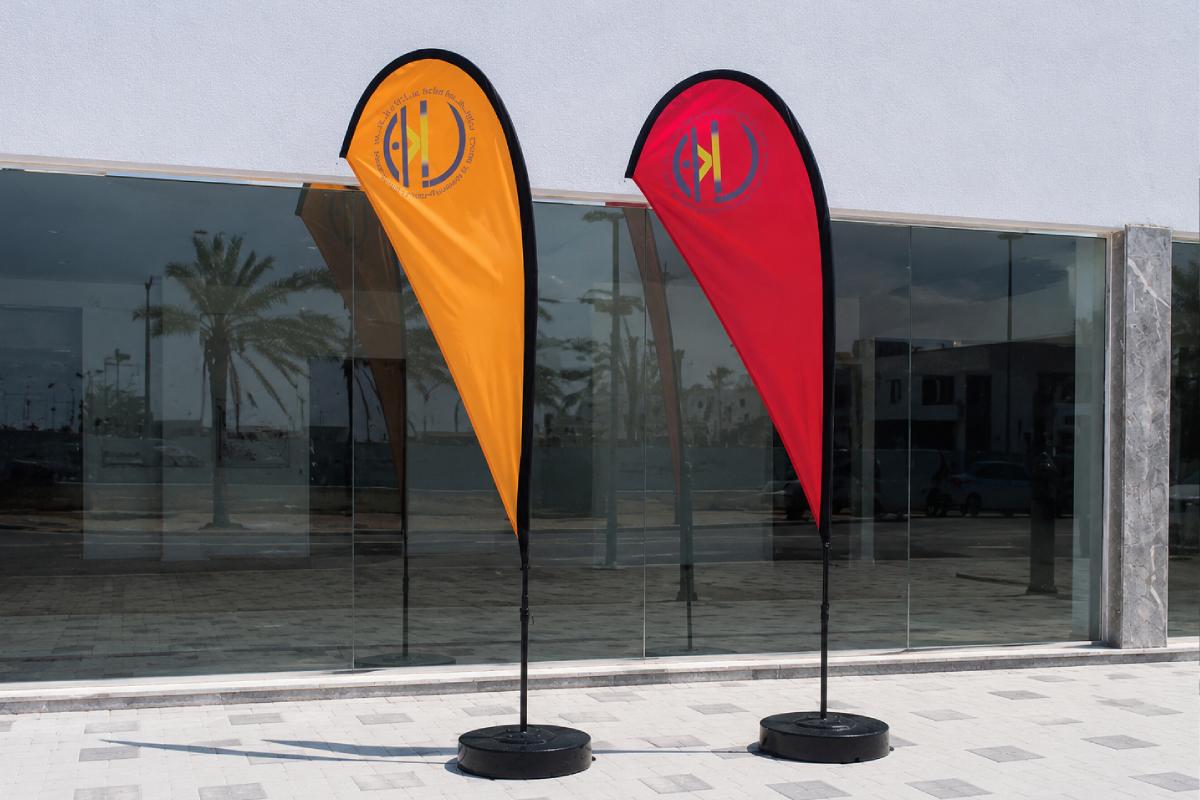
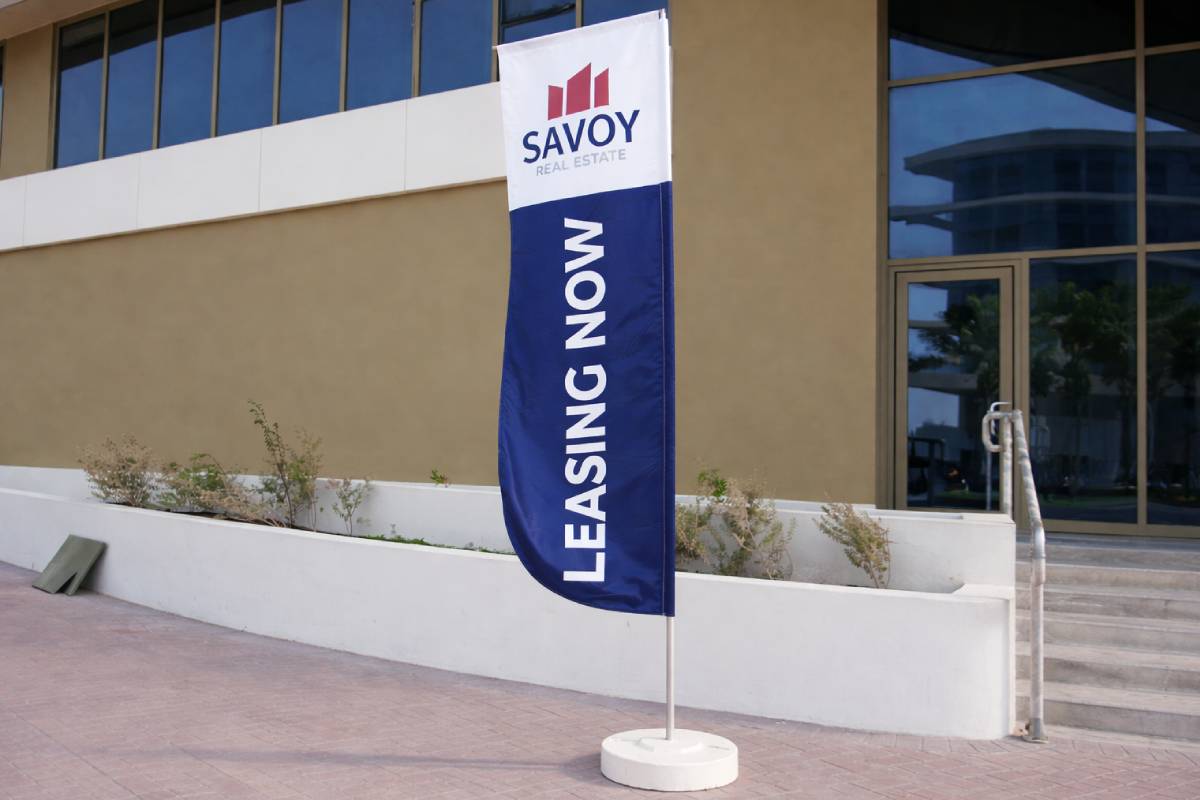
Feather and sail flags use aerodynamic shapes and rotating spindle hardware that allows the flag to pivot with wind direction rather than resist it, reducing mechanical strain on the pole system and maintaining display readability. On outdoor flag systems of this format, fixed spindle fittings increase wrapping and tangling risk under variable wind conditions; rotating hardware is commonly specified on feather, sail, and similar builds where the base is designed to turn with the wind. L-shape flags produce a taut, consistently readable vertical display, making them the stronger format for forecourts, storefronts, and roadside positions where fixed sightlines and pedestrian clearance define placement.
Base type and ground anchoring are specified to match wind exposure level and surface conditions at each installation site. For retail operators, event organizers, and hospitality venues, the format decision between feather, sail, and L-shape depends on whether kinetic visibility or positional consistency is the priority. Public-facing outdoor flag and banner placements should be checked against the applicable TAMM permit route before production begins, because the proposed setup and supporting documents may need adjustment before submission.
Protocol and Formal Display Flag Systems in Abu Dhabi
Conference flags and table flags are produced for environments where fabric finish, hardware standard, and display accuracy operate under formal scrutiny — reception areas, boardrooms, signing ceremonies, press conferences, bilateral meetings, and institutional settings where the flag is viewed at close range.
Conference flags use heavier satin or taffeta-style builds with internal stiffeners or canvas-backed construction so the display holds its shape and presents cleanly in air-conditioned halls and formal meeting rooms. True double-sided flags with blockout liners are specified for protocol display where the flag must read correctly from both faces — single-sided construction produces a reversed bleed-through image on the back face, which is not acceptable in bilateral meeting environments or signing ceremony settings where multiple viewing angles are standard.
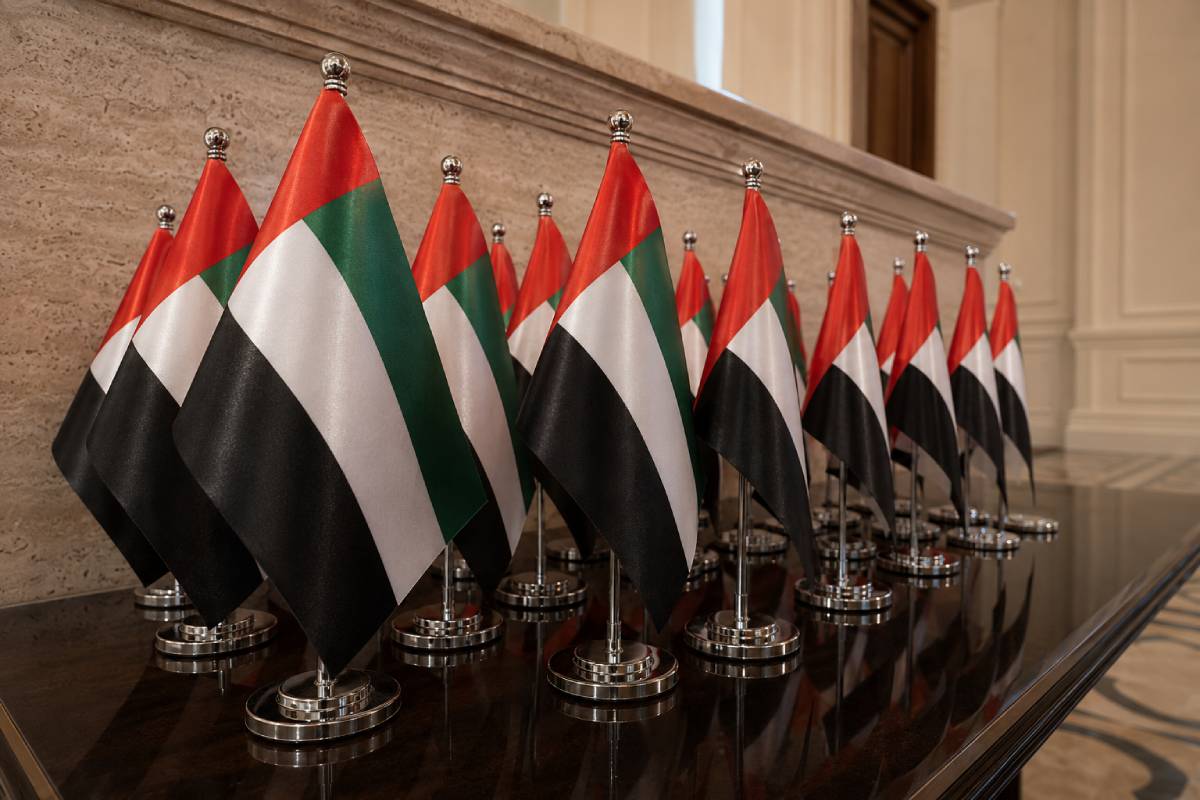
Table flags are commonly produced in satin or similar indoor flag fabrics with metal desk stands sized for executive suites, conference tables, and formal meeting rooms where presentation accuracy is part of the setting. Gloss and matte fabric choices affect glare and camera response in formal indoor environments, so the finish is selected against viewing and lighting conditions rather than treated as decorative preference.
Corporate premises, institutional clients, and government bodies use these flag systems across reception environments, boardrooms, and presentation settings where presentation standard is a functional requirement of the setting.
Explore Flag Printing & Promotional Flag Solutions
Our flag printing solutions are designed to support visibility, promotion, and brand presence across commercial, civic, and event environments. Explore the core flag options below, with pricing, turnaround time, and warranty details available on each product page.

L-Shape Promotional Flags

Feather & Sail Flags

Table & Conference Flags


Materials for Abu Dhabi Heat, UV and Coastal Conditions
Flag printing in Abu Dhabi is shaped by UV exposure, wind load, heat, and outdoor exposure, and by glare, air-conditioning, and photography conditions in indoor environments. Material selection starts with the performance requirement of each setting.
For outdoor promotional flag systems in Abu Dhabi, knitted polyester flag textile is specified as the base fabric. Its open construction allows air to pass through rather than build pressure against the face, reducing load on the pole system. Dye-sublimation is specified because colour bonds within the polyester fibre, supporting outdoor colour stability under UV exposure and sustained heat. Low-grade flag textile and unsuitable print methods lose contrast and readability in outdoor use.
Fiberglass or fiberglass-aluminium hybrid pole systems are specified for outdoor promotional flag builds because controlled flex distributes wind load along the pole length rather than concentrating stress at one fixed point. Base type and ground anchoring are matched to wind exposure and surface conditions; incorrect base selection in open or coastal positions creates toppling risk.
Conference flags use heavier satin or taffeta-style builds with internal stiffeners or canvas-backed construction so the display holds form in air-conditioned halls and meeting rooms. True double-sided protocol builds use two separately printed faces with an internal blockout liner; single-sided construction produces a reversed image through the back face, which is not acceptable in bilateral meetings or signing ceremonies.
Indoor table flags are produced in satin or similar indoor flag fabrics, with finish selected to suit viewing and lighting conditions. Matte finishes reduce glare under photography and artificial lighting; higher-sheen satin is used where ambient room light is the primary concern.
Correct specification across fabric, print method, pole system, and finish reduces the risk of UV fading, pole stress, glare in photography settings, and bleed-through in protocol display environments.
Flag Printing Production Process
From brief to handover, we follow a controlled workflow for consistent color, correct hardware fit, and fast deployment across sail, feather, table, and conference flags.
Requirement Audit and Use Case
Flag type, intended environment, display purpose, and quantity are defined at the outset so that outdoor promotional systems and formal protocol displays are routed to the correct specification from the start. We confirm whether the installation is outdoor or indoor, identify the deployment zone and exposure conditions, and establish whether the flag system requires TAMM-related permit review before any production decision is made.
Engineering & Contracting
Artwork dimensions, print orientation, flag format, hardware type, and finish are reviewed and approved against the confirmed flag system before production begins.
For public-facing outdoor placements, we review TAMM permit requirements and landlord or developer authorization at this stage, including site plan and flag distribution layout, so that compliance is resolved before production cost is committed.
Production & Printing
Fabric is printed to the confirmed specification — knitted polyester with dye-sublimation for outdoor systems, satin or taffeta-style builds for conference and protocol flags — and finished for the selected flag type.
We match each printed fabric to its confirmed pole system, base type, rotating spindle hardware, or display stand before any component leaves production.
Deployment & Handover
Flag systems are deployed against the confirmed placement plan, with base type, anchoring, and installation position checked against the approved specification before handover.
We confirm that each flag system — feather, sail, L-shape, table, or conference — is installed, stable, and presenting correctly in its intended environment before the project is signed off.
.webp)


Flag Printing Projects Delivered Across Abu Dhabi
Ninety Nine Advertising has delivered flag printing across event, institutional, and outdoor promotional environments in Abu Dhabi.
New York University, Saadiyat Marina District, Abu Dhabi
Table flags produced for the MENA Universities Summit, delivering professional brand presence and event branding across the venue for summit attendees.
Emirates Council for Rural Development Abu Dhabi
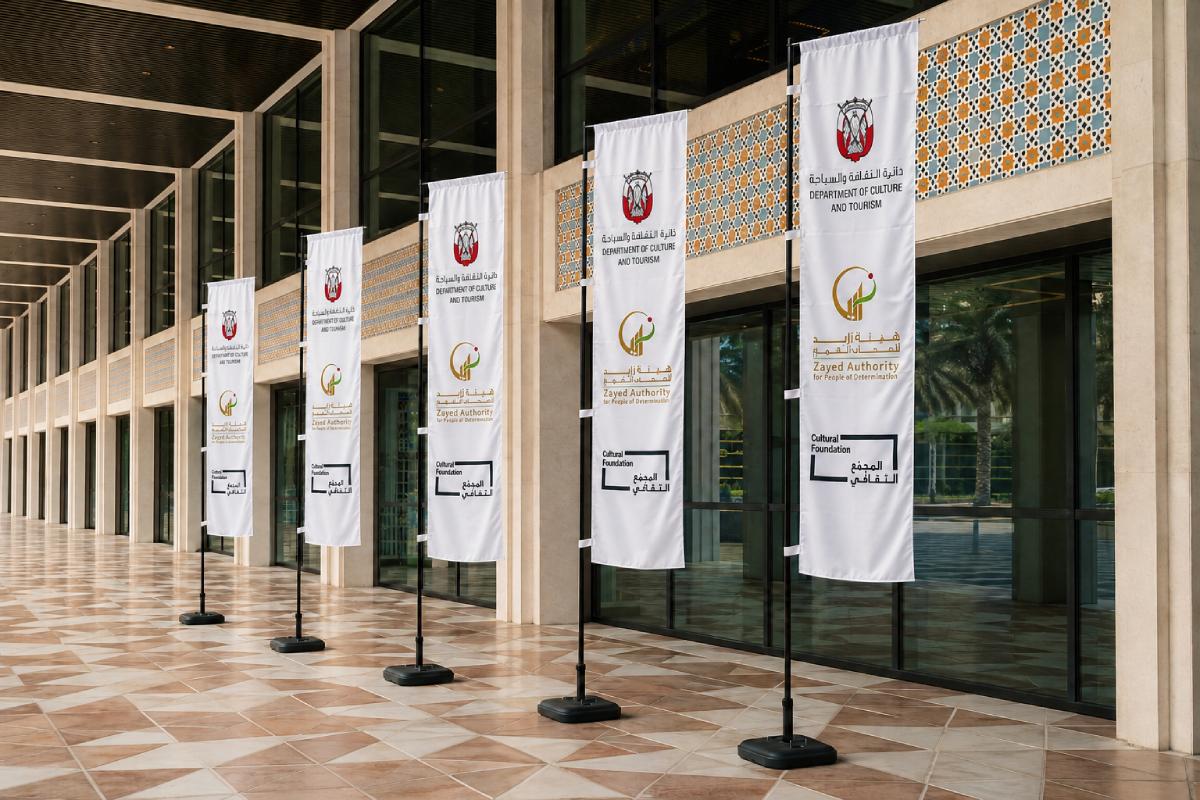
L-shape flag campaign integrated with facade banners to deliver complete and consistent brand presence and messaging across the deployment area.
Polygreen at Yas Marina Circuit, Abu Dhabi
Custom flags deployed within the circuit environment as part of the Reusable Cups Campaign, providing professional identification of designated areas and clear campaign messaging throughout the site.
Frequently Asked Questions About Flag Printing & Deployment Services in Abu Dhabi
Common queries about services, permit timelines, and installation in Abu Dhabi.
What types of flags do you print in Abu Dhabi?
Flag printing in Abu Dhabi covers five common product types used across promotional and formal display environments: feather flags, sail flags, L-shape promotional flags, table flags, and conference flags. Feather, sail, and L-shape formats are used outdoors for retail forecourts, event perimeters, hospitality sites, and public-facing activations. Table flags and conference flags are used indoors in reception areas, boardrooms, signing ceremonies, press conferences, bilateral meetings, and other formal institutional settings.
Which flag type is best for outdoor events in Abu Dhabi?
For many outdoor activations, feather and sail flags are a strong option because their aerodynamic shapes and rotating hardware are better suited to exposed conditions. L-shape flags are also used outdoors, especially where a taut and consistently readable display is more important than movement. The correct format depends on whether kinetic visibility or positional consistency is the functional priority at that location.
What is the difference between feather flags, sail flags, and L-shape flags?
Feather and sail flags are selected where movement and visibility matter. Their aerodynamic shapes and rotating hardware allow the flag to pivot with wind direction, reducing strain on the pole system while keeping the display active and visible. L-shape flags are selected where a more stable reading face is required. Their taut vertical profile makes them a stronger format for forecourts, storefronts, roadside positions, and other placements where fixed sightlines and controlled positioning matter.
What is the difference between conference flags and table flags?
Conference flags and table flags both serve formal indoor settings, but they are specified differently. Conference flags use heavier satin or taffeta-style builds, often with internal stiffeners or canvas-backed construction, so the display holds form in air-conditioned halls and meeting rooms. Where both faces must read correctly, true double-sided builds use two separately printed faces with an internal blockout liner. Table flags are smaller desk-format displays produced in satin or similar indoor flag fabrics, with finish selected against room lighting and viewing conditions.
What is the difference between single-sided and double-sided flags?
Single-sided flags produce a mirror-bleed effect, where the design is visible on the back face but in reverse. True double-sided flags use two separately printed faces with an internal blockout liner between them, so the logo or message reads correctly from both directions. Double-sided construction is used where front-and-back readability is required, especially in protocol, bilateral, and formal display environments.
What materials are suitable for Abu Dhabi flag printing?
For outdoor promotional use, knitted polyester flag textile is specified with dye-sublimation printing. The open fabric construction allows air to pass through the face rather than building pressure against it, reducing load on the pole system in exposed conditions. Dye-sublimation is used because colour bonds within the polyester fibre, which supports colour stability under UV exposure and heat. Outdoor builds are matched to fiberglass or fiberglass-aluminium hybrid pole systems, with base type and anchoring selected against site wind exposure and surface conditions. Indoor applications use satin or heavier satin or taffeta-style builds depending on presentation standard, lighting conditions, and display format.
Do I need approval to place promotional flags outside my shop or event space?
Public-facing outdoor flag and banner placements in Abu Dhabi should be checked against the applicable permit route before production begins. That review matters because the proposed setup and supporting documents may need adjustment before submission. Where the installation interacts with regulated external space, pedestrian access, site-management rules, or landlord or developer control, approval relevance should be confirmed before artwork and hardware are finalised.
How long does flag printing usually take in Abu Dhabi?
Flag printing timelines depend on the specification, flag type, finishing method, and order size. As an indicative range, standard flag printing projects typically complete within 2-5 days. Larger quantities, double-sided protocol builds, or projects involving multiple flag formats may require additional time depending on scope and production complexity.
Can existing flag systems be updated without full replacement?
Yes. Existing flag systems can be updated through fabric printing only where the current hardware remains suitable for continued use. This allows the printed flag face to be replaced without remanufacturing the full system, provided the pole set, base, stand, or support hardware is still serviceable and correct for the intended application.