Interior Signage

Interior signage in Abu Dhabi covers every physical, non-vinyl sign installed inside a commercial space — 3D reception logos, CNC-cut acrylic and aluminium composite signs, room plates, suspended ceiling signs, LED lightboxes, and identification systems for offices, retail stores, and building portfolios. Specification is governed by building and landlord codes controlling permitted materials, fixing methods, and installation conduct — and by Abu Dhabi's coastal chloride environment, where incorrect hardware grade produces surface failure.
Interior Signage

Updated On

March 25, 2026

Written by:

Ninety Nine Advertising Technical Team

The Main Reasons Intrior Signs Fail in Abu Dhabi

Indoor signage failures in Abu Dhabi usually fall into four categories, each with its own cause and consequence. Fixing failure happens when the fixing method does not match the sign weight, substrate, surface finish, or service conditions, causing the sign to loosen under load and creating both a safety risk and a surface repair liability.

Electrical detailing failures in finished interiors can conflict with fit-out standards, FM requirements, and building controls. Cable concealment, service access, and routing must be resolved as construction requirements, not treated as finishing details. Incorrect LED drivers, poor access, or non-serviceable illuminated signs increase early failure risk and often force finished walls or sign bodies to be reopened for remedial work, a cost that proper component specification and access planning should prevent at fabrication stage.

Destructive mounting, where the fixing method conflicts with landlord requirements, fit-out controls, wall build-up limitations, or base-build restrictions, produces reinstatement obligations that can exceed the original sign budget. We address each of these at site audit and specification stage, before fabrication is committed.

Four completed interior sign scopes confirm the delivery method in practice. OFCO Offshore International at Addax Office Tower on Al Reem Island: full office interior sign scope including site audit, submission package, fabrication, and in-house installation. Kent PLC at Trade Centre Mall in Abu Dhabi: office zoning and department and room identification across the full fit-out. Mesar Engineering & Project Management in Al Nahyan: company identification and printed optical medica establishing brand presence at point of entry. Global Beam Telecom on Electra Street: spatial zoning, department identification, and a reception wall sign anchoring brand presence at first client contact.

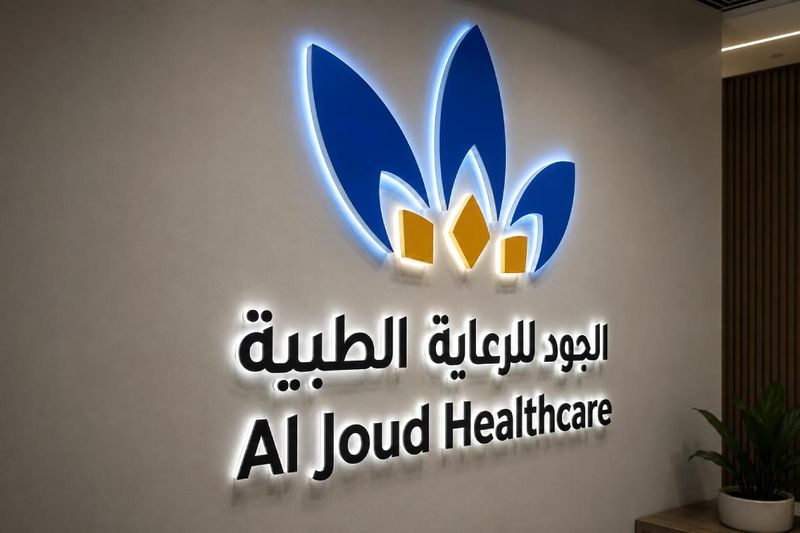
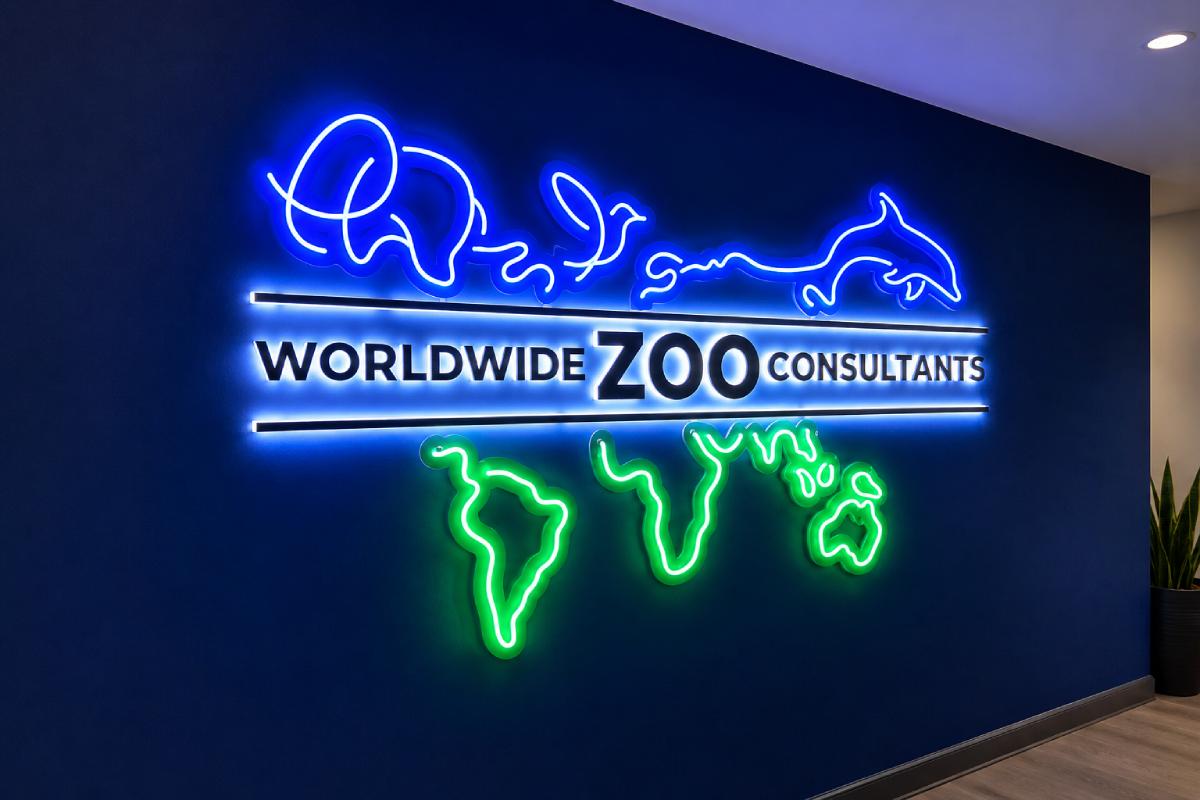
3d reception sign Ninety Nine Advertising MSF Abu Dhabi

What Interior Signs Cover

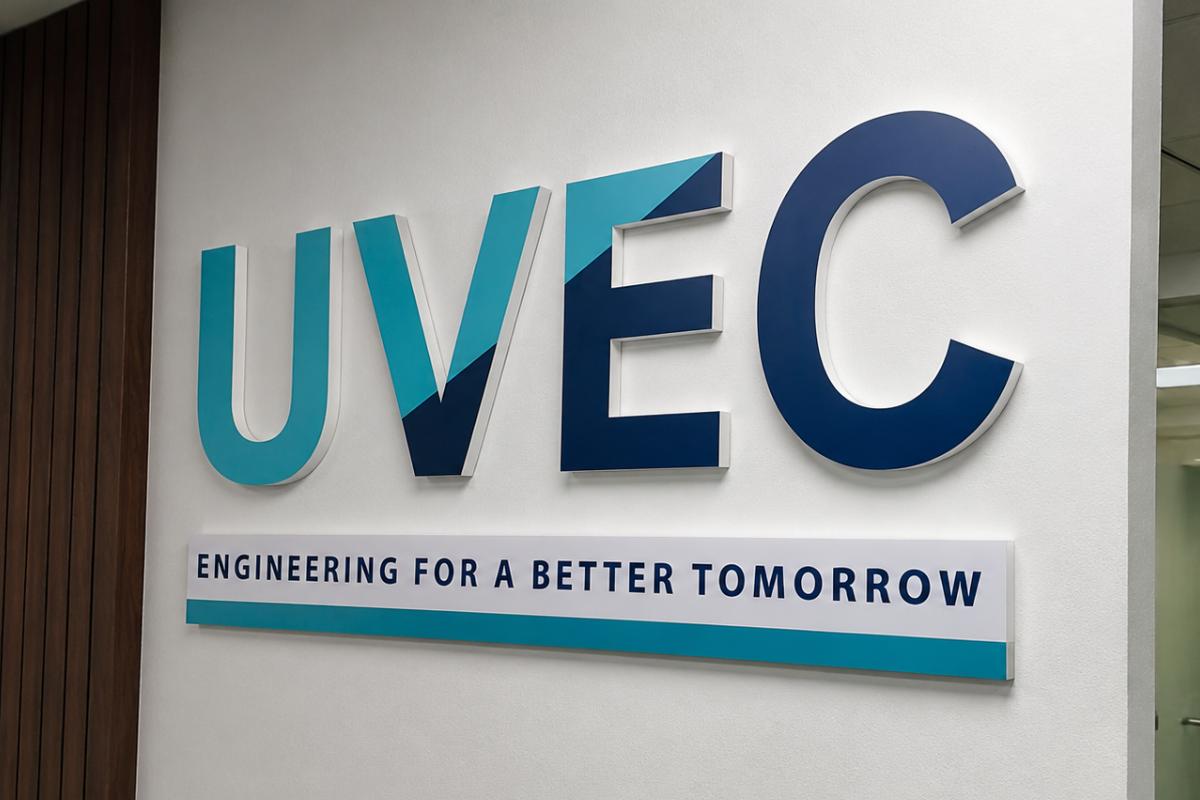
Interior signage covers 3D reception logos, CNC-cut acrylic signs, aluminium and ACP-backed panel signs, standoff and floating panel signs, room plates, door signs, department markers, suspended directional and identification signs, illuminated sign systems, directional signs, permanent counter and menu boards, and statutory interior identification and code-required signs where applicable.

This category applies across commercial office towers, mall environments, retail formats including supermarkets, restaurants, clinic interiors, showrooms, and residential building common areas. It is relevant to property owners, building managers, and mall operators responsible for shared spaces such as lobbies, floor identification, parking, and tenant directories; corporate tenants fitting out and identifying their own leased offices, including office branding, company door identification, and company listings within tenant directories; and retail operators applying store branding across single or multiple locations in Abu Dhabi.

3d reception sign Ninety Nine Advertising MSF Abu Dhabi

Who Interior Signs Is For

Building and mall managers requiring interior signage as a tenant signage system with operational identificaiton signs, consistent across zones, installed with fixing methods suited to the substrate and approval conditions, and maintainable throughout the building’s occupancy cycle.

Corporate tenants fitting out a rented commercial space require an interior aligned with landlord, fit-out, and building requirements while maintaining brand identity across the service life of the fit-out.

Retail chains operating across multiple locations require a repeatable sign format that deploys consistently at each site. Boutiques, restaurants, clinics, and supermarkets require in-space signage that carries brand identity and communicates directly with the customer from entry point. Interior signage is the physical layer through which a commercial space becomes readable, functional, and identifiable.

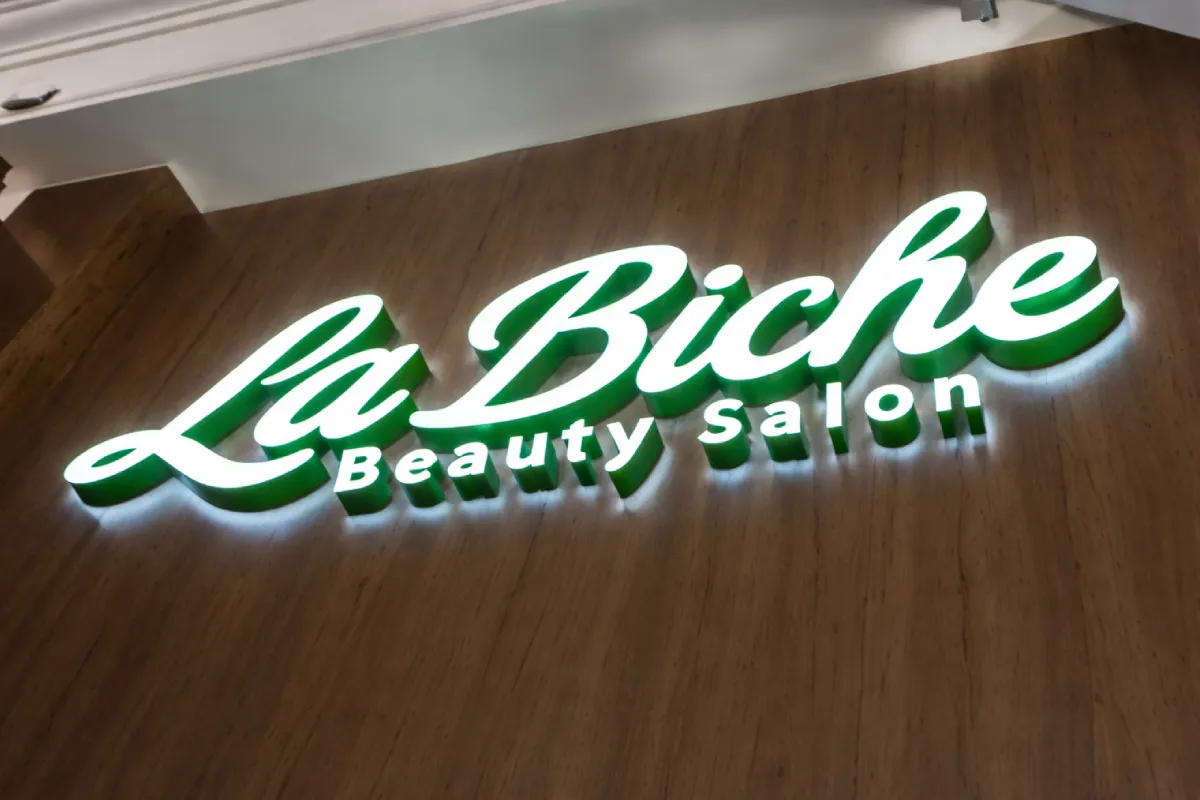
Indoor office signs with standoff moutning for Mesar Abu Dhabi3d front-lit reception signage in Abu DhabiStandoff mounted indoor office sign in Al Nahyan Abu Dhabitop view illiminated Acrylic inteiror sign3d acrylic indoor sign for labiche in Abu Dhabi

Interior Signs Permits & Access Planning in Abu Dhabi

Committing fabrication cost before building management approval is confirmed produces one of two outcomes: a redesign when the submission is rejected, or a reinstatement obligation when the approved fixing method does not match the final site condition. In Abu Dhabi, interior signage is usually coordinated through building management, landlord, fit-out, and access-control requirements. DMT Commercial Signage Regulations govern permanent commercial signs on buildings, but standard interior sign packages inside leased spaces are typically reviewed through building management and project approval channels rather than the public advertising-permit route.

Where a building restricts drilling to protect finished surfaces, the fixing method must be confirmed against the sign weight, substrate, wall finish, and service conditions before specification is locked. We prepare a submission package covering dimensions, material build-up, fixing method, and wiring route for building management review before manufacturing begins.

Access coordination and work permits are commonly required in Abu Dhabi commercial buildings. In malls, secure office towers, and controlled sites, after-hours work may also require additional site access approvals or temporary evening work permits before installation starts. We manage submission, access coordination, and installation planning before any production cost is committed.

Arrange a site audit to confirm approval requirements, fixing method, and access coordination before specification is finalised.

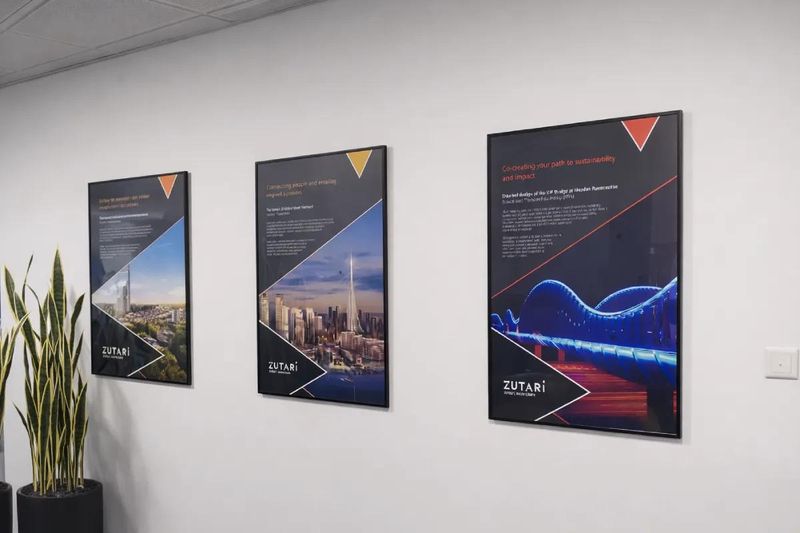
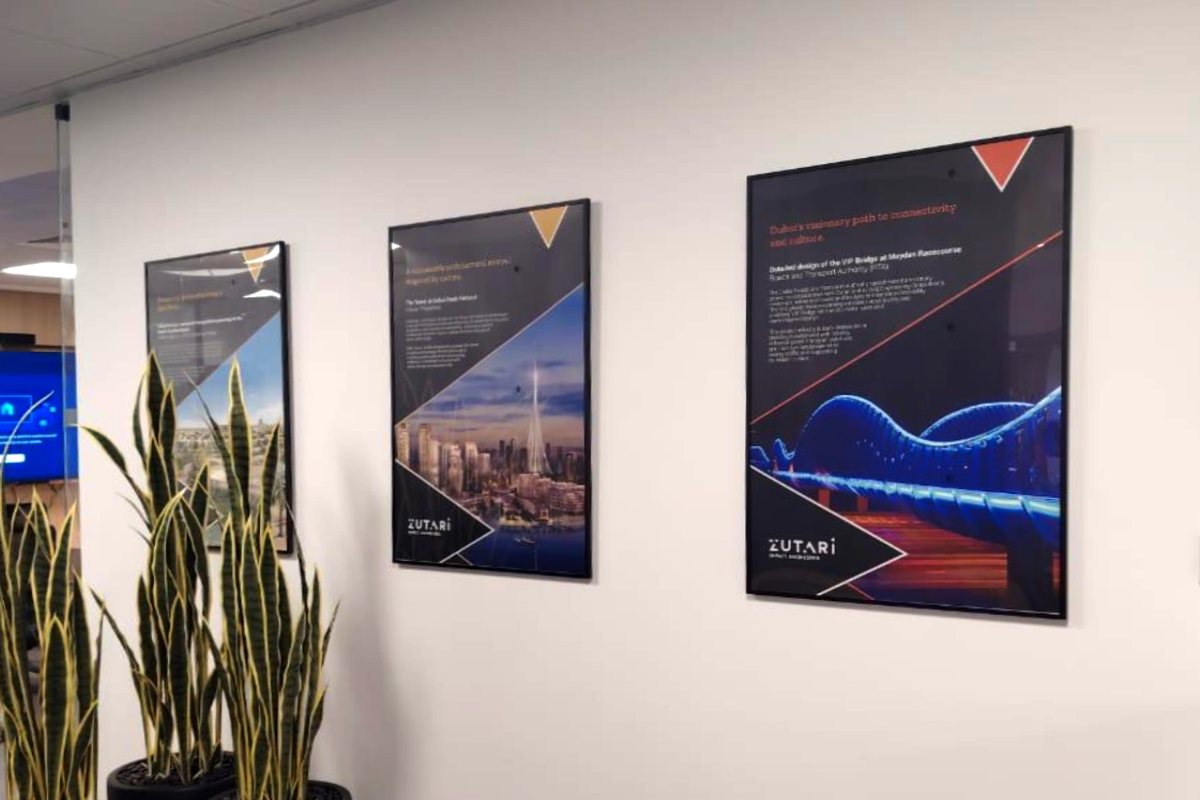
3D reception Sign with backlit halo effect for WBG musaffahFramed Wall Art for Zutari in Corniche Area Abu DhabiDoor Identification signsInterior door name metal sign by Ninety Nine Advertising Adnoc Logo Fabricated and installed by Ninety Nine AdvertisingClose up of Office identification door sign in Abu Dhabi

Interior Signage Types and What Each One Does

3D Reception Logos & Lobby Feature Signs for Commercial Interiors

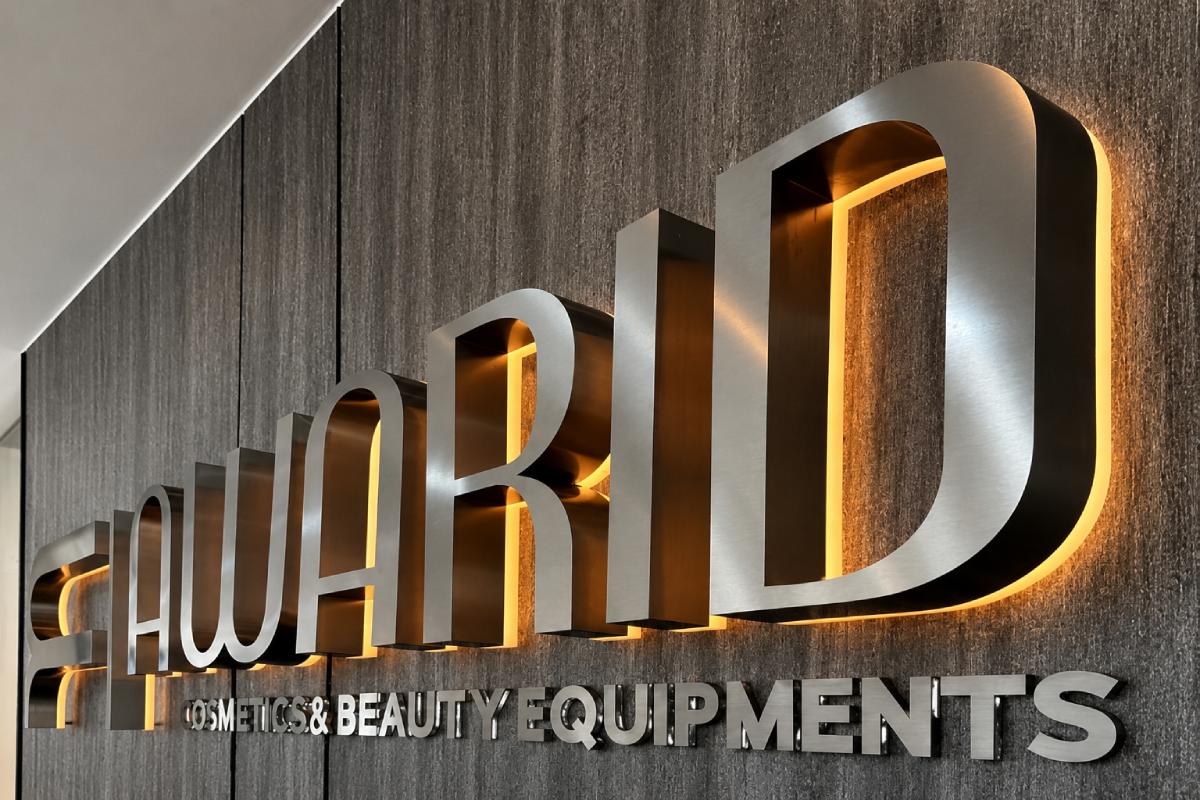
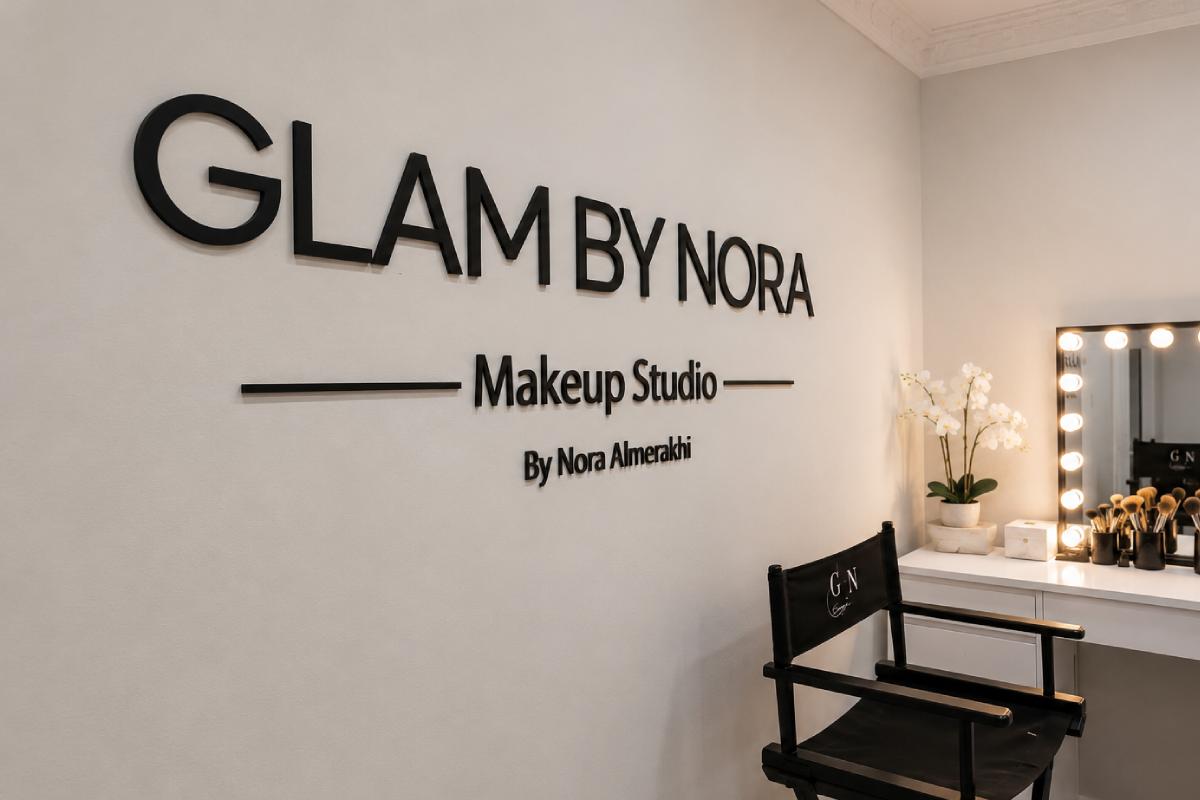
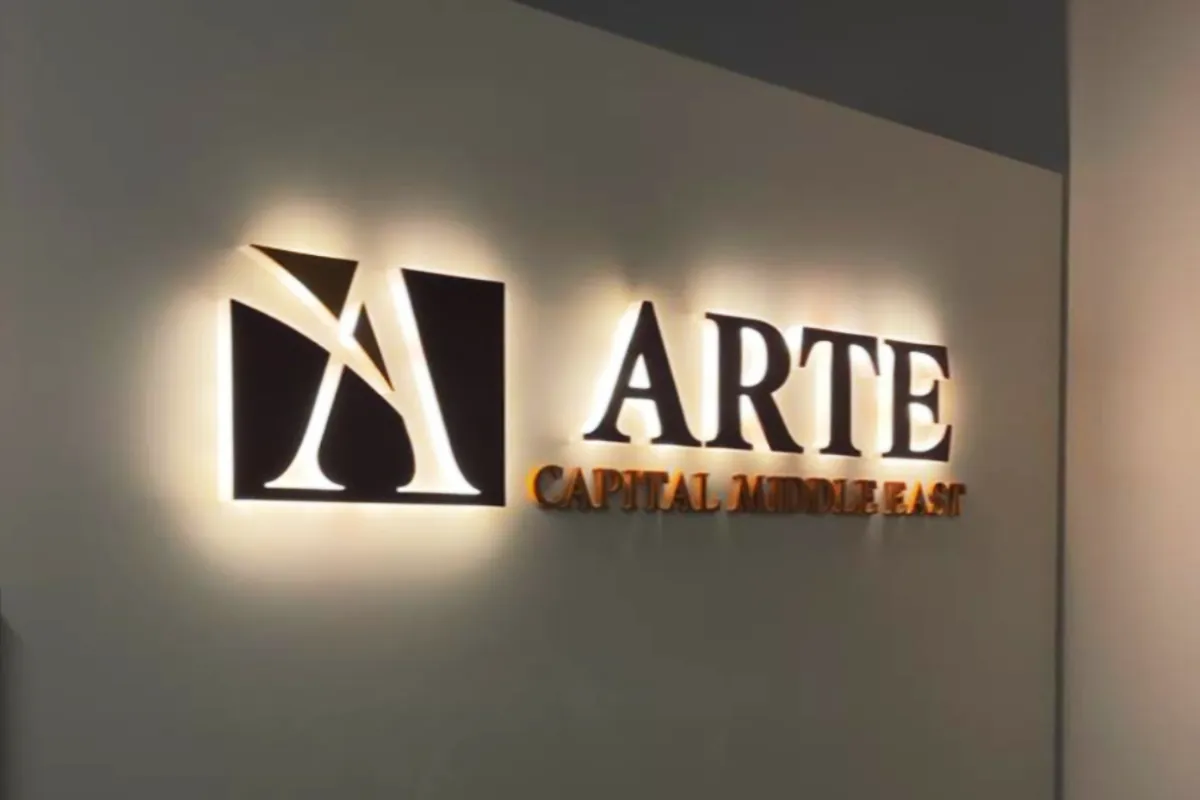
We fabricate dimensional reception logos in CNC-cut acrylic and aluminium composite-backed forms, mounted with standoffs or fixing methods matched to the wall condition. The reception wall is the first physical contact a client has with a brand, and a flat printed alternative does not carry the same spatial authority. For illuminated versions, we specify Samsung LEDs with Mean Well indoor drivers. This is the brand statement the submission package must accommodate and protect.

LED Lightboxes & SEG Fabric Displays for Retail and Office Interiors

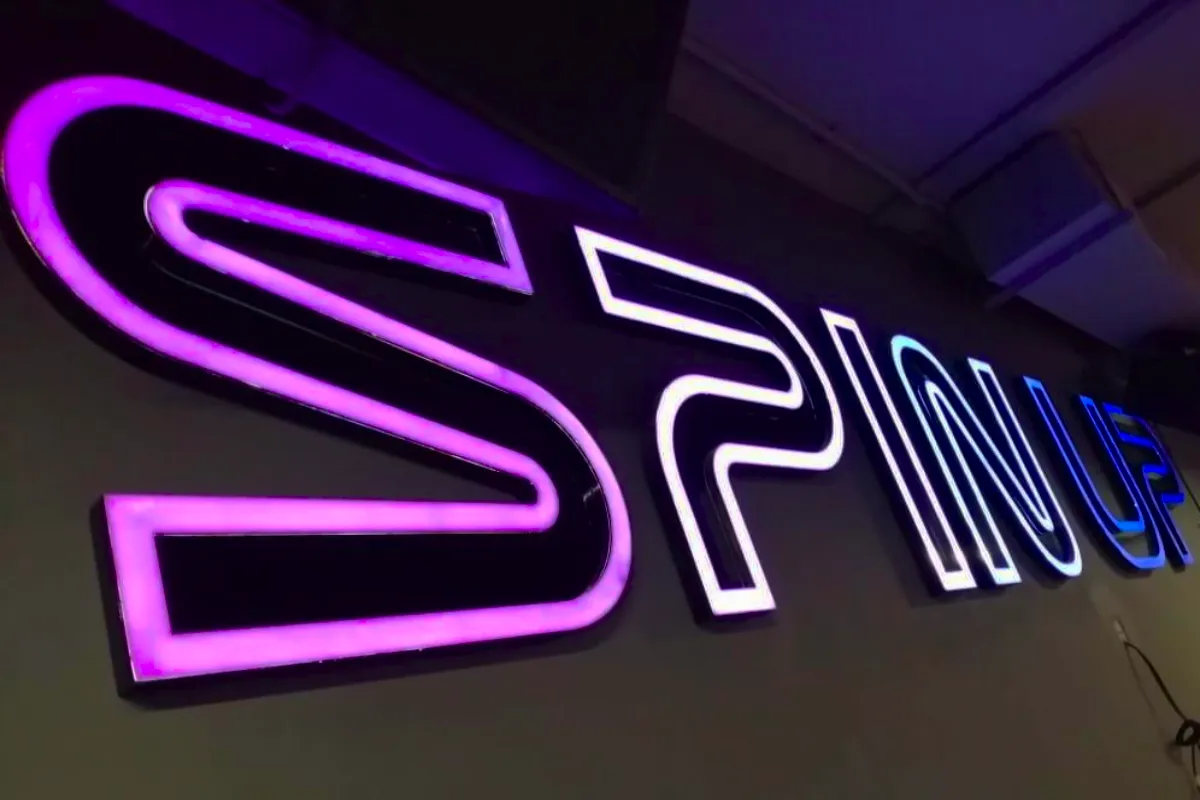
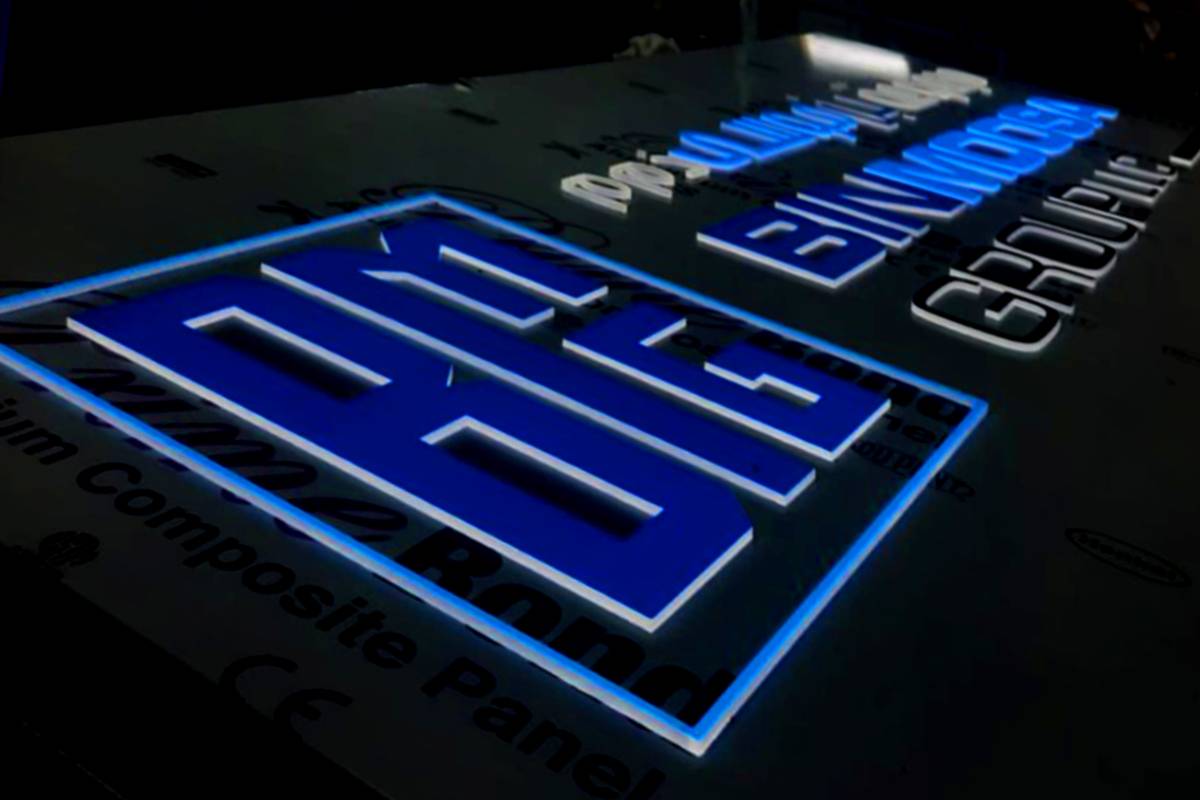
We specify Samsung LEDs and Mean Well indoor drivers for illuminated lightboxes and SEG fabric displays. An SEG lightbox uses a fabric graphic with a silicone edge that tucks into a frame, allowing graphic replacement without opening the full sign, while a standard acrylic lightbox carries a rigid face better suited to fixed displays. Incorrectly specified drivers raise maintenance risk in finished interiors; this component pairing reduces that risk across the sign’s service life.

Door Signs, Room Plates & Department Identification for Abu Dhabi Office and Building Interiors

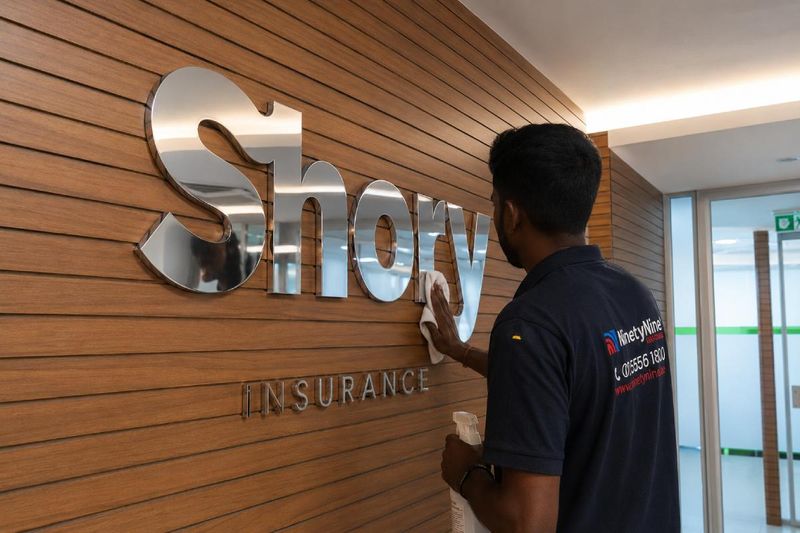
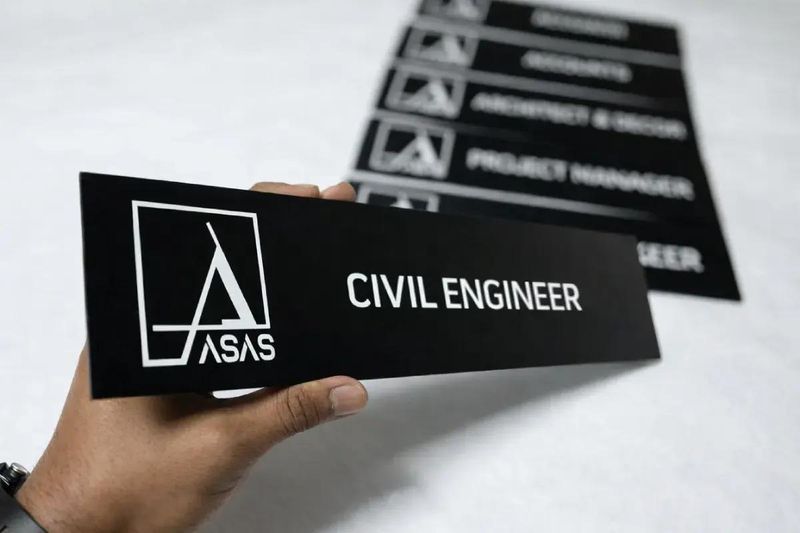
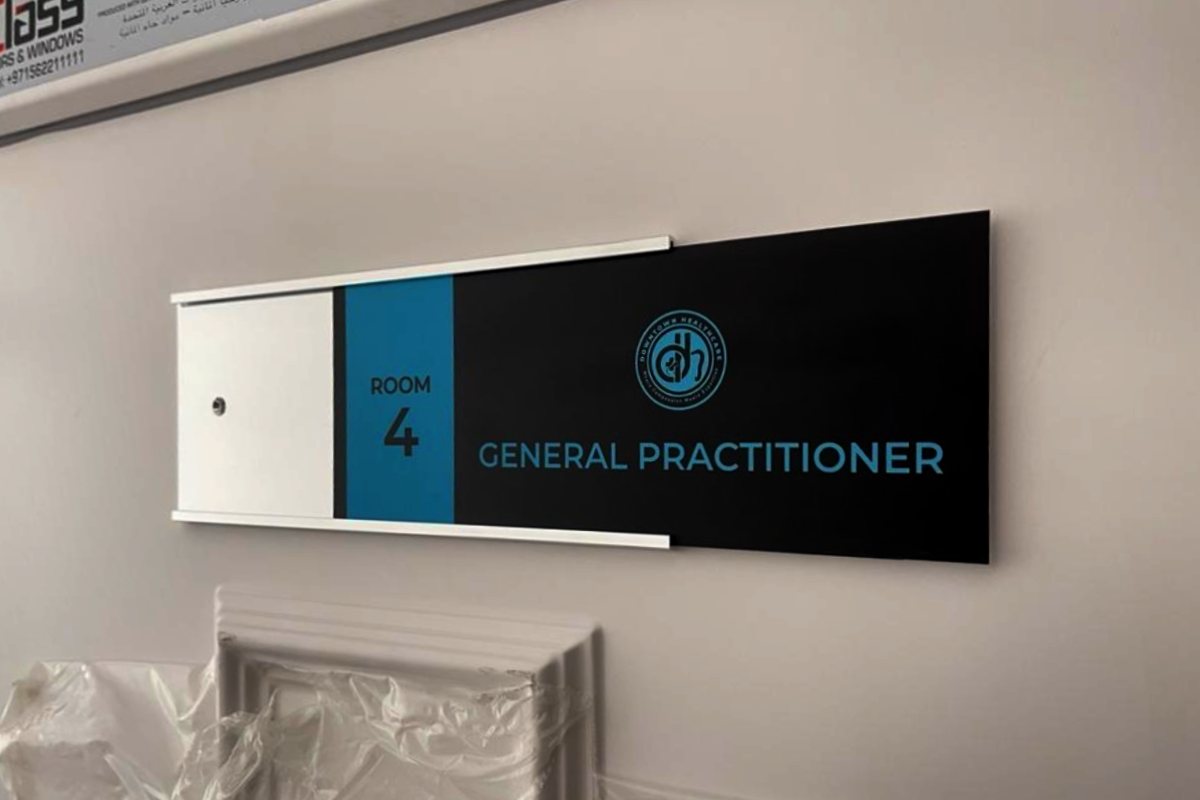
We supply door signs, room plates, and department markers as a coordinated system with a consistent format, fixing method, and finish across each zone. Inconsistency across a building portfolio signals unmanaged specification, not incremental procurement. For a building manager in Abu Dhabi, a coordinated identification system maintains interior coherence across the occupancy cycle without per-zone variation.

Counter Signs, Menu Boards & Information Displays for Abu Dhabi Retail and Hospitality Interiors

We supply counter signs, menu boards, service information displays, and point-of-purchase 3D signs for retail stores, restaurants, clinics, and showrooms. For a retail chain, the requirement is a repeatable branded format that deploys consistently across Abu Dhabi locations. For a boutique or restaurant, it is the in-space communication layer between the brand and the customer from the point of entry.

Suspended Ceiling Signs for Abu Dhabi Mall & Open-Plan Interiors

We supply suspended ceiling signs and overhead projecting signs for corridors, mall aisles, and open-plan commercial spaces where wall-mounted signs do not carry the required sightline. For a mall or building manager, suspended overhead signs provide the wayfinding layer that wall signs cannot deliver at navigation range. In large-format retail and clinic interiors, they establish zoning before a visitor reaches the wall.

Standoff Signs & Floating Acrylic Panels for Commercial Interiors

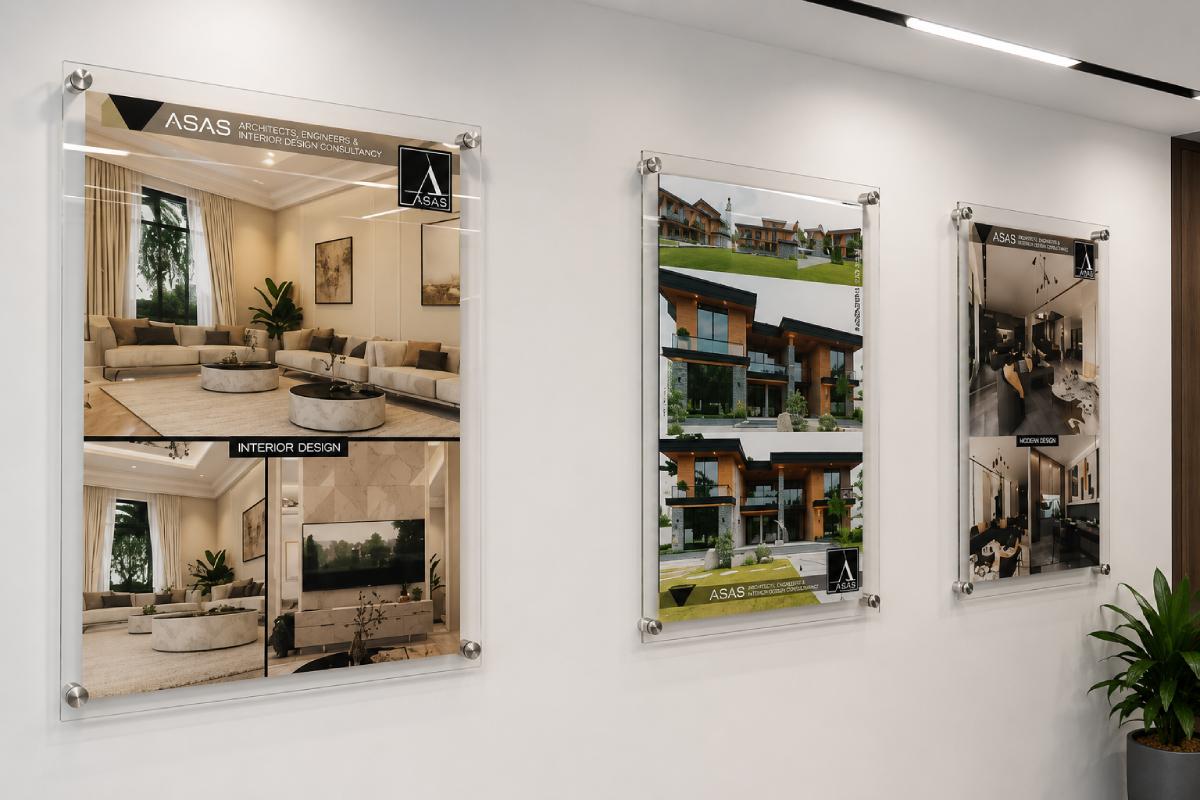
We fabricate floating acrylic panels on brushed stainless steel standoffs, using anchor types selected to suit the wall substrate, such as Hilti HUD-2 or fischer DuoPower where appropriate. Standoff signs require mechanical fixing; adhesive alone places the full sign load on a bond not intended to carry it. Where Abu Dhabi buildings prohibit drilling into marble, granite, or glass, the alternative fixing method must be confirmed at site audit before specification is committed.

Explore Our Indoor Signage Solutions

Our indoor signs are specified for brand presence, navigation, and commercial interiors across offices, retail, and shared environments. Pricing, turnaround, and warranty details are on each product page.

Custom Acrylic Interior Signs

Custom Acrylic Interior Signs

CNC-cut acrylic logos, labels, and room signs. Precision fabrication where generic printed alternatives dilute fit-out investment.
Explore Acrylic Signs
3D Reception Logos & Lobby Feature Signs

3D Reception Logos & Lobby Feature Signs

Dimensional logo signs & 3D wall signages for entry walls where depth and identity anchor brand authority at first client contact.
Explore 3D Reception Signs
Name Plates & Identification Signs

Name Plates & Identification Signs

Coordinated room and department identification. Inconsistent labelling across a building undermines an otherwise coherent interior.
Explore Identification Signs
Indoor Ceiling Suspended Signs

Indoor Ceiling Suspended Signs

Specified for corridors, mall aisles, and open-plan spaces where wall-mounted signs cannot reach required sightline distances.
View Indoor Hanging Signs
Standoff Signs & Floating Panels

Standoff Signs & Floating Panels

Fixed with Hilti HUD-2 or fischer DuoPower anchors — mechanical fixing confirmed at site audit before specification is committed.
Explore Standoff Signs
Framed Wall Art for Zutari in Corniche Area Abu DhabiIndoor office signs with standoff moutning for Mesar Abu Dhabi3D reception Sign with backlit halo effect for WBG musaffahAdnoc Logo Fabricated and installed by Ninety Nine Advertising3d reception sign Ninety Nine Advertising MSF Abu Dhabi

Materials Specified for Abu Dhabi Interior Conditions

Material selection for interior signs in Abu Dhabi starts with performance, not appearance, because coastal chloride exposure and finished marble, granite, glass, and cladding surfaces act together across the sign’s service life.

Hardware and fixings: We specify SS316 marine-grade stainless steel for coastal-adjacent interiors because SS304 can show chloride-led corrosion within 18 to 36 months, creating avoidable replacement cost. In dry non-coastal interiors, we specify SS304.

Mechanical fixings: We fix standoff hardware with Hilti HUD-2 or fischer DuoPower anchors matched to the wall substrate. Adhesive alone on a standoff transfers sustained sign load to a bond not intended to carry it.

Adhesives: We specify 3M VHB 4910 for clear acrylic and glass-facing signs, 3M VHB 5952 for aluminium logos, stainless letters, ACP faceplates, and glass-mounted dimensional signs, 3M VHB LSE-110WF for plastic and low-surface-energy parts, tesa 4965 Original for slim name strips and profile trims, and SikaBond-115 Strong Fix where wall contact is uneven. Correct substrate matching prevents bond failure and reinstatement work.

LED components: We specify Samsung chip LEDs and Mean Well indoor drivers for illuminated signs because incorrect driver pairing increases early failure risk and later rewiring in finished interiors.

Contained routing protects finished surfaces and prevents exposed wiring where drilling restrictions affect marble, granite, or cladding zones.

Correct specification across hardware, fixings, adhesives, LED components, and wiring containment prevents bond failure, exposed wiring, early driver failure, and avoidable surface damage before fabrication begins.

Our Indoor Signage Process from Site Review to Installation in Abu Dhabi

Indoor signage delivery is a staged process that begins with the sign’s purpose inside the space and then moves through layout, approval, production, and installation. In retail stores, offices, and shared commercial interiors, the process works best when brand impact, identification needs, zoning logic, and mounting conditions are resolved before fabrication starts.

Step 1

Site Audit & Measurement

The site audit records the interior environment, surface condition, fixing restrictions, available power point locations, and approval requirements before specification is committed.

We assess wall substrate, confirm whether drilling is permitted, and define the adhesive system, mechanical fixing method, and wiring route against the actual interior condition so the approved specification reflects the installation environment from the outset.

Step 2

Engineering and Contracting

Engineering and contracting confirm scope, material specification, artwork, and required approvals before production begins. We lock adhesive grade against sign substrate, specify Samsung chip LEDs and Mean Well indoor drivers where illumination applies, prepare the submission package covering dimensions, material weights, fixing method, and wiring route, and coordinate work permits and CID clearance through the in-house team where building access control requires it.

Step 3

Fabrication & Production

Proceeding against the confirmed specification and approved submission package, with quality checks completed before dispatch from the workshop. We build using the named material set for the approved scope, including CNC-cut acrylic and aluminium composite-backed forms, SS316 or SS304 hardware matched to exposure conditions, Samsung chip LEDs, Mean Well indoor drivers, and substrate-specific adhesive, while installation access and scheduling are coordinated before units are released for site works.

Step 4

Installation & Handover

Installation and handover confirm that fixing method, wiring containment, and final sign position match the approved specification before the completed scope is accepted. We verify adhesive bond or mechanical anchor against the confirmed substrate, check contained wiring routes and sign alignment against the approved layout, and complete handover only when the installed package corresponds in full with the agreed specification and approved submission record.

Standoff mounted indoor office sign in Al Nahyan Abu Dhabi3d acrylic indoor sign for labiche in Abu Dhabi3d front-lit reception signage in Abu Dhabi

Delivered Interior Signage Projects Across Abu Dhabi

Ninety Nine Advertising has delivered interior signage across office towers, mall-based commercial spaces, and corporate fit-outs on Al Reem Island, Al Nahyan, Trade Centre Mall, and Electra Street.

OFCO Offshore International — Addax Office Tower, Al Reem Island

Door identification signs, department identification, and a 3D acrylic wall reception sign delivering brand presence and first impression at point of entry across the full fit-out.

Kent PLC — Trade Centre Mall, Abu Dhabi

Office zoning and department identification across the fit-out, with a 3D reception sign anchoring brand presence and first impression for visiting clients.

Mesar Engineering & Project Management — Al Nahyan, Abu Dhabi

Destination-reach identification delivered through company door identification signs across the office, confirming location for visitors and staff at every entry point.

Global Beam Telecom — Electra Street, Abu Dhabi

Spatial zoning and department identification across the office, with a 3D reception sign establishing brand presence and first impression impact at client entry.

Indoor Signage FAQs for Abu Dhabi Businesses

Common queries about services, permit timelines, and installation in Abu Dhabi.

What is included in indoor signage?

Interior signage covers physical, non-vinyl signs installed inside a commercial space. That includes 3D reception logos, CNC-cut acrylic signs, aluminium-backed panel signs, room plates, door signs, department markers, suspended directional and identification signs, illuminated sign systems, counter and menu boards, and statutory interior identification signs where required. In this page structure, wall graphics, window film, frosted manifestations, and other vinyl-led applications sit outside the interior signage category because they belong to wall branding or window branding.

Is indoor signage the same as wayfinding?

No. Wayfinding is one function within interior signage, but it is not the whole category. Interior signage also covers brand presence, room and department identification, reception logos, zoning, and statutory identification where required. If the two are treated as the same scope at briefing stage, the result is usually split procurement and inconsistent specification across the finished interior. On this page, wayfinding sits inside the wider family of fabricated indoor signs rather than replacing it.

Can 3D backlit logo signs be used for both stores and offices?

Yes. 3D illuminated logo signs are used in both retail and office interiors because the product type is defined by fabrication method and installation context, not by business category. In this session’s material specification, illuminated versions are described using Samsung chip LEDs with Mean Well indoor drivers, and the final build is coordinated against wall condition, power availability, and the approved fixing method. The difference between store and office use is usually layout, scale, finish, and approval route, not the basic sign family.

Do indoor signs in Abu Dhabi need landlord approval?

For most managed commercial interiors in Abu Dhabi, approval is commonly routed through building management, landlord, fit-out, and access-control requirements before manufacturing begins. Standard interior sign packages inside leased spaces are typically reviewed through building and project approval channels rather than the public advertising-permit route used for permanent commercial signs on buildings. In practice, the submission package should confirm dimensions, material build-up, fixing method, and wiring route before production is committed, especially where finished surfaces, drilling restrictions, or controlled access conditions apply.

Why does mounting method matter for indoor signage?

Mounting method controls sign safety, substrate protection, service life, and whether the approved installation can proceed without redesign. In the materials section, standoff signs are described as requiring mechanical fixing, with anchor type selected to suit the wall substrate, while adhesive systems are selected by substrate and surface condition rather than used generically. That matters in Abu Dhabi interiors because marble, granite, glass, decorative cladding, and landlord-controlled finishes often restrict drilling, load transfer, and visible intervention, so fixing cannot be treated as a late-stage installation decision.

What is the difference between an SEG Lightbox and a standard Acrylic Lightbox?

An SEG lightbox uses a silicone-edge fabric graphic that tucks into an aluminium frame, allowing graphic replacement without opening the full display body during routine content changes. A standard acrylic lightbox uses a rigid face better suited to fixed brand displays where the displayed content does not change between cycles. In the product section, both sit under illuminated interior display formats, but the practical difference is service method: SEG supports faster graphic change, while acrylic is better suited to stable long-term display content.

Do I need to provide my own power source for illuminated interior signs?

A primary power supply at the mounting location must be coordinated before installation of halo-lit 3D logos, lightboxes, and other illuminated interior signs. In the process section, site audit confirms available power point locations and the wiring route before specification is locked, because retrofitting power after surfaces are closed affects programme, wall finish, and installation method. The sign package may include transformers, drivers, and internal wiring components, but the incoming supply point still needs to be planned with the fit-out or MEP contractor.

Can 3D reception logos be installed on glass partitions?

Yes, but the specification must match the sign material and the glass condition. In the materials section, 3M VHB 4910 is identified for clear acrylic and glass-facing signs, while 3M VHB 5952 is identified for aluminium logos, stainless letters, ACP faceplates, and dimensional signs mounted to glass-facing conditions. The installation method should also consider visibility of the bond line, sign weight, and whether a matching reverse-face element is needed to visually control the fixing from the opposite side of the partition.

How long does an interior signage project take from assessment to installation?

Project timelines vary based on artwork complexity, sign thickness, finish selection, lighting scope, and installation readiness. As a general guide, standard non-illuminated acrylic signs typically complete within 3 to 7 days, illuminated or more complex acrylic signage projects typically complete within 5 to 10 days, and larger custom builds or multi-sign packages may require additional production time depending on scope, approvals, and site conditions.