.svg)

Rigid Signs, Snap Frames & Acrylic Sandwich Panels
Streamline your physical marketing and compliance displays with front-loading poster snap frames, floating acrylic sandwich signs, and permanent standoff boards. We supply, print, and install weatherproof lobby info boards, restaurant menu frames, and corporate trade license plaques across Abu Dhabi.
Rigid Sign Printing, Poster & Snap Frame Display Options
Our rigid signs, poster frames, snap frame boards, and acrylic display panels are fabricated and printed at our Mussafah workshop for offices, restaurants, clinics, retail shops, schools, and commercial facilities across Abu Dhabi. Choose from foam board printing, Forex board printing, ACP panel signs, aluminium poster frames, clear acrylic poster pockets, acrylic sandwich poster frames, and permanent standoff signs depending on how often the display content needs to change.


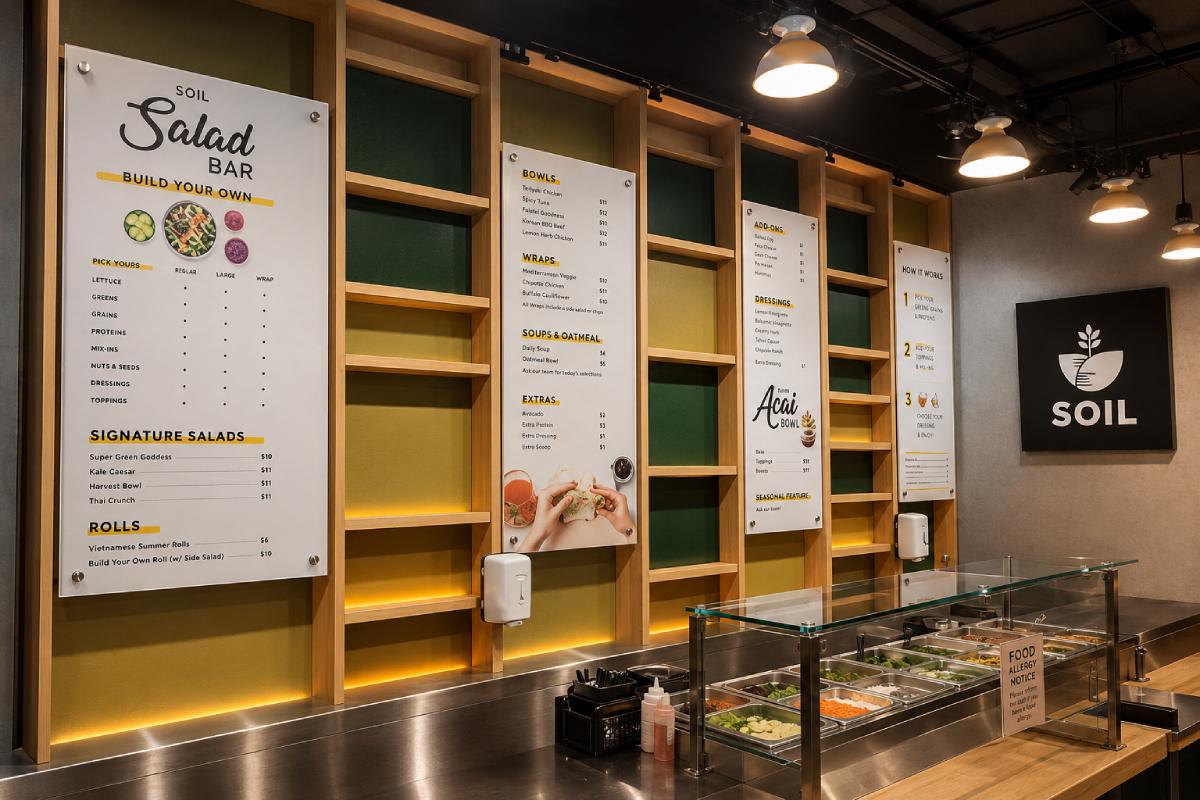

Rigid Signs, Foam Board & ACP Panel Printing
We custom-print high-resolution graphic sheets directly onto durable flat-to-wall rigid backer panels, delivered fully finished from our Mussafah workshop for seamless commercial mounting.
- Printed ACP & DiBond Aluminium Signs: Rigid aluminium composite panel signs for wall-mounted notices, site boards, outdoor information panels, shop displays, and permanent commercial graphics.
- Foam Board Printing, Forex Board Printing & PVC Foam Board Signs: Lightweight rigid boards for indoor retail graphics, event panels, checkout displays, menu boards, office notices, and short-term promotional signage.
- Coroplast & Corrugated Plastic Signs: Cost-effective temporary signs for site notices, event direction arrows, real estate boards, parking notices, and short-term outdoor messages.
- Acrylic Printed Panels & Second-Surface Acrylic Signs: Clear, frosted, or coloured acrylic panels printed from the back or front for polished wall displays, branded information boards, and premium office graphics.
Poster Frames, Menu Display Stands & Poster Pockets
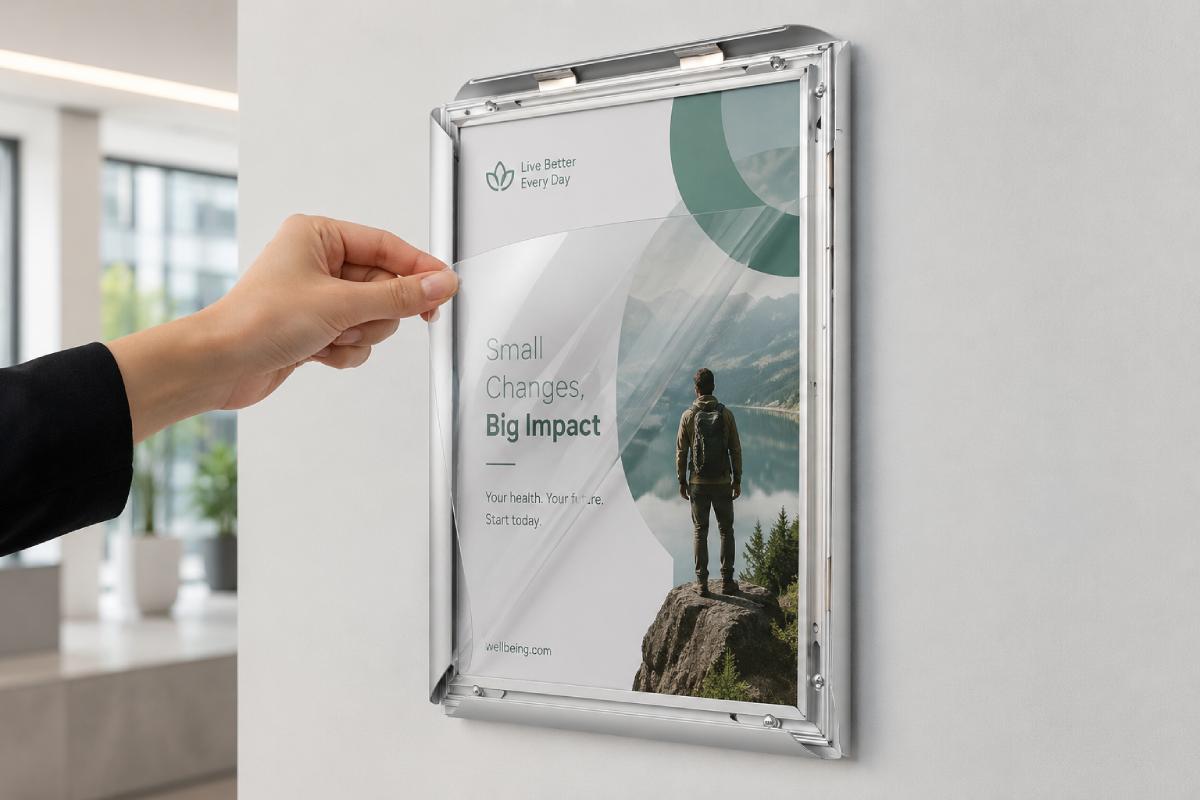
Poster frames, aluminium snap frames, and snap frame boards are the best fit when your printed content changes regularly. They let your team replace office notices, retail posters, clinic information sheets, restaurant menus, price lists, queue instructions, and promotional messages without removing the frame from the wall.
- Aluminium Poster Frames & Snap Frame Boards: Front-opening aluminium poster frames with snap-open edges for fast poster replacement. Suitable for office notice frames, retail poster frames, clinic information boards, restaurant menus, school notices, and elevator lobby displays.
- Clear Acrylic Poster Holders & Wall-Mounted Poster Pockets: Borderless acrylic poster holders with top-loading paper inserts for temporary notices, QR code sheets, service menus, pricing displays, reception instructions, and internal workplace updates.
- Freestanding Menu Stands & A3 Sign Stands: A4 and A3 sign stands for restaurant entrances, café counters, reception areas, waiting zones, queue instructions, and indoor-facing promotional messages.
- Standard Poster Frame Sizes: A4, A3, A2, A1, and A0 poster frame sizes, with custom poster frames available for larger retail posters, menu displays, compliance notices, and commercial information boards.

Acrylic Sandwich Panels & Standoff Signs
Acrylic sandwich frames and standoff acrylic poster frames create a premium floating display for certificates, trade licenses, company rules, menus, project photos, and branded information sheets. The printed insert sits between two clear acrylic sheets and is mounted with stainless steel standoff spacers for a clean glass-like presentation.
- Acrylic Sandwich Poster Frames: Two clear acrylic sheets hold a printed poster, certificate, license, or information sheet between the panels, allowing your team to update the insert without replacing the full wall display.
- Single-Panel Standoff Acrylic Signs: Permanent acrylic panels mounted away from the wall with stainless steel standoff fixings, suitable for company statements, branded instructions, department plaques, and fixed office information signs.
- Trade License Frames, Certificate Display Frames & Acrylic Document Holders: Premium wall-mounted acrylic frames for Abu Dhabi trade licenses, civil defense certificates, chamber documents, company certificates, and executive credentials.
- Drill-Free Glass Partition Mounting: Acrylic poster pockets and lightweight acrylic sign holders can be fixed to smooth glass partitions using high-bond clear adhesives where drilling is not suitable.
Our Projects Gallery
Browse our gallery of completed branding projects across Abu Dhabi. Every photo shown is from a real project delivered by Ninety Nine Advertising LLC, showcasing premium, functional and high-visibility branding solutions in actual business environments.

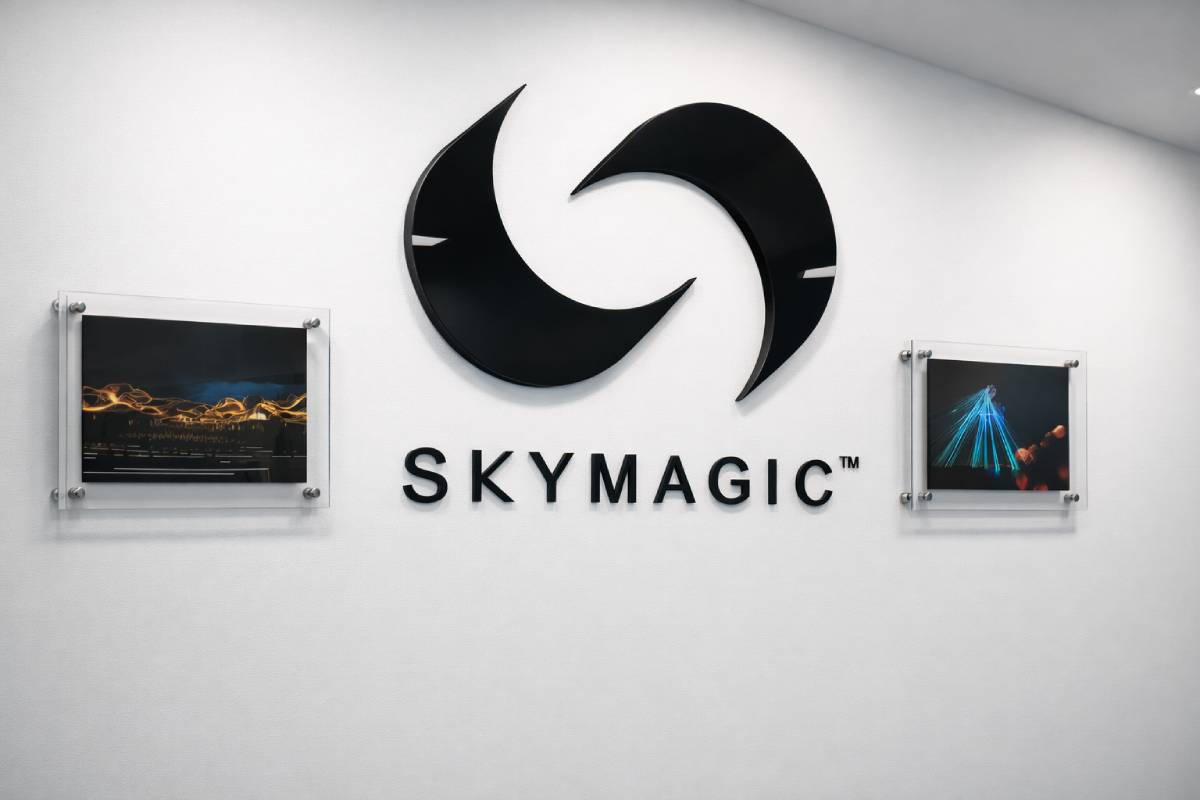
Rigid Sign Printing & Wall-Mounted Frame Installation
Ninety Nine Advertising LLC provides design checking, rigid board printing, poster insert printing, frame supply, wall mounting, and installation coordination for commercial properties across Abu Dhabi. From our Mussafah workshop, we prepare poster frames, snap frames, acrylic sandwich frames, standoff signs, and rigid panels as complete packages ready for facility, fit-out, or property-manager approval.
Rigid Sign Panel Printing & Poster Insert Production
We match our UV printing, latex printing, or laminated digital print production to your exact placement environments, ensuring long-lasting graphic vibrancy across all rigid sign panels.
- Second-Surface Acrylic Panel Printing: For premium standoff plaques, we print your artwork directly on the rear side of clear acrylic, permanently shielding the design from scratches while creating a premium, high-gloss visual depth.
- Outdoor-Rated ACP Panel Printing: Our printed Aluminum Composite Panels (ACP) are outdoor-rated with suitable print curing and laminate selection for UAE heat, UV exposure, and short-to-medium-term exterior use.
- Snap Frame Poster Inserts & Anti-Glare Cover Sheets: We print poster inserts on suitable matte or laminated media and supply protective clear cover sheets where required, helping menus, notices, promotions, and information posters sit flat inside the frame without curling or glare.
Poster Frame Mounting & Wall Installation
Our experienced field installation crew deploys your complete poster frame, acrylic sandwich frame, and rigid panel package using frame fixings, standoff spacers, and wall mounting hardware tailored directly to your wall conditions.
- Drill-Free Glass Partition Fitting: We utilize high-bond double-sided mounting adhesives to cleanly mount clear acrylic poster pockets and sign sleeves onto frameless glass entryways and corridor glass partitions.
- Wall-Mounted Poster Frame Installation: Aluminium poster frames and snap frame boards are installed flat to the wall using screws, hidden mounting points, or high-bond tape on suitable smooth surfaces, depending on frame size, wall type, and update frequency.
- Stainless Steel Standoff Panel Mounting: Our teams utilize heavy-duty 4, 6, or 8 stainless steel standoff fixings based on sign sizing to securely anchor floating trade license and certificate display panels away from drywall, timber paneling, or concrete walls.
Multi-Branch Rollout & Fit-Out Coordination
We organize our logistics and production workflows to align perfectly with corporate fit-out schedules and strict local property manager access rules.
- Turnkey Corporate Fit-Out Logistics: We seamlessly supply full material submittals and product samples to project managers and interior designers to quickly secure your building consultant approvals.
- Rapid Multi-Branch Turnarounds: We coordinate disciplined installation workflows to roll out promotional boards, safety notices, and menu frames across multiple corporate branches simultaneously without causing business delays.
- Property Access & After-Hours Installation Coordination: Our experienced field teams fully understand local property guidelines and security access protocols, managing late-night or weekend installations so your space is branded before morning business hours.
Dedicated Rigid Signs & Poster Frames Across Abu Dhabi Industries
- Corporate Offices & Public Information Displays: Wall-mounted poster frames, snap frame boards, acrylic poster holders, and rigid information signs for staff notices, evacuation maps, lift lobby posters, department updates, HR announcements, and facility communication areas.
- Restaurants, Cafés & Retail Promotion Areas: Aluminium poster frames, menu display stands, clear acrylic poster pockets, and rigid menu boards for daily offers, price lists, QR codes, queue instructions, product posters, and seasonal campaigns.
- Trade License, Certificate & Compliance Displays: Acrylic sandwich frames, standoff acrylic signs, certificate display frames, and trade license frames for Abu Dhabi trade licenses, civil defense certificates, chamber documents, company certificates, and boardroom credentials.
Planning a wall-mounted display layout for your Abu Dhabi workspace? Whether you need a single frame or a full facility package, share your basic project requirements below, and our team will prepare a custom quote or arrange a site survey for you.
- Frame or Panel Type: Tell us if you need aluminium poster frames, snap frame boards, clear acrylic poster holders, acrylic sandwich frames, standoff signs, or flat rigid sign boards.
- Size, Quantity & Orientation: Share the required sizes, such as A4, A3, A2, A1, A0, or custom dimensions, plus quantity and portrait or landscape orientation.
- Print Type: Confirm whether you need replaceable poster inserts, laminated prints, direct-to-board rigid printing, second-surface acrylic printing, or permanent UV-printed graphics.
- Mounting Surface: Let us know whether the display will be installed on drywall, concrete, tiles, glass partitions, timber panels, elevator interiors, or retail walls.
- Update Frequency: Tell us whether the content changes daily, weekly, seasonally, or stays permanent, so we recommend the right frame or rigid panel system.
Complete Your Workspace Fit-Out with Ninety Nine Advertising
- Main Entrance Branding: Complement your floating panels with high-impact custom 3D reception signs and illuminated corporate logos for your primary office entrance lobby.
- Room Identification: Ensure seamless workplace navigation with premium custom office door signs and room name plates Abu Dhabi for meeting spaces and executive suites.
- Dimensional Displays: Explore standalone wall logos and laser-cut lettering using custom acrylic sign boards & plexiglass signage Abu Dhabi for commercial interiors and storefronts.
- Glass Manifestation & Privacy: Secure meeting rooms and glass conference partitions with premium frosted glass stickers and our office window films Services in Abu Dhabi.
This Product is Not What You Want? Explore Our Other Branding Solutions

Interior Door Signs
Custom fixed and changeable office door signs, room name plates and occupied-vacant sliders for workplaces across Abu Dhabi. Ninety Nine Advertising LLC prepares Arabic-English layouts, matches approved colours and finishes, manufactures each sign in our Mussafah facility and installs it on doors, walls or glass partitions using a fixing method suited to the surface and sign weight.

Reception Signs
Make a powerful first impression with premium 3D reception letters, backlit corporate logos and luxury reception signs. We custom-fabricate and install high-impact stainless steel and powder-coated aluminum wall 3D signs for upscale corporate offices, showrooms and luxury clinics across Abu Dhabi.

Frosted Glass Stickers
Custom office frosted glass stickers and privacy film for glass doors, partitions and windows across Abu Dhabi. We design, print, precision-cut and install plain or blank frosted glass film, gradient frosted stickers, frosted privacy bands, standard-cut, logo-cut and reverse-cut frosted stickers, patterned manifestation frosting and full-colour printed frosted glass stickers.

Acrylic Wall Signs
We custom-fabricate, print, and install custom acrylic sign boards and wall-mounted acrylic signs for corporate interiors, offices, and showrooms across Abu Dhabi. From LED acrylic office signs to flat-cut acrylic letters and 3D acrylic cutout letters, our workshop in Mussafah engineers permanent acrylic wall signage for office interiors.
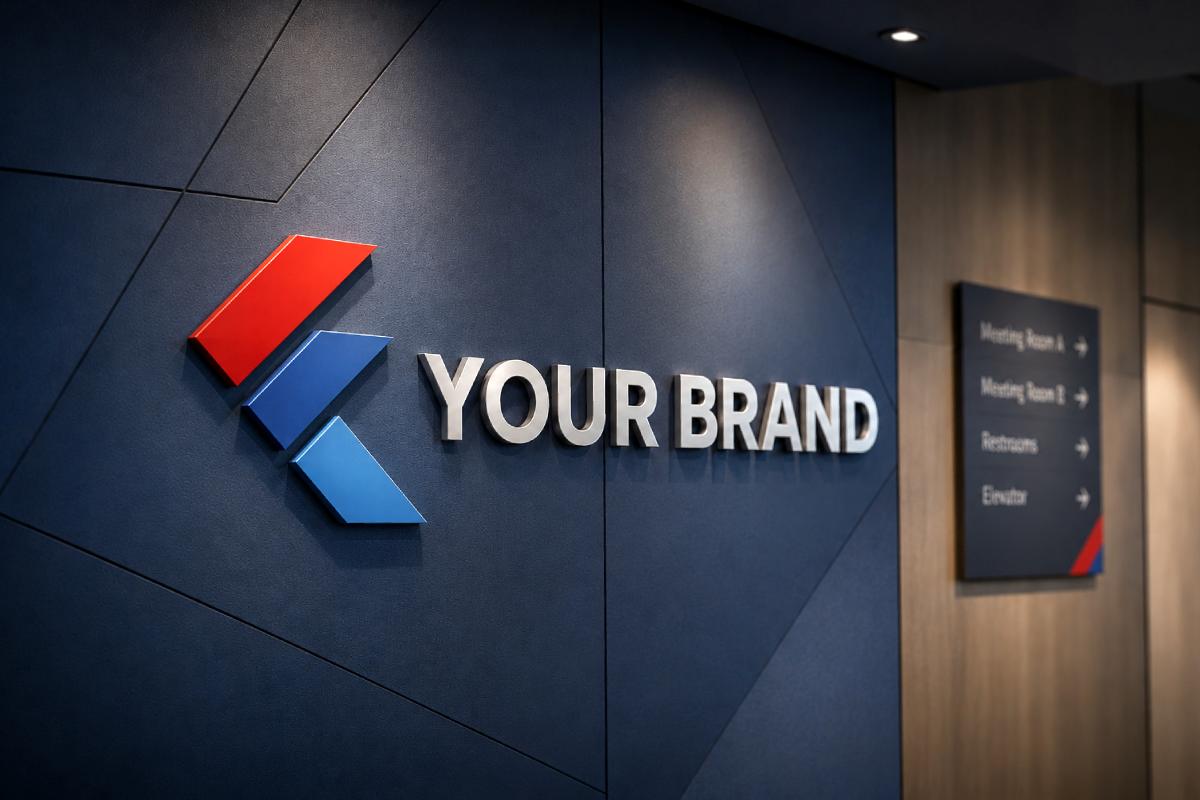
If acrylic signs are not the exact fit for your office, shop, or interior branding requirement, browse our comprehensive interior branding collections. We design and manufacture custom signage solutions for reception logo signs, office wall branding, acrylic door signs, wall displays, and interior signage systems across Abu Dhabi.
Frequently Asked Questions
What is the difference between a snap frame and an acrylic sandwich panel?
An aluminum snap frame opens from the front for quick, tool-free paper graphic updates. An acrylic sandwich panel holds your printed sheet securely between two layers of clear plastic using metal wall spacers to achieve a premium, glass-like corporate presentation.
What is the best wall display for menus or posters that change often?
Aluminum snap frames are the best choice for frequently changed prints. Because the four metal frame edges flip open forward, you can swap out retail promotions, daily restaurant menus, or office notices in seconds without removing the frame from your wall.
When should I choose flat rigid sign boards over a frame?
Flat rigid panels (made from heavy-duty PVC foam or aluminum composite) are ideal for permanent wall information that does not need regular replacement. They work best for fixed company branding boards, customer safety instructions, retail price lists, and directional signs.
Can these commercial signs be installed on any wall type in Abu Dhabi?
Yes, our professional installation team securely mounts display frames and rigid signs across all commercial wall surfaces. We evaluate your specific space—whether it is gypsum drywall, concrete blocks, wooden panels, glass, or tiled surfaces—to select the perfect mounting bolts, screws, or heavy-duty adhesives.