Interior & Wayfinding Signage in Abu Dhabi

Strategic signage networks that guide movement through complex environments using hierarchy, consistency, and intuitive visual language for spatial orientation.

We are rated 4.8 out 5 on Google

ADDED Licensed Since 2014 | ISO 9001:2015 | ISO 14001 | ISO 45001:2018

Updated On

January 12, 2026

Interior & Wayfinding Signage in Abu Dhabi
Strategic signage networks that guide movement through complex environments using hierarchy, consistency, and intuitive visual language for spatial orientation.

Service Overview

Interior and wayfinding signage in Abu Dhabi refers to navigation and identification systems installed within buildings to support visitor orientation, spatial clarity, and functional movement. This category applies to internal environments including commercial properties, institutional facilities, and multi-tenant buildings and is distinct from exterior signage, civil defence systems, or emergency egress signage.

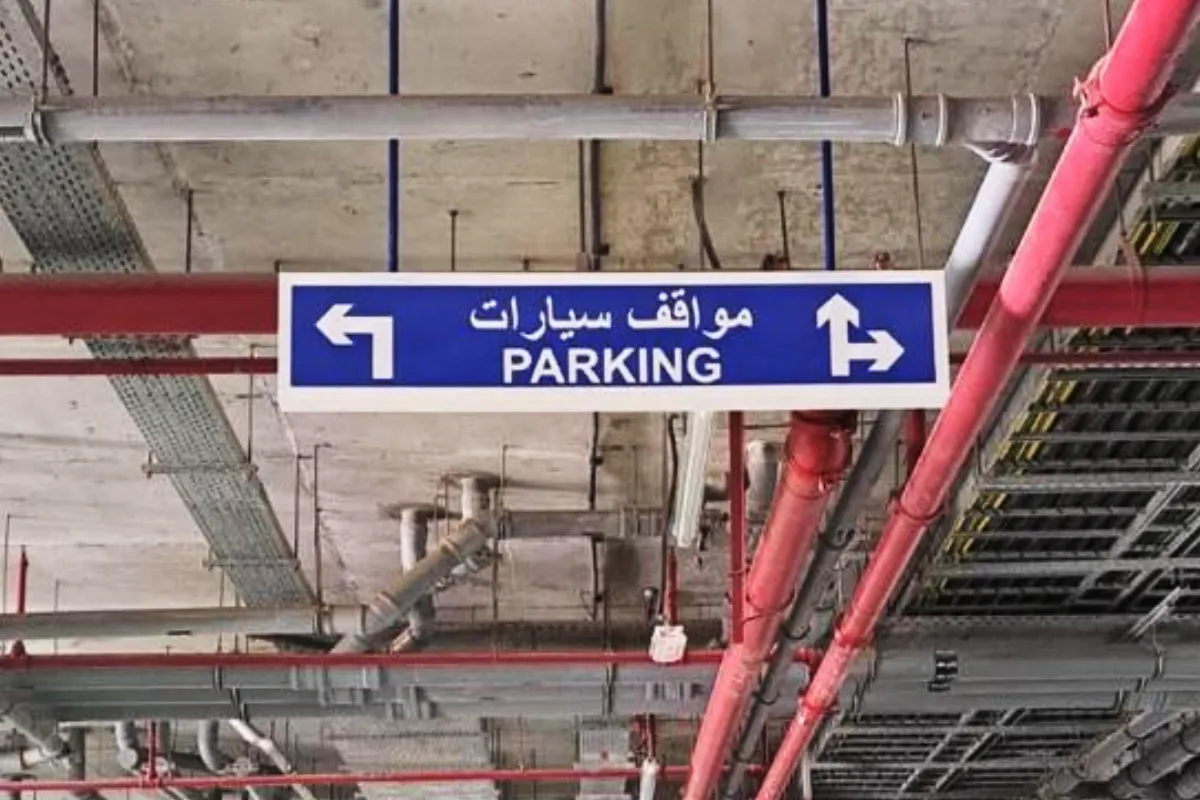
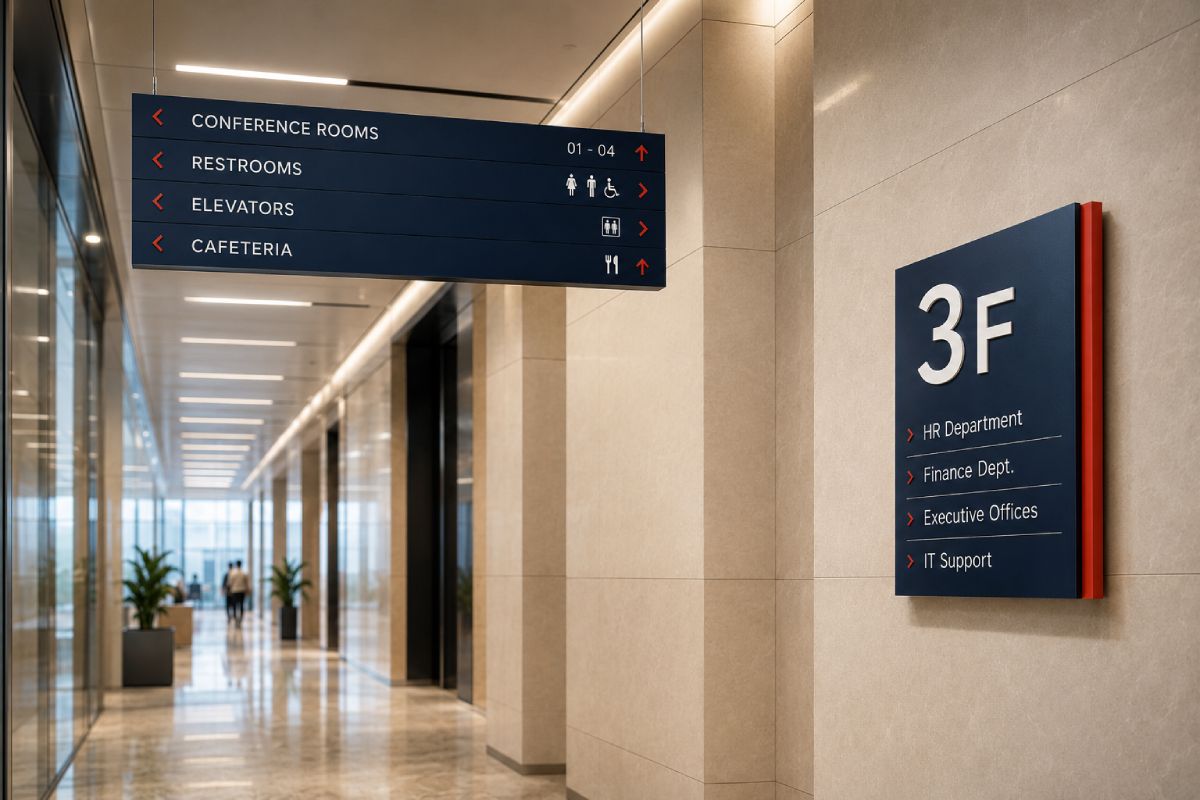
Interior wayfinding systems are designed to guide users through built environments rather than serve decorative or life-safety functions. Applications include directional signage, building directories, room and door identification, suspended wayfinding signs, and interior branding elements aligned to building layout, circulation patterns, and user experience requirements. Projects prioritize clarity, consistency, and long-term usability across interior spaces over ad-hoc or purely aesthetic signage treatments.

Engineering & Compliance

Regulatory Compliance

Interior and wayfinding signage in Abu Dhabi operates within applicable building codes, safety standards, and accessibility compliance frameworks. Projects are planned in alignment with relevant signage regulations and approval requirements prior to fabrication or installation, supporting safe visitor movement and reducing regulatory, operational, or financial risk.

Engineered Solutions Before Execution

Wayfinding solutions are engineered and validated before execution. Proposed systems are reviewed for placement logic, visibility, circulation alignment, and building use to confirm effective implementation before fabrication or installation. This pre-execution validation prevents ineffective wayfinding outcomes, reduces rework, and avoids post-installation adjustments.

Strategic signage networks that guide movement through complex environments using hierarchy, consistency, and intuitive visual language for spatial orientation.

Scope of Service

What We Provide

A comprehensive list of deliverables covered by this service. Some deliverables are included by default, while others are available as add-ons for an additional fee.

Spatial Mapping & Audit - Add-On

We handle space-aware layouts, message hierarchy, and artwork files, delivered as an approved, complete wayfinding pack

Site Survey & Planning - Included

We manage on-site survey, mounting constraints, and location mapping, translating conditions into a clear execution plan

Production & Installation - Included

We deliver fabricated signage systems and wayfinding elements, including on-site installation management and final handover readiness.

Access Coordination - Add-On

We coordinate building access, security requirements, and scheduling with facility teams, minimizing disruption during working hours

Client Responsibility

Clearly define the scope of our services, outlining where and how we can assist to ensure expectations are set for an optimal experience with us.

Permit Renewals & Compliance

Clients are responsible for all permit renewals, regulatory updates, and removal of permitted assets - Initial permit does not include ongoing compliance support service

Explore our Advertising Permit handling service

File Retention

Project files are stored for 90 days after completion, then permanently deleted. No long-term file storage provided for any project or production files or copies of permits

File Retention

Project files are stored for 90 days after completion, then permanently deleted. No long-term file storage provided for any project or production files or copies of permits

Design Ownership

All designs and artwork remain company property unless separate design licensing is purchased. Clients receive usage rights for approved application only.

Projects We've Delivered

Our interior signage work includes wayfinding systems, directional elements, and ADA-compliant installations—fabricated from brushed aluminum, acrylic substrates, and precision-cut vinyl across corporate, retail, and institutional environments.

Backlit stainless steel reception signage for engineering firm featuring halo-effect dimensional letterforms with acrylic diffusion layer and substrate installation.

ASAS International Engineering

Interior Signage

Solutions Applied

Backlit stainless steel reception signage for engineering firm featuring halo-effect dimensional letterforms with acrylic diffusion layer and substrate installation.

Khalida City, Abu Dhabi

·

Engineering

·

Mar 2025

·

Backlit stainless steel reception signage for Korean restaurant featuring halo-effect dimensional letterforms with acrylic diffusion layer.

Madang Korean Restaurant

Interior Signage

Solutions Applied

Backlit stainless steel reception signage for Korean restaurant featuring halo-effect dimensional letterforms with acrylic diffusion layer.

Airport Rd, Abu Dhabi

·

Food & Beverage

·

May 2025

·

Frontlit aluminum channel letter reception signage for delivery service featuring dimensional letterforms with acrylic face illumination.

Instashop

Interior Signage

Solutions Applied

Frontlit aluminum channel letter reception signage for delivery service featuring dimensional letterforms with acrylic face illumination.

JLT, Dubai

·

Retail

·

Oct 2025

·

LED backlit lightboxes for car care center featuring SEG fabric fascias in anodized aluminum profiles with uniform illumination across wall-mounted units.

Mubarak & Brothers Investments

Interior Signage

Solutions Applied

LED backlit lightboxes for car care center featuring SEG fabric fascias in anodized aluminum profiles with uniform illumination across wall-mounted units.

Khalifa City, Abu Dhabi

·

Service

·

Feb 2025

·

ASAS International acrylic identification signs with engraved lettering installed across Abu Dhabi offices for professional wayfinding clarity.

ASAS International Engineering

Interior Signage

Solutions Applied

ASAS International acrylic identification signs with engraved lettering installed across Abu Dhabi offices for professional wayfinding clarity.

Bani Yas, Abu Dhabi

·

Engineering

·

Dec 2025

·

Lobby directory wayfinding system featuring three-dimensional raised embossed lettering on acrylic panel with premium metal construction.

Stantec International

Interior Signage

Solutions Applied

Lobby directory wayfinding system featuring three-dimensional raised embossed lettering on acrylic panel with premium metal construction.

Al Rawdah, Abu Dhabi

·

Corporate

·

Feb 2025

·

Our Process

From initial consultation to final installation, our structured process ensures quality execution, regulatory compliance, and on-time delivery across all Emirates.

Navigation Analysis

Map user journeys, identify decision points, and assess existing spatial cues. Define wayfinding hierarchy based on destination types.

System Design

Develop consistent visual language for directories, directional signage, and identification elements. Coordinate placement with architectural sightlines

Component Fabrication

Manufacture signage elements with specified materials and finishes. Ensure modularity for future content updates and additions.

Coordinated Installation

Install interior signage at planned locations. Verify mounting heights, lighting conditions, and clear visibility from approach paths.

User Validation

Test navigation effectiveness from multiple entry points. Confirm wayfinding systems support independent spatial orientation throughout the facility.

Frequently Asked Questions

Common queries about services, permit timelines, and installation in Abu Dhabi.

When does a facility need a complete wayfinding system versus individual directional signs?

Facilities with multiple decision points—more than three distinct zones, multiple floors, or frequent tenant changes—benefit from coordinated interior wayfinding where reception signage, overhead directionals, and door identification follow consistent hierarchy and visual language. Individual signs work for single-floor environments with straightforward layouts where visitors require minimal guidance beyond initial orientation. Multi-tenant commercial properties in Abu Dhabi typically require modular directory systems enabling independent content updates without affecting the broader navigation system.

How do we balance permanent architectural signage with content that changes frequently?

Corporate wayfinding separates structural elements from information layers—dimensional reception branding and mounting infrastructure remain permanent while directory signage and wall displays use changeable insert systems for content updates. This approach prevents wall damage from repeated installations while maintaining brand consistency. Multi-tenant buildings particularly benefit from modular directory frameworks where individual tenant nameplates update independently without replacing entire panel arrays. Door identification signage with concealed mounting enables nameplate changes without visible fastener holes accumulating over organizational restructures.

How do wayfinding signs remain visible without conflicting with interior design aesthetics?

Effective interior signage uses mounting techniques and illumination strategies that increase visibility while respecting architectural language. Suspended ceiling-mounted signs provide overhead visibility without wall clutter, while standoff mounting creates dimensional separation making directional signage visible without dominating surfaces. LED backlighting in retail environments ensures readability throughout operating hours without altering interior lighting schemes. For corporate lobbies, dimensional letterforms integrate as architectural elements rather than applied graphics, establishing hierarchy through depth while complementing material palettes. The approach prioritizes functional visitor navigation through placement and lighting rather than oversized signage solutions competing with interior design.