Outdoor Signage in Abu Dhabi

Outdoor signage for shops, buildings, and commercial sites, including shopfront signs, blade signs, pylon signs, rooftop signs, and facade lettering.

Updated On

March 21, 2026

Written by:

Ninety Nine Advertising Technical Team

Outdoor Signage in Abu Dhabi

Why Outdoor Signs Matter for Your Business in Abu Dhabi

Outdoor signs for shops, buildings, and commercial sites across Abu Dhabi. We supply shopfront signboards, blade signs, pylon signs, building facade lettering, rooftop signs, and illuminated lightboxes.

Outdoor signage in Abu Dhabi is the category of commercial signs placed externally on shops, buildings, site entrances, and shared property frontages — governed under DMT Version 5 and submitted through the TAMM portal before any installation begins. It applies across shopfront tenants, landlords managing building facades, property teams shaping how a development is recognised from the road, and retail chains requiring a consistent sign format across multiple Abu Dhabi locations.

The four most common failure modes: face delamination from adhesive systems not rated for 48°C thermal cycling; LED driver failure from underspecified components; frame corrosion on coastal-zone aluminium not correctly primed before powder-coat; and water ingress from poor edge sealing at installation. We address all four at specification stage — before the sign leaves the workshop.

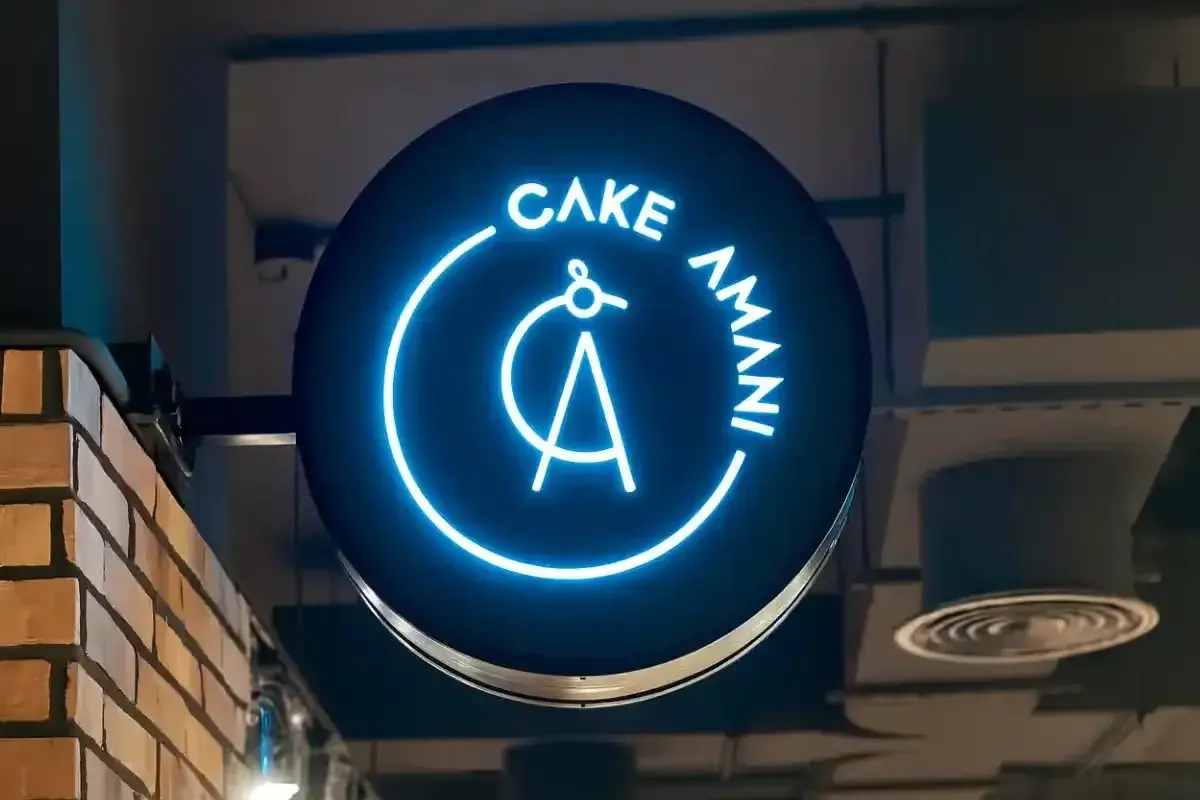
We have delivered this scope for Cake Amani on Airport Road, Life Pharmacy across 20+ Abu Dhabi locations, and ADASI across a 29-set facade rollout. We conduct a site assessment before any specification is committed — contact us to arrange a visit

Wide view of outdoor building facade signage

Strategic Outdoor Visibility

Outdoor signage category is broader than a single signboard. It includes frontage signs, façade-mounted identification, freestanding site-entry structures, roadside pylons, and larger building signs that each respond to different scales of access, traffic pattern, and property type.

In Abu Dhabi, those decisions are shaped by sun, heat, glare, dust, and high-traffic locations across areas such as Musaffah, Yas Island, Saadiyat, and established city retail strips, all of which affect how a sign looks, reads, and lasts over time. They are also shaped by a regulated approval framework that governs where a sign can sit, how large it can be, and how it can be illuminated, so those parameters need to be considered from the start rather than after the design is finalised. When that is handled properly, you get clearer identification, stronger public-facing presence, and fewer approval or coordination delays whether the sign belongs to one shopfront, an entire building facade, or a multi-tenant development.

Building facade Signage front view of Round Blade sign installed by Ninety Nine Advertising LLC3D illuminated Signage for shopfront of Cake Amani at airport road Abu Dhabiinstallation progress of building facade sign by Al Reem Island Abu DhabiBuilding Facade Signage by Ninety Nine Advertising LLC

Functions of Outdoor Signs

Building Facade & Rooftop Signs (Building-Level Identification)

Used where a property needs to be recognised clearly from distance, these signs give office buildings, hotels, industrial facilities, and major retail sites a fixed point of identification on the skyline. Engineered with structural frames and IP67-rated LED illumination where required, they support long-range legibility while maintaining a controlled brand presence across larger facades and rooflines.

Pylon & Monument Signs (Arrival & Roadside Presence)

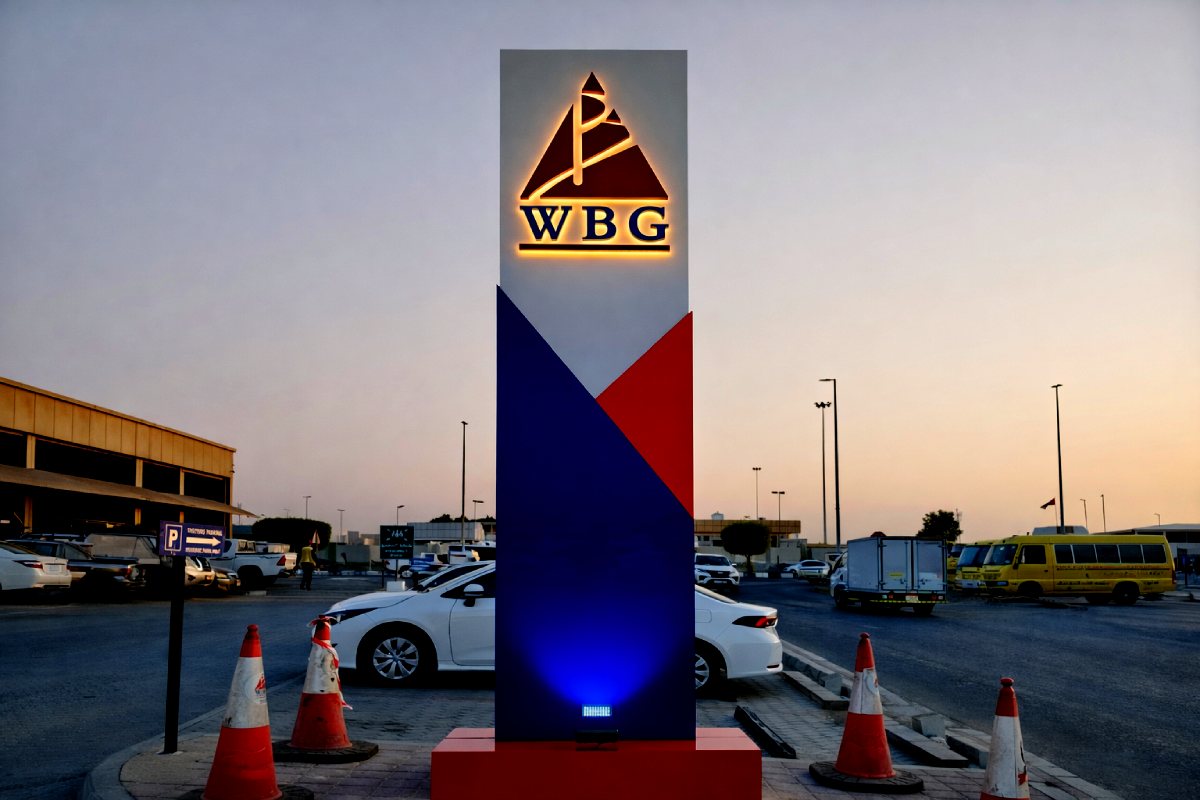
Placed at entrances, roadside edges, and site approaches, pylon and monument signs help visitors, tenants, and passing traffic identify a property before they reach the building line. For commercial compounds, showrooms, industrial facilities, and mixed-use developments, they create early recognition at ground level and support clearer arrival across higher-traffic access routes.

Shopfront Sign Boards & Blade Signs (Unit-Level Visibility)

At unit level, shopfront signs and projecting blade signs identify individual tenants clearly within busy streets, mall frontages, and shared retail clusters. Using non-corrosive metals, UV-stable acrylics, and high-contrast bilingual layouts, they hold colour and readability under the Gulf sun while improving visibility from both direct and side approaches.

Lightboxes & Large Displays (Illuminated Signage Systems)

Where even illumination and cleaner graphic presentation matter, outdoor lightboxes and larger display systems provide a controlled format for branding, tenant identification, and promotional messaging. Our weather-sealed flex-face and outdoor SEG lightboxes are built for dust, humidity, and consistent night-time clarity across building fronts, forecourts, and external retail environments.

Our Most Popular Outdoor Sign Options

Our outdoor signage solutions are designed to improve visibility, strengthen site presence, and support long-term performance across commercial properties in Abu Dhabi. Explore monoliths, pylons, facade signs, and elevated logo systems, with pricing, turnaround time, and warranty details available on each product page.

Exterior Store Signboards

Exterior Store Signboards

Use fascia signboards to identify shops clearly and improve recognition from the street or mall corridor.
Explore Store Signboards
Building Facade Signage

Building Facade Signage

Use high-level facade signs when buildings need a stronger brand presence across main external elevations.
Explore Facade Signage
Exterior Blade Signs

Exterior Blade Signs

Project your brand toward passing footfall with outdoor blade signs for shops, clinics, and commercial units.
Explore Blade Signs
Outdoor Pylon Signs & Monoliths

Outdoor Pylon Signs & Monoliths

Guide traffic from a distance with freestanding outdoor signs designed for roadsides, compounds, and major entries.
Explore Pylon Signs
Rooftop & Skyline Signage

Rooftop & Skyline Signage

Take your brand higher with rooftop signs built for large buildings, long-range visibility, and skyline recognition.
Explore Rooftop Signage

How We Turn Your Idea into a Installed Sign, The 5 Clear Steps in Abu Dhabi

Outdoor signage delivery is the staged process of turning a site requirement into a compliant, fabricated, and properly installed exterior sign. In Abu Dhabi, that process needs to balance visibility, site conditions, structural practicality, and approval readiness from the start so the sign works both on the property and within the required submission route.

Step 1

Site and Signage Assessment

The process starts with reviewing the property, frontage condition, viewing angles, access constraints, and the sign positions that suit the building, the tenant, and the wider site context.

Step 2

Design and Technical Proposal

The sign concept is then developed around the correct scale, reading distance, material system, lighting method, and fixing approach for the specific location and type of use.

Step 3

Approval and Permit Submission

Artwork, dimensions, and technical details are prepared for the relevant approval route, including TAMM-based permit handling and content submission where required.

Step 4

Fabrication and Pre-Installation

Once approved, the sign is manufactured with the specified structure, finishes, electrical components, and mounting details needed for long-term outdoor performance.

Step 5

Installation and Final Handover

The sign is installed with the required structural, electrical, and finishing coordination so the completed system is ready for identification, daily use, and practical maintenance access.

Blue and white Al Waqaed Laundry pylon sign showing Laundry, and Open 24 hrs outdoorsStore Shopfront Signboard in Abu Dhabi by Ninety Nine Adveritsingfront view of Round Blade sign installed by Ninety Nine Advertising LLC

Exterior Signage Materials for Heat, Dust & Coastal Exposure

In Abu Dhabi, outdoor signage materials have to cope with peak summer temperatures in the mid-to-high 40s°C, UV intensity that reaches Extreme classification for the majority of the year, blowing dust, and, in coastal locations, added salt-related corrosion pressure. That is why material selection starts with performance rather than appearance alone.

In practice, exterior signs are usually built around aluminium, acrylic, protected films, outdoor-rated electrical components, and fixing systems that can stay stable under local exposure instead of softening, peeling, or fading early. For non-illuminated acrylic elements, cast acrylic outperforms standard extruded acrylic significantly — extruded acrylic yellows visibly under sustained UV exposure, reducing legibility and appearance over time.

On illuminated signs, the sign face and the light source are separate specification decisions that work together. For the face, PLEXIGLAS® LED — a PMMA sheet engineered for LED edge, side, and back-lighting — is stocked and used as standard in fabrication. The opal white grade diffuses the LED source evenly across the full face, eliminating hot spots, and carries a manufacturer guarantee of no visible yellowing for 30 years. For the light source, high-grade LED chips — Samsung and equivalent tier manufacturers — hold colour consistency and lumen output more reliably under Abu Dhabi's sustained ambient temperatures than standard commercial-grade alternatives.

Material choice therefore affects more than the day-one finish. It directly shapes colour retention, delamination risk, corrosion resistance, electrical reliability, and how much maintenance the sign will demand over its service life.

installation progress of building facade sign by Al Reem Island Abu Dhabibuilding facade 3d sign installed in Yas Island for PeaksyWide view of outdoor building facade signage

Getting Permits and Staying Compliant in Abu Dhabi

In Abu Dhabi, outdoor signage compliance is the planning discipline that keeps your sign acceptable in position, form, and installation before it ever reaches site. The framework has two parts: the DMT Commercial Signage Regulations Version 5 set the rules for sign type, size, position, and core specification limits, while TAMM is the digital route used to issue, add, renew, cancel, and manage signboard permits.

That means you need to match the sign type to the property, the frontage zone, and the approved mounting area from the start. Ground-floor signs, supplementary signs, colonnade conditions, industrial frontages, and stand-alone formats are not treated the same way, and the rules also control whether your sign covers architectural features, how cables and lighting are concealed, and when external illumination is allowed. In practice, this is where a supplier’s compliance service matters: surveying the frontage, aligning the sign to the permitted façade zone, preparing the artwork and technical details, and handling the TAMM submission route before fabrication starts, including coordination across multi-tenant facades and shared commercial properties.

If that is handled late, the cost usually shows up as redesign, permit rejection, installation delay, or avoidable fines.

Handled properly, it gives you a sign that is easier to approve, cleaner to install, and better aligned with the building, site, or development it represents.

storefront signage with red perforated aluminum background Night view of Aseer Time

Real Projects We've Delivered

Outdoor signage projects are best understood by looking at the main application routes that sit under the category. The related service areas below help separate frontage-led signage from landmark-scale identification, so businesses can move from broad category research into the route that best fits their site, visibility distance, and approval conditions.

Outdoor signage for shops, buildings, and commercial sites, including shopfront signs, blade signs, pylon signs, rooftop signs, and facade lettering.

Quick Answers to Common Questions About Outdoor Signage in Abu Dhabi

Common queries about services, permit timelines, and installation in Abu Dhabi.

What is included in outdoor signage services?

Site assessment, sign type recommendation, design and technical proposal, permit preparation and TAMM submission under DMT Version 5, fabrication, and installation. In Abu Dhabi, compliance is part of every exterior sign project — not a parallel exercise. Sign placement, dimensions, illumination, and content are all governed under DMT Version 5. We manage design, compliance review, and TAMM submission as standard so the sign reaches installation with the permit file closed.

Which sign type is right for my property?

The correct sign type depends on viewing distance, building geometry, and the sign's role — identification, wayfinding, or brand presence at scale. Street-level retail needs a fascia or blade sign. Compounds and industrial sites with vehicular approach roads need a pylon. Multi-storey buildings and towers need facade or rooftop signs for driver-distance visibility. We assess the sightline requirement at project start and recommend the sign type that solves the actual visibility problem at each scale.

What materials work better in Abu Dhabi weather?

Abu Dhabi outdoor signs face four simultaneous stress conditions: 48°C peak temperatures, UV Extreme classification, dust abrasion, and coastal salt deposition. Frames and housings are powder-coated aluminium — rust-resistant and UV-stable over a five-plus year outdoor cycle. Sign faces are UV-stable acrylic; illuminated faces use PLEXIGLAS LED-grade acrylic with a 30-year no-yellowing guarantee. LED modules and drivers are IP67-rated throughout — fully sealed against dust and water ingress.

How do you stop signs from fading in the heat?

Fading is a UV and heat problem — the answer is material specification at design stage, not a post-fabrication coating. Sign faces are UV-stable acrylic; illuminated faces use PLEXIGLAS LED-grade acrylic with a 30-year no-yellowing guarantee under direct exterior UV. Frames are powder-coated aluminium; coastal-zone frames receive a corrosion-resistant primer before powder-coat. Printed inserts on non-vertical surfaces are overlami­nated. LED modules are sealed to IP67 throughout.

What causes signs to fail prematurely — and how is that avoided?

Four causes account for most premature sign failures in Abu Dhabi: face or film delamination from adhesive systems not rated for local thermal cycling; LED driver failure from underspec or poorly ventilated components; frame corrosion on coastal-zone aluminium not correctly primed before powder-coat; and water ingress behind mounted letters from poor edge sealing at installation. We address all four at specification and installation stage — before the sign leaves the workshop.

How much does outdoor signage cost?

Fabrication runs from AED 550 to AED 1,850 per square metre, determined by material specification, structure type, and electrical component grade. Non-illuminated lettering and standard lightboxes sit at the lower end; built-up illuminated 3D letters with PLEXIGLAS LED-grade faces and IP67-rated systems sit at the upper end. Site costs — access, structural fixing, and electrical connection — are additional and vary by sign type and location. We produce itemised proposals on confirmed project parameters.

What is the difference between a pylon sign and a monument sign?

A pylon is a tall structure — typically 4 metres and above — designed to enter a driver's sightline 80 metres or more from the turn, clearing surrounding walls and landscaping. We engineer pylon structures in steel with powder-coated aluminium cladding to Abu Dhabi wind load requirements. A monument sign is lower — typically 0.8 to 1.5 metres — built for entrance identification where the visitor is already on site. If drivers need to read a sign from distance, a monument will not solve the problem.

Do outdoor signs in Abu Dhabi need permit approval?

Yes. Commercial signage is governed under DMT Version 5, covering placement, dimensions, illumination format, and content. Applications are submitted through the TAMM portal, tied to a specific business, address, and sign configuration. A standard shopfront sign takes five to seven working days for approval; pylon, rooftop, and high-level facade signs requiring structural review take three to four weeks. We manage permit preparation, compliance review, and TAMM submission on every project.

Do I need a structural engineer's report for my outdoor sign?

Not for every sign — but rooftop signs, large high-level facade letters, and tall pylon structures typically require one from two independent sources. At the municipal level, signs at height or with significant wind load profiles require a structural stability certificate. At the building level, many Abu Dhabi properties require a structural method statement before approving any drilled fixing, regardless of sign scale. Where required, we coordinate the technical documentation as part of project scope.

Can I install a sign on a leased commercial unit?

Yes. Leased units are among the most common sign projects we handle. The practical difference is a landlord consent layer before the permit process — confirming signage is permitted under the lease and obtaining written approval for the sign type, position, and fixing method. Abu Dhabi managed properties typically apply defined conditions: approved facade zones, maximum dimensions, and reinstatement requirements. Once consent is confirmed, TAMM permit submission proceeds identically to any commercial sign.