Vehicle Graphics

Commercial vehicle graphics in Abu Dhabi include full wraps, partial wraps, reflective markings, fleet decals, and cut vinyl lettering for cars, vans, trucks, food trucks, and multi-vehicle fleets. Each vehicle requires a separate Unified Economic Permit submitted through TAMM, and long-term durability depends on matching the vinyl specification to Abu Dhabi’s heat and UV exposure.
Vehicle Graphics

Updated On

April 2, 2026

Written by:

Ninety Nine Advertising Technical Team

Angled View of Bus Full Branding in Abu Dhabi

What Commercial Vehicle Graphics Cover in Abu Dhabi

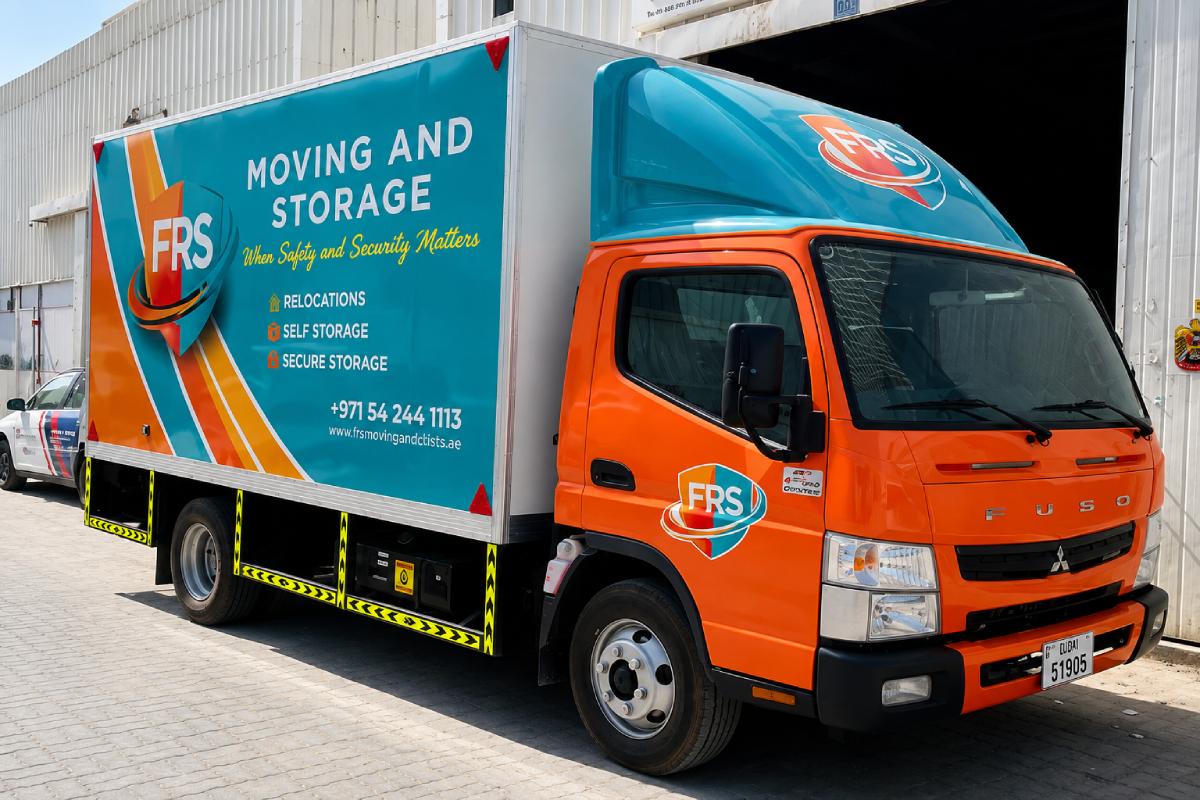
Commercial vehicle graphics in Abu Dhabi cover full wraps, partial wraps, cut vinyl lettering, fleet decals, reflective markings, food truck branding, truck branding and box van graphics applied to business-use vehicles operating across commercial environments.

The category spans delivery and logistics fleets, service and support vehicles, and mobile business units working across Musaffah's industrial corridors, Yas Island's hospitality and retail zones, Saadiyat's business and cultural district, city retail strips, and compound-format industrial sites.

Each type serves a distinct identification, visibility, or compliance function depending on vehicle type, route pattern, and operating environment.

Angled View of Bus Full Branding in Abu Dhabi

Who Commercial Vehicle Graphics Is For in Abu Dhabi

Delivery and logistics fleet operators in Abu Dhabi use vehicle branding as a consistent identification system across multiple units, making each vehicle recognisable at delivery points and on route before the driver steps out. Service and support vehicle operators — covering trades, facilities, and technical services — use graphics to signal that the right company has arrived at a client site.

Food truck operators depend on vehicle branding as the primary exterior communication layer, carrying menu presence, business identity, and street-level visibility in a single applied system. Fleet managers overseeing mixed vehicle types — cars, vans, pickups, and rigid trucks under one brand — use graphics to standardise visual identity across body geometries that each require different specification decisions.

Explore Our Vehicle Branding Solutions

Vehicle branding only works commercially when design, compliance, production, and installation are planned as one process rather than handled in isolation. From vehicle review to final handover, we schedule the work around your operating hours, adapt artwork to each vehicle model, and keep branding consistent across cars, vans, trucks, bikes, and multi-vehicle fleets.

Full Coverage Vehicle Graphics

Full Coverage Vehicle Graphics

Transform delivery vans and corporate fleets with 100% surface coverage wraps. Specified exclusively in 3M and Avery Dennison cast vinyl. Turnkey TAMM permit clearance and a strict 12-month installation warranty included.
Explore Full Wraps
Partial Vehicle Graphics

Partial Vehicle Graphics

High-durability printable cast vinyl for doors, sides, and rear panels. Built to withstand Abu Dhabi's climate with a 12-month warranty, featuring 3M materials and full DED permit management included per vehicle.
Explore Partial Wraps
Cut Vinyl Vehicle Graphics

Cut Vinyl Vehicle Graphics

Exterior-grade cast vinyl lettering for commercial fleets in Abu Dhabi. We provide Avery and 3M cut decals for logos and unit IDs, with full TAMM and DED permit compliance managed per vehicle.
Explore Fleet Decals
Reflective Vehicle Graphics

Reflective Vehicle Graphics

Reflective vehicle markings in Abu Dhabi for emergency units, service fleets, and logistics vehicles — 3M Scotchlite IJ680 printable and Series 680 cut reflective references.
Explore Reflective Graphics
Food Truck Graphics & Signs

Food Truck Graphics & Signs

Full exterior food truck wraps and sign integration in Abu Dhabi. Engineered using UV-resistant 3M and Avery cast vinyl, with DED permit approval managed per vehicle.
Explore Food Truck Branding
Truck Graphics in Abu Dhabi

Truck Graphics in Abu Dhabi

Commercial box truck graphics in Abu Dhabi. Engineered with Avery polymeric and 3M cast vinyl systems for extreme UV resistance. Full TAMM DED permit management and 12-month warranty included.
Explore Truck Branding

Commercial Vehicle Branding Projects Across Abu Dhabi

Explore recent projects delivered across Abu Dhabi for retail, commercial, corporate, hospitality, healthcare, and public-facing environments. This section highlights real applications of our work across different project types, showing how design, production, and installation come together in live business settings. Each example reflects practical execution, local relevance, and category-specific delivery experience.

vehicle vinyl cut lettering in Abu Dhabifull vehicle branding for Service market in Abu DhabiRear view of branding van by Ninety Nine Advertising Abu Dhabi

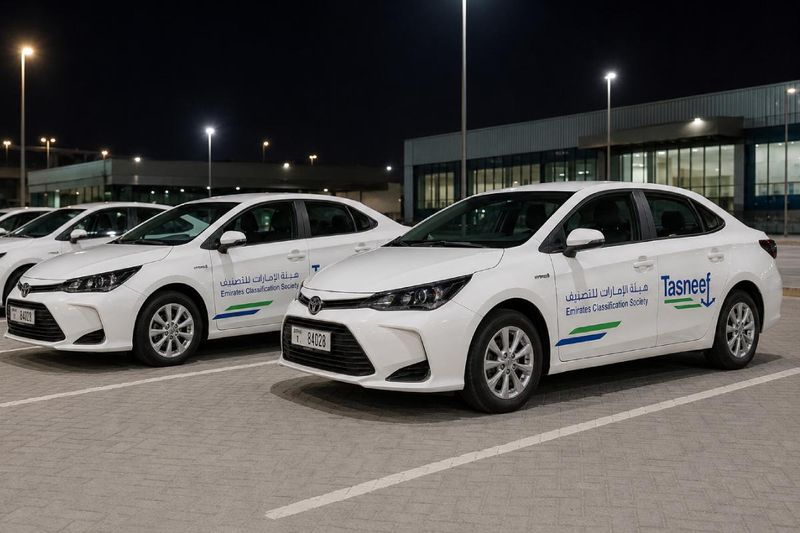
Emirates Global Motors — Abu Dhabi

Scope: Fleet branding across a mixed vehicle type fleet.

Outcome: Unified brand identity delivered across different vehicle categories, bringing visual consistency to a fleet operating across multiple vehicle body types under a single brand. Check Project Details.

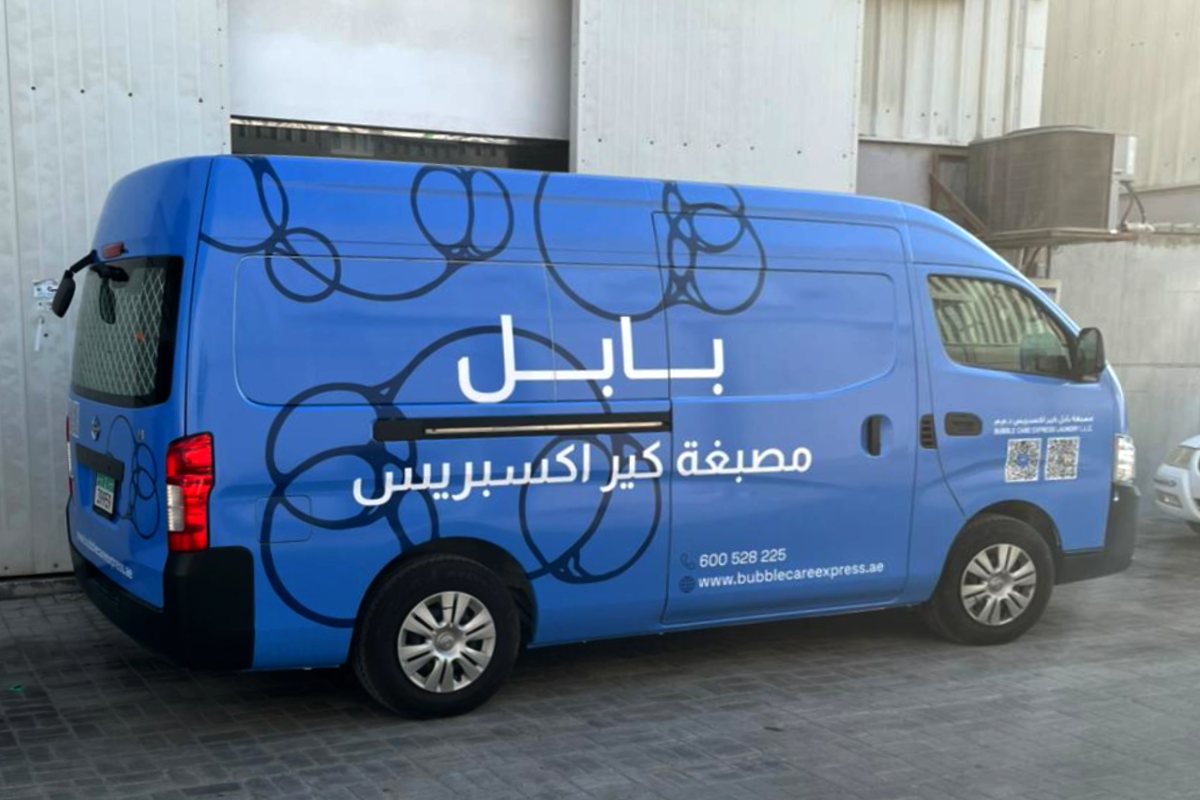
Bubbles Care Express — Abu Dhabi

Scope: Fleet van branding across operational vehicles.

Outcome: Branding completed with near-zero operational downtime, keeping client vehicles on the road and revenue-generating throughout the installation schedule. Check Project Details.

Al Rafidain Laundry — Abu Dhabi

Scope: Full fleet rebranding with new livery design across service vans.

Outcome: Modernised brand identity applied across the operating fleet, with a redesigned livery confirmed as legible and visually clear at road speed across Abu Dhabi routes. Check Project Details.

vehicle branding company in Abu Dhabi (2) (1)fleet vinyl cut lettering for National Eagle ABu Dhabi MSFfull vehicle branding Abu Dhabi Ninety Nine AdvertisingFull vehicle branding in Abu Dhabipartial vehicle branding for shiny Window Cleaning At Sadddyat island Abu Dhabifront view of truck branding by Ninety Nine Abu dhabi

Vehicle Branding Types in Abu Dhabi and What Each One Does

Full Vehicle Wraps for Commercial Fleets in Abu Dhabi

For full wraps across vans, pickups, trucks, and food trucks, we specify printable cast vinyl paired with a cast overlaminate. Common UAE-market systems include 3M Print Wrap Film IJ280, 3M IJ180mC, Avery Dennison MPI 1105 Easy Apply RS, and ORAJET 3951RA+PS. These cast systems are designed for complex vehicle surfaces — corrugations, recesses, and body curves — where dimensional stability and conformability determine service life under Abu Dhabi's sustained heat and UV load. High-performance calendered film remains suitable for flatter panels but is not the correct specification for demanding wrap geometry.

Partial Vehicle Wraps for Service and Delivery Fleets in Abu Dhabi

Partial wraps should be specified by surface geometry, not by coverage level alone. Wherever the artwork crosses a curve, recess, channel, corrugation, or stressed body line, the same cast vinyl and cast overlaminate standard used for full wraps applies. On flat or simple-curved panels, a high-performance polymeric calendered film may remain technically appropriate where the service requirement and geometry allow it.

Fleet Lettering, Decals, and Spot Graphics for Commercial Vehicles

For cut logos, fleet names, unit numbers, and contact details, we use cast cut vinyl — Avery Dennison 900 Super Cast and ORACAL 751C High Performance Cast. These pre-coloured cut films deliver clean edges, dimensional stability, and durable exterior lettering service without printing. This is a distinct material category from printable wrap film; the specification should not be blurred between the two.

Reflective Vehicle Graphics and Safety Markings in Abu Dhabi

Where fleet branding or safety markings require retroreflectivity — utility vehicles, service fleets, and vehicles operating in industrial zones or at night — we specify reflective graphic film as a separate material class. For pre-coloured cut markings, we use 3M Scotchlite Reflective Graphic Film Series 680 or 680CR. For printed reflective applications, we use 3M IJ680-10 (permanent) or IJ680CR-10 (removable). Reflective graphics must be built with the manufacturer-approved reflective film and compatible graphic-protection system; field performance depends on the full material construction, not the base film alone.

Perforated Film for Fleet Glazing in Abu Dhabi

For rear side glazing and approved window areas, we specify perforated window film as a separate material category from body-wrap film. The correct product depends on service term, visibility requirement, glass location, and regulatory use case. We do not treat short-term promotional perforated films as the default solution for long-term fleet glazing. The window film system, print method, and protection layer are confirmed separately before production.

Polymeric Calendered Film for Flat-Panel Fleet Graphics in Abu Dhabi

For box trucks, trailers, flat van sides, and simpler panel graphics where the design does not cross deep recesses or demanding body geometry, high-performance polymeric calendered film remains a valid specification. Common systems include Avery Dennison MPI 2105 Easy Apply RS — suited to flat or simple-curved vehicle applications, but not a substitute for cast wrap film where conformability and long-term stress performance are required.

Why Vehicle Graphics Fail in Abu Dhabi — and How we Prevent It

Commercial vehicle branding in Abu Dhabi requires a chassis-specific DED Unified Economic Permit per vehicle — compliance requirements affect artwork before production starts, not after.

Four specification failures drive the majority of premature graphic replacement on Abu Dhabi fleets. Calendered film lifts at panel edges under thermal cycling — its adhesive system is not rated for 48°C peak temperatures, and failure begins at the highest surface stress points.

Graphics applied over non-OEM or previously repainted surfaces fail at the adhesion boundary when contamination is not assessed before application. On corrugated panels and deep recesses, standard cast film without an air-egress channel traps air at application — producing bubbling that requires full removal to correct. Trade name discrepancies between vehicle artwork and the DED business record cause permit rejection after production costs are committed. Ninety Nine Advertising addresses all four failure points at specification, surface assessment, and artwork review — before production is authorised.

Emirates Global Motors, Abu Dhabi — unified branding delivered across a mixed fleet, bringing visual consistency across different vehicle types under a single identity. Bubbles Care Express, Abu Dhabi — fleet van branding completed with near-zero operational downtime, keeping vehicles on the road throughout the project. Al Rafidain Laundry, Abu Dhabi — fleet rebranding modernised the vehicle identity with a redesigned livery that remains legible at road speed.

Contact us to arrange a vehicle assessment before the project scope is fixed.

fleet vinyl cut lettering for National Eagle ABu Dhabi MSFfull-vehicle-branding-nissan-urvan-high-roof-van-bubble-care-express-abu-dhabivehicle branding company in Abu Dhabi (2) (1)partial vehicle branding for shiny Window Cleaning At Sadddyat island Abu DhabiAngled View of Bus Full Branding in Abu Dhabi

Vehicle Graphics Materials for Abu Dhabi Heat and Coastal Conditions

Commercial vehicle graphics in Abu Dhabi operate under 48°C peak temperatures, UV Extreme classification, coastal salt deposition in Al Raha, Saadiyat, and Yas Island zones, sand abrasion, and frequent high-pressure washing — conditions that make material selection a performance decision, not an appearance decision.

For full and partial wraps on complex vehicle surfaces, we specify printable cast vinyl paired with a cast overlaminate. Common UAE-market systems include 3M Print Wrap Film IJ280, 3M IJ180mC, Avery Dennison MPI 1105 Easy Apply RS, and ORAJET 3951RA+PS. Cast film maintains dimensional stability across corrugations, recesses, and body curves under sustained thermal cycling; calendered film on the same geometry is more prone to shrinkage, stress whitening, and edge lifting under long-term exterior service.

For cut logos, fleet names, unit numbers, and contact details, we specify cast cut vinyl — Avery Dennison 900 Super Cast and ORACAL 751C High Performance Cast. These pre-coloured cut films hold clean edges and dimensional stability in exterior conditions without printing. Substituting printable wrap film in this application, or cut vinyl in a printed wrap application, produces the wrong material performance in both directions.

For box trucks, trailers, and flat van sides where the design does not cross deep recesses or demanding body geometry, high-performance polymeric calendered systems — such as Avery Dennison MPI 2105 Easy Apply RS — remain a valid specification. On complex geometry, they are not.

For retroreflective applications, we specify reflective graphic film — 3M Series 680, or printable variants like 3M IJ680-10 and IJ680CR-10 — as a separate material class with a manufacturer-approved compatible graphic-protection system. Field retroreflective performance depends on the full material construction; substituting an incompatible overlaminate degrades retroreflectivity without visible indication of failure.

full-vehicle-branding-nissan-urvan-high-roof-van-bubble-care-express-abu-dhabiRear view of branding van by Ninety Nine Advertising Abu Dhabivehicle vinyl cut lettering in Abu DhabiSide View of Full branded Vehicle by Ninety Nine Advertising full vehicle branding for Service market in Abu Dhabi

Vehicle Brnaidng Permits and Compliance in Abu Dhabi

Committing to vehicle wrap production before the permit file is confirmed creates a specific commercial problem: if the artwork fails the DED compliance review, the design must be revised and resubmitted — and any production already completed against the non-compliant artwork is a sunk cost.

The regulatory framework is the DED Unified Economic Permit, submitted through the TAMM portal. Each permit is chassis-specific, carries its own validity period, and requires annual renewal — a permit issued for one vehicle does not extend to additional fleet units. Approved permits carry an ADRA QR verification code confirming the document is genuine.

Artwork compliance extends beyond layout. The trade name must match the DED business record exactly in both Arabic and English. Bilingual content is required. Graphics must respect driver visibility zones, glass areas, and number plates. Three documentation requirements apply depending on project profile: any business logo included in the branding must be trademark-registered, with a valid certificate submitted in the TAMM package; leased vehicles require a NOC from the rental company explicitly naming the client's trade name; and designs incorporating third-party registered trademarks require a NOC from the trademark owner authorising use on vehicle branding. After installation, the Mulkiya must be updated at Muroor — Abu Dhabi Police Traffic Department — to reflect the branded condition; the permit alone does not close the registration record.

Permit preparation and TAMM submission typically require three to five working days when the trade license, chassis number, artwork, and supporting documentation are confirmed at the outset. Ninety Nine Advertising manages the full permit workflow as integrated project scope, running compliance and production in parallel.

Commercial Vehicle Branding Process in Abu Dhabi

Commercial vehicle branding works properly only when design, permit planning, production, and installation are handled as one controlled process — from a single service van to a multi-vehicle fleet, the work has to suit the vehicle, the operating environment, and the approval requirements from the start.

Step 1

Vehicle Assessment and Branding Review

The planning stage reviews vehicle type, body condition, panel geometry, glazing, access constraints, operating route, and wash exposure before any branding scope is committed. We assess OEM versus repainted surfaces, corrugations, recesses, door edges, and number-plate visibility so the correct film class, coverage level, and installation approach are confirmed before design or production cost is agreed.

Step 2

Artwork Compliance, Permit, and Contracting

Detailed scope, material specification, artwork, chassis-specific permit inputs, and supporting documents are confirmed and agreed before production begins. We proof the artwork against Abu Dhabi DED permit requirements, confirm trademark and lease documentation where applicable, and submit the Unified Economic Permit file through TAMM — no print or installation slot is released until the compliance file and contractual scope are both closed.

Step 3

Print Production and Pre-Installation Preparation

Graphics are printed, laminated, panel-mapped, and quality-checked against the approved artwork and confirmed vehicle specification before installation starts. We produce against the confirmed material system — cast printable wrap film with cast overlaminate for complex geometry, cast cut vinyl for logos and fleet markings, and reflective film where required — with colour, panel layout, and edge-risk zones verified before the vehicle enters the bay.

Step 4

Installation and Technical Finishing

Installation begins with full panel IPA degreasing to remove wax, grease, and surface contamination before any film is applied.

The installer then works through the correct application sequence — controlled squeegee pressure, post-heating on contoured and stressed areas, and clean edge termination so the film holds under UAE heat, washing, and dust.

Frequently Asked Questions About Vehicle & Fleet Graphics in Abu Dhabi

Common queries about services, permit timelines, and installation in Abu Dhabi.

What is included in commercial vehicle branding?

Commercial vehicle branding covers full wraps, partial wraps, cut vinyl lettering, fleet decals, reflective markings, food truck branding, and truck and box van graphics applied to business-use vehicles. Each project includes vehicle assessment, artwork development, DED Unified Economic Permit submission through TAMM, print production against a confirmed material specification, installation, and post-installation Mulkiya update guidance.

Which format is right for my fleet — full wrap, partial wrap, or cut vinyl?

Full wraps suit vehicles where the surface itself carries the brand brief — food trucks, promotional units, and high-visibility fleet assets. Partial wraps deliver strong identification at lower coverage across service and delivery fleets. Cut vinyl — Avery Dennison SC950, ORACAL 751C, or ORACAL 951 — suits logos, fleet names, unit numbers, and contact details where printed coverage is not required. The correct choice depends on vehicle geometry, route visibility requirements, and brand objectives.

What materials are used for vehicle branding in Abu Dhabi conditions?

For full and partial wraps on complex surfaces, we specify printable cast vinyl with a cast overlaminate — common systems include 3M IJ280, 3M IJ180mC, Avery Dennison MPI 1105 Easy Apply RS, ORAJET 3951RA+ ProSlide, and Mactac JT10700 or JT10800. For flat panels, high-performance polymeric calendered systems such as Avery MPI 2105 or ORAJET 3551RA remain valid. Reflective applications require a separate reflective film class. Full material detail is covered in the materials section above.

How does Abu Dhabi's climate affect vehicle graphics performance?

48°C peak temperatures, UV Extreme classification, coastal salt deposition across Al Raha, Saadiyat, and Yas Island zones, sand abrasion, and frequent high-pressure washing place continuous stress on film, adhesive, laminate, and edges. Cast vinyl with a protective overlaminate is specified because it maintains dimensional stability under these conditions. Calendered film on complex geometry is more prone to shrinkage, stress whitening, and edge lifting under long-term exterior service.

What causes vehicle graphics to fail prematurely?

Four specification failures account for most premature replacements: calendered film applied to curved or recessed panels under thermal cycling; graphics applied over non-OEM or contaminated surfaces without adhesion assessment; standard cast film on corrugated panels without an air-egress channel; and permit rejection from trade name discrepancies between artwork and the DED business record. These are addressed at specification, surface assessment, and artwork review stages — covered in detail in the technical section above.

How much does commercial vehicle branding cost?

Indicative pricing runs from AED 1,450 to AED 18,500 per vehicle depending on vehicle type, size, and body complexity; coverage scope; material system and finish; surface condition and prep requirements; removal of existing branding; and fleet volume and installation scheduling. Lettering and spot graphics on a standard commercial van sit at the lower end of the range; full wraps on large or complex-body vehicles sit at the upper end. Accurate pricing requires a vehicle assessment and confirmed scope.

Does vehicle branding require a permit in Abu Dhabi?

Yes. Every branded commercial vehicle requires its own DED Unified Economic Permit, submitted through the TAMM portal and tied to a specific chassis number. Permits require annual renewal and carry an ADRA QR verification code. After installation, the Mulkiya must be updated at Muroor to reflect the branded condition. The permit alone does not close the registration record.

Are there additional documentation requirements for leased vehicles or third-party logos?

Three documentation requirements apply depending on project profile. Business logos included in the branding must be trademark-registered with a valid certificate submitted in the TAMM package. Leased vehicles require a NOC from the rental company naming the client's trade name. Designs incorporating third-party registered trademarks require a NOC from the trademark owner authorising use on vehicle branding. These are confirmed at the contracting stage before production begins.

How long does a vehicle branding project take from assessment to completion?

Installation timelines vary by coverage scope and vehicle complexity. Fleet lettering typically takes one to four hours per vehicle. A full wrap on a standard sedan runs one to two days. Large vehicles or complex body profiles typically require two to three days depending on scope, surface preparation, and scheduling. Production runs in parallel with design approval and print preparation. Permit preparation adds three to five working days when all documentation is confirmed at the outset.

Can vehicle artwork be updated without replacing the full wrap?

In most cases, yes. Where the design is panel-mapped and the artwork change is contained to a discrete area — a rear door, front end, or individually replaceable panel — that section can be reprinted and replaced without disturbing the rest of the wrap. A colour variation between sun-exposed existing film and new replacement panels should be expected, particularly on vehicles with significant exterior service time. Where colour consistency across the full vehicle is a requirement, full replacement is the more reliable approach.

What documentation is needed before production starts?

Trade license, chassis number, confirmed artwork with bilingual Arabic and English content, trademark registration certificate for any logos included, NOC from the rental company for leased vehicles, and third-party trademark NOC where applicable. The DED trade name on the artwork must match the business record exactly in both languages before the permit application can proceed.

What is the difference between reflective markings and standard vehicle graphics?

Standard vehicle graphics use printable cast vinyl or cut vinyl film systems. Reflective markings require a separate reflective graphic film class — 3M Scotchlite 680, 680CR, or IJ680 — specified with a manufacturer-approved compatible graphic-protection system. Retroreflective field performance depends on the full material construction. In Abu Dhabi, certain vehicle categories must carry retroreflective markings, making this both a branding and a compliance decision.