.svg)
Truck Branding and Trailer Wraps Abu Dhabi
Fully managed fleet branding and vinyl wrapping for commercial box trucks, chiller reefers and long-haul trailers in Abu Dhabi. Ninety Nine Advertising LLC handles everything from design and printing to artwork and documentation for vehicle advertisement approvals where applicable.
Box Truck Branding & Trailer Wraps: Fleet Specifications
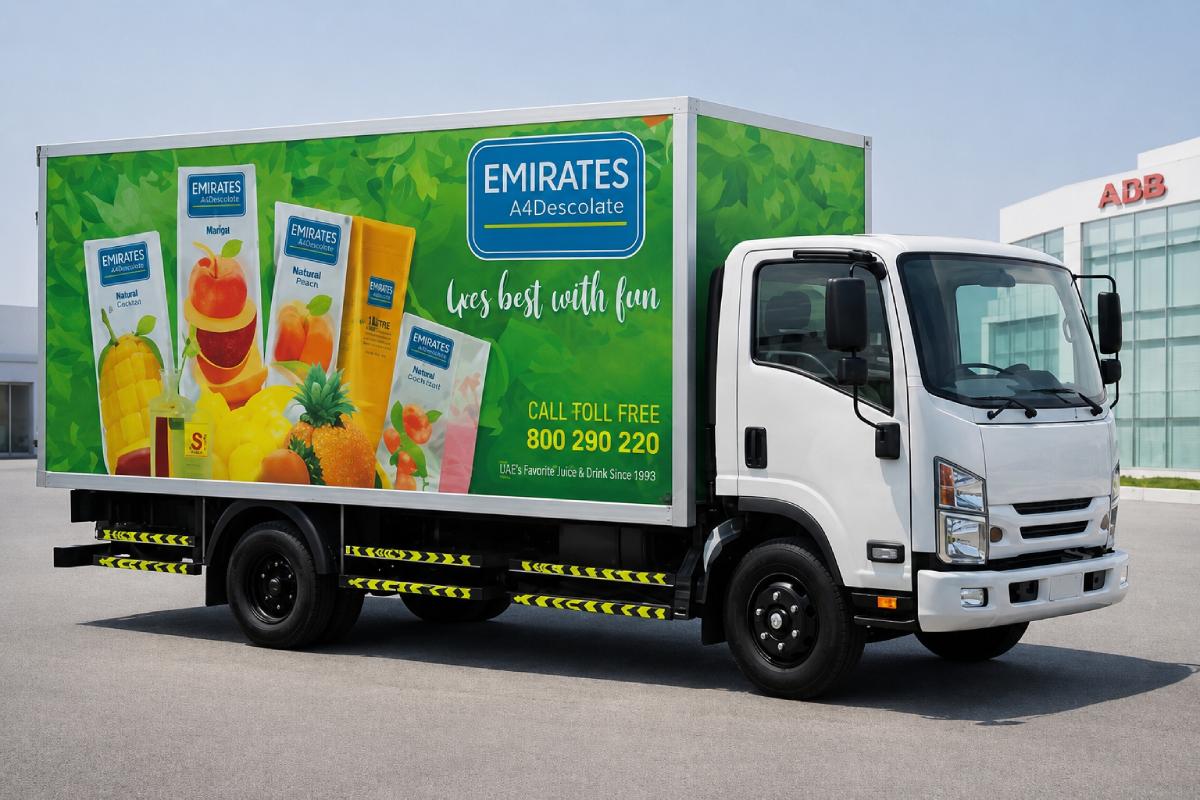
Managing a logistics fleet across the UAE requires heavy-duty vehicle branding built for extreme highway conditions. Whether you need full vinyl coverage for 3-ton delivery box trucks, long-haul flatbeds, or temperature-controlled chiller vans, our Truck Branding & Trailer Wraps turn your transport vehicles into rolling billboards selected for the vehicle's surfaces and outdoor conditions.
Ninety Nine Advertising LLC prints truck graphics in its Musaffah workshop and installs them with its own team. Truck branding and trailer wraps are specified for the relevant panels, exposure and planned maintenance.

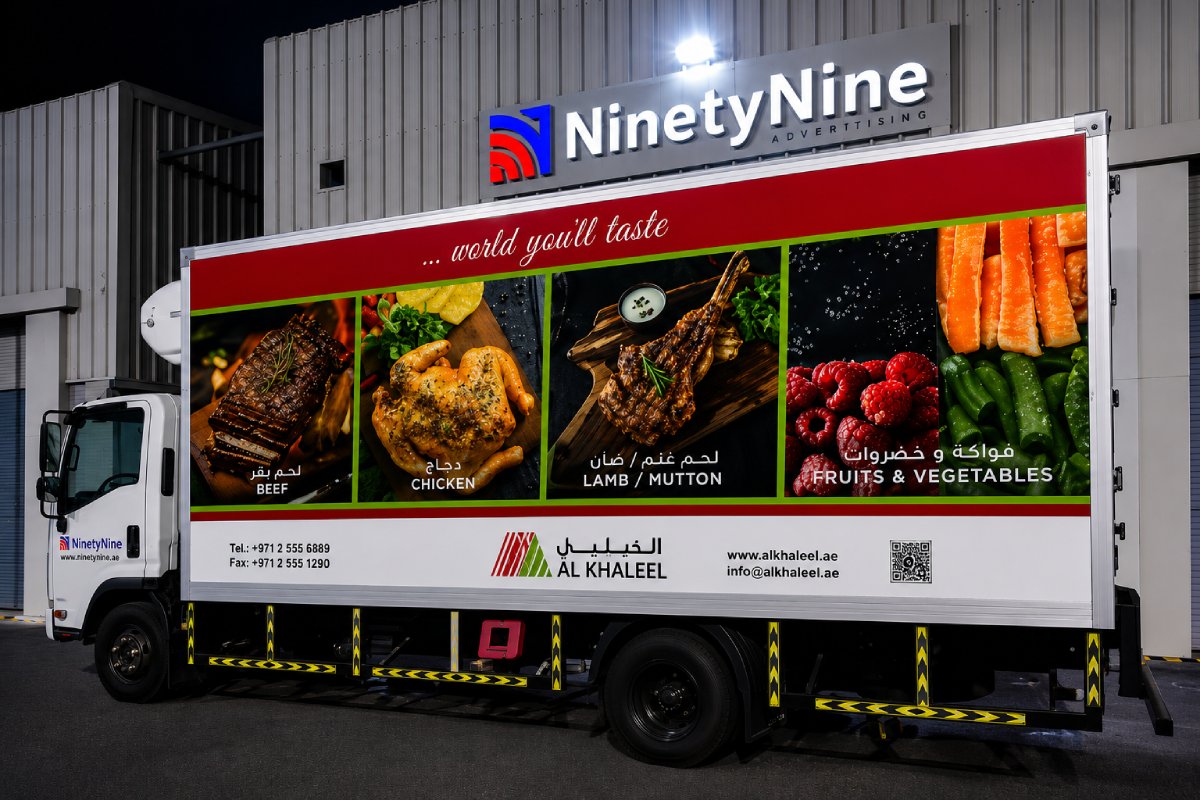
Corrugated Sheet Branding & Heavy-Duty Installation
- Corrugated Container Deep Stretching: Cast vinyl applied with heat to conform to corrugated steel panels.
- Rivet-Safe Application: Heat-installation technique to seat vinyl around rows of commercial body rivets.
- Hardware & Door Rod Cutting: Precision edge-trimming around rear door lock rods, hinges, and tie-down tracks to prevent tearing.
- Peel-Prevention Edge Trimming: Strategic cutting configurations that prevent mechanical hardware friction from lifting the edges of the film.
Box Truck Branding & Logistics Trailer Wraps in Abu Dhabi
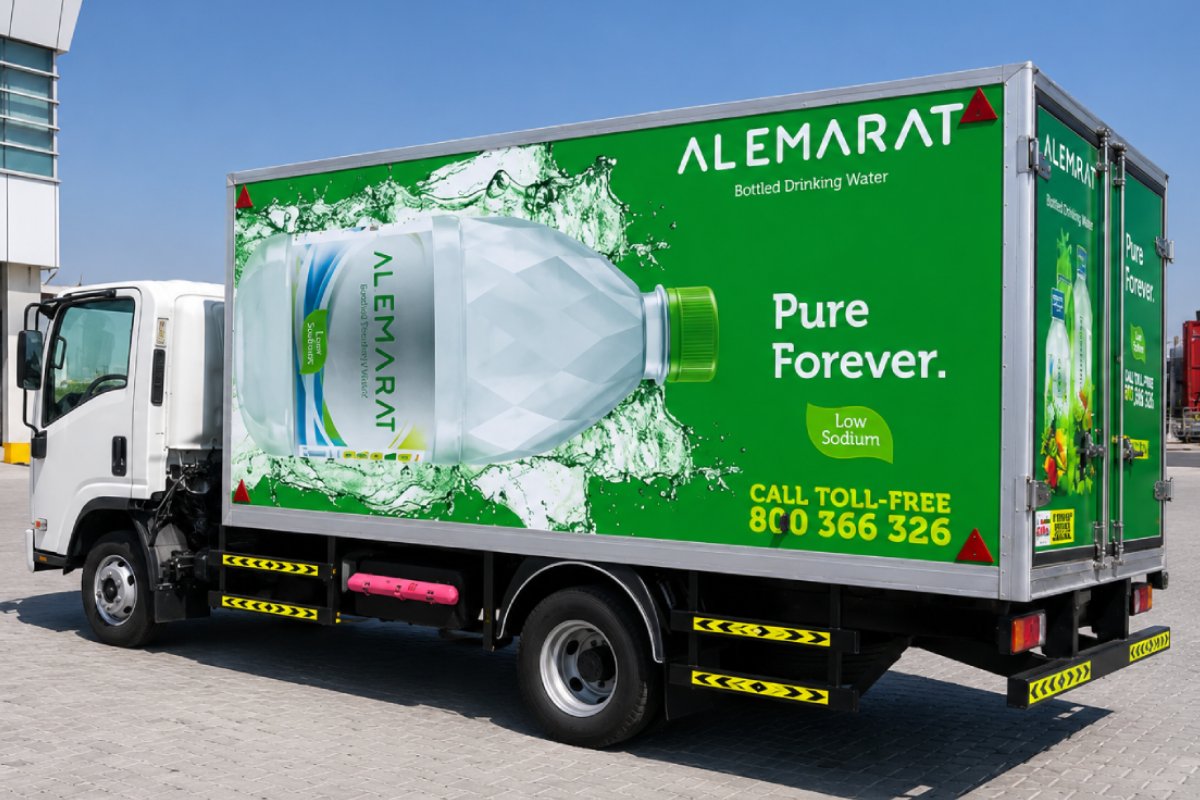
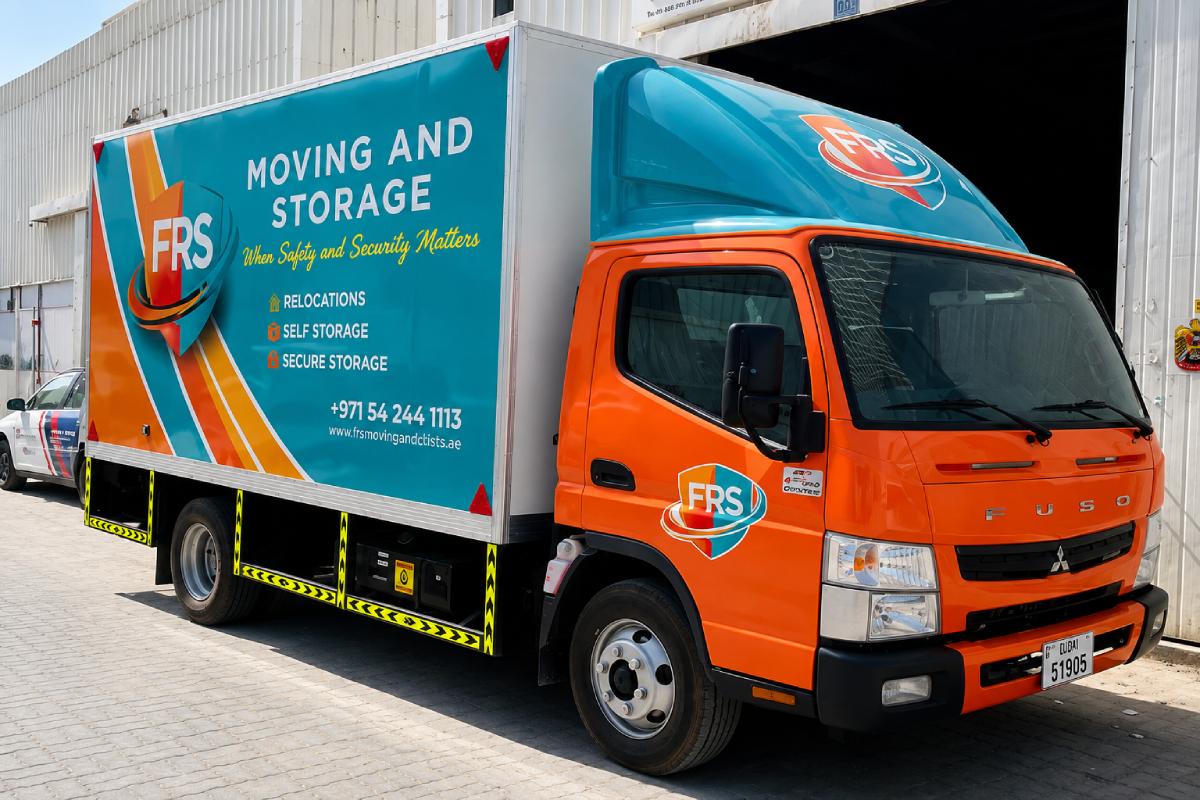
- 3-Ton & 7-Ton Rigid Trucks: Custom vinyl graphics scaled to flat-sided local delivery box trucks.
- FMCG Chiller & Reefer Vans: Vinyl selected for the temperature changes on refrigerated bodies, subject to surface condition.
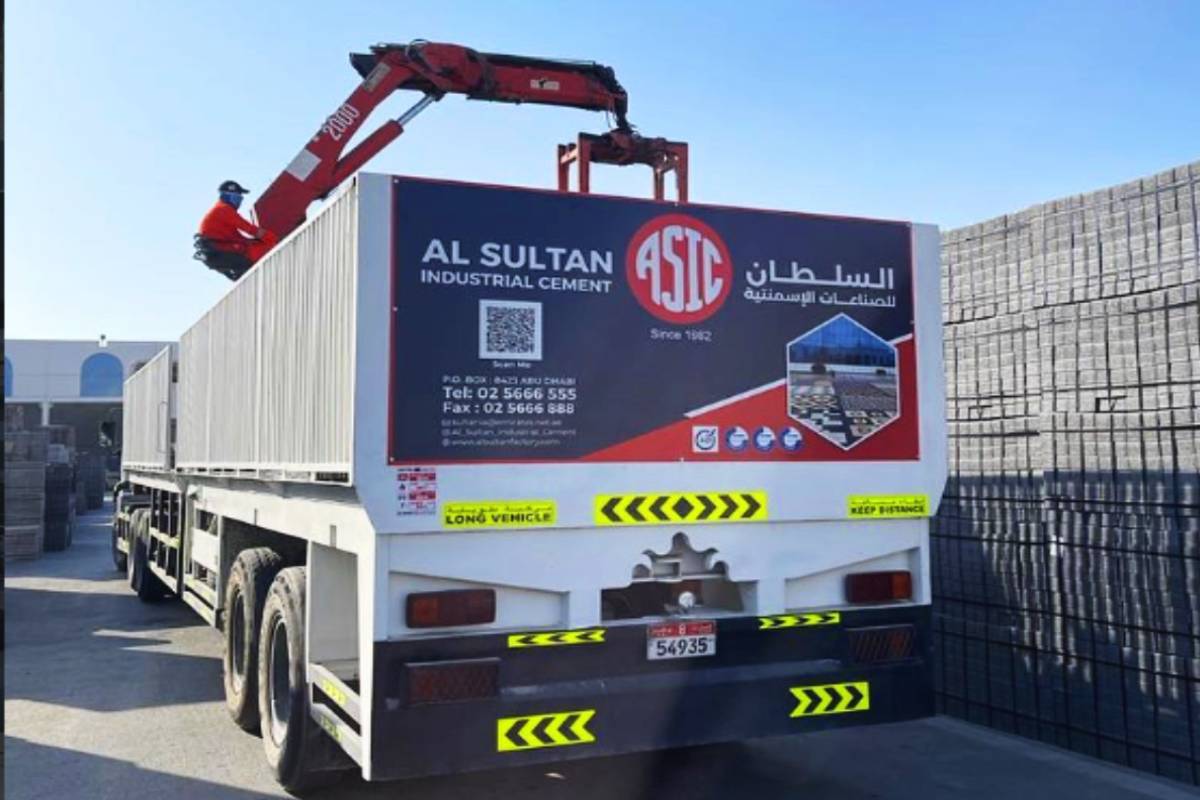
- Long-Haul Trailer Fleets: Complete cargo box and trailer side layouts sized for the largest flat surfaces on the vehicle.
- Driver Cabin Branding: Cost-effective company logo decals and identification text planned for the approved vehicle layout.


Laminates & Care for Abu Dhabi Truck Fleets
- Abrasion: Overlaminate helps protect printed graphics against sand and road abrasion on highway routes.
- Exhaust soiling: Regular washing removes exhaust residue; heavy soot left on graphics can stain over time.
- Heat and UV: UV-stable laminate reduces fading and cracking; exposure and care affect service life.
- Washing: Graphics tolerate commercial washing when the film manufacturer's care guidance is followed; high-pressure jets aimed at edges can cause lifting.
Our Projects Gallery
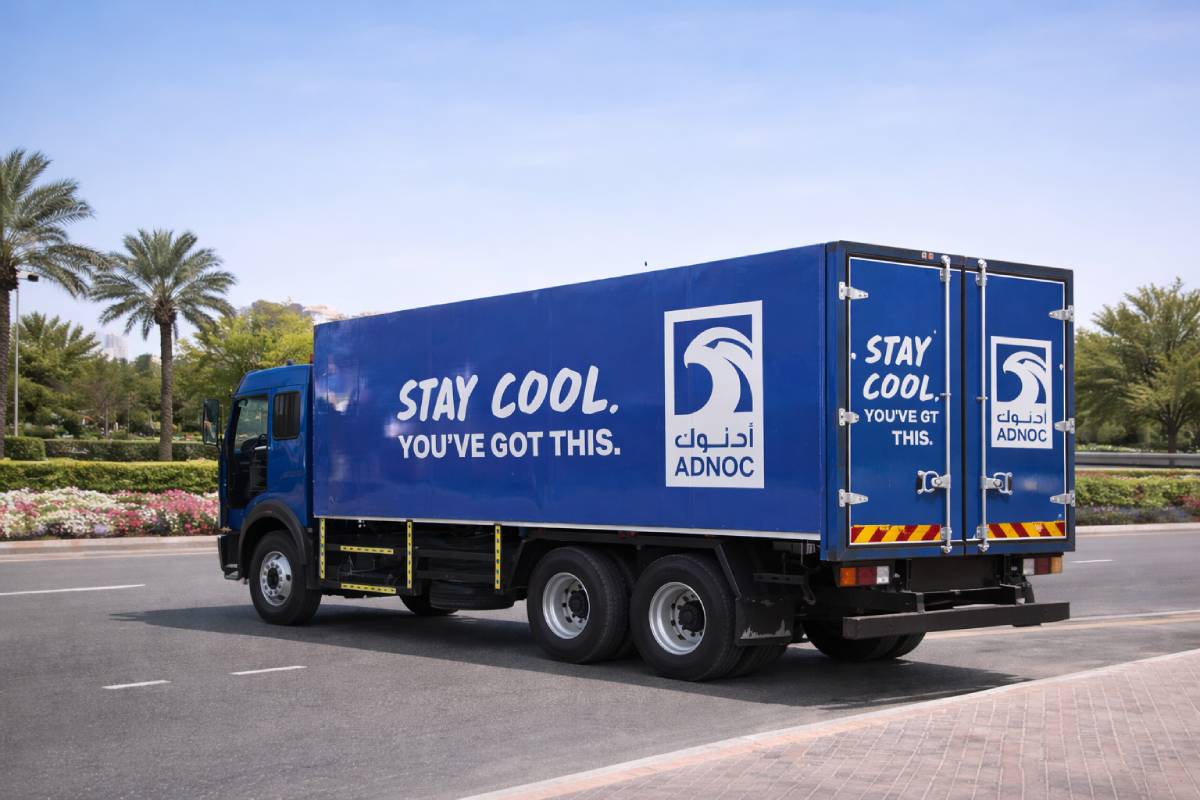
Browse our gallery of completed branding projects across Abu Dhabi. Every photo shown is from a real project delivered by Ninety Nine Advertising LLC, showcasing premium, functional and high-visibility branding solutions in actual business environments.

Why Choose Ninety Nine Advertising for Truck Branding?
Ninety Nine Advertising LLC provides printed truck and trailer graphics with vehicle-specific material selection, artwork preparation and installation planning. We can assist with relevant approval documentation; acceptance depends on the authority and the vehicle's requirements.
Vehicle Branding Artwork & Permit Coordination
- Scaled layouts: We prepare vehicle artwork and dimensions for review.
- Application support: We can coordinate documentation for vehicle advertisement permits where required.
- Artwork review: Trade name, graphics and placement are checked against the vehicle and applicable approval requirements before production.
Film Selection for Commercial Vehicles
- Panel-specific materials: Flat and corrugated surfaces are assessed separately when choosing films and laminates.
- Sun and cleaning exposure: Material selection accounts for vehicle routes, washing methods and storage.
- Maintenance: We discuss care and replacement options for heavily used fleet graphics.
Printing & Installation Planning
- Production: Graphics are prepared for the dimensions and surfaces of each truck.
- Vehicle inspection: We review panel condition and access before confirming installation arrangements.
- Fleet scheduling: Multi-vehicle work is planned around the operator's availability and confirmed installation scope.
Who Uses Truck Branding in Abu Dhabi
- Commercial delivery and logistics fleets: Operators running daily depot-to-customer routes across Abu Dhabi who want every kilometre of route mileage to carry the brand.
- Multi-vehicle fleet rollouts requiring uniform branding: Companies branding 5+ trucks at once where every vehicle must read as one brand across regions, depots, and customer touchpoints.
- Refrigerated and insulated body operators: Chiller and reefer fleet owners — food distribution, pharma logistics, cold-chain delivery — branding insulated panels that meet film-suitability conditions.
- Long-haul and trailer operators: Tractor-trailer and semi-trailer fleets where flat trailer sides carry the largest available branding surface in commercial road transport.
To give you an accurate project estimate or arrange a vehicle inspection, please share a few details with our team:
- Vehicle Type & Body (Heavy-duty trailers, chiller box trucks, flatbeds, or standard pickup trucks)
- Coverage Tier & Design (Full edge-to-edge vinyl wraps, partial cabin and box graphics, or standalone trailer decals)
- Project Scale (A single commercial delivery truck or a complete multi-vehicle logistics fleet rollout)
Complete Your Commercial Branding Strategy With Us
- Commercial Fleet & Van Branding: Scale your mobile advertising across your entire logistics network with custom commercial van wraps and fleet graphics Abu Dhabi.
- Industrial & Warehouse Signage: Optimize your loading bays and storage facilities with high-visibility signboards and safety boards Abu Dhabi.
- Exterior Corporate Signage: Ensure your logistics hub is easily locatable from the main road with durable 3D building signs and illuminated exterior logo signage Abu Dhabi.
- Wayfinding & Directional Signs: Guide heavy vehicles and transport personnel safely through your compound with custom outdoor wayfinding pylons and directional signs Abu Dhabi.
- Read our guide on Pick Up Branding in Abu Dhabi.
This Product is Not What You Want? Explore Our Other Branding Solutions
Fleet Lettering & Decals
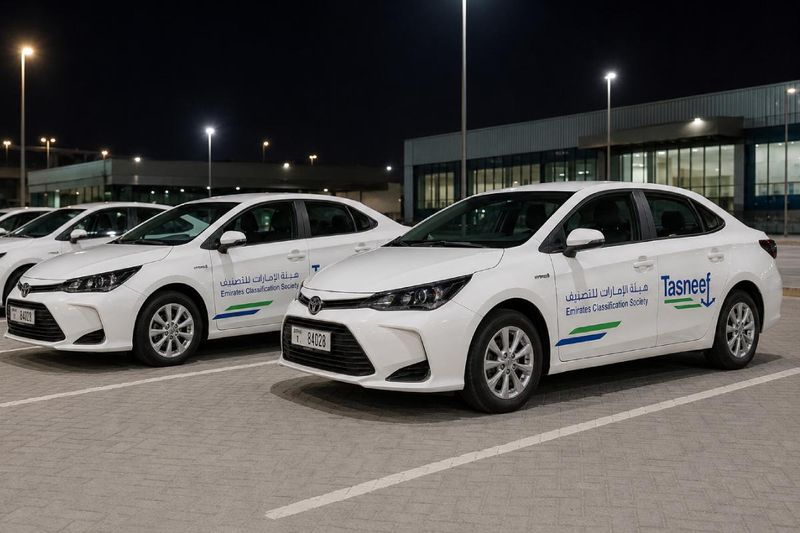
We design, plotter-cut and install vinyl lettering for vehicles, logo decals and fleet lettering for company names, contact details and required regulatory wording. Our cut text layouts identify service vans, pickups and cars, with placement reviewed against any applicable approval requirements. Produced in-house by our Musaffah workshop team.

Full Vehicle Branding
Full vehicle branding and commercial vehicle wraps for Abu Dhabi company cars, vans, buses and fleets. Coverage, film choice and artwork are agreed for each vehicle after checking its condition and any applicable advertising permit requirements.
-p-800.jpg)
Partial Vehicle Branding
Partial vehicle wraps, half wraps and sectional graphics for company vans, cars and pickups in Abu Dhabi. Partial coverage can use the existing paint colour as part of the design, with printed vinyl panels placed where customers see them.
-p-800.jpg)
Reflective Vehicle Graphics
Reflective, high-visibility vehicle markings help fleet identification stay visible under headlights and in low light. We prepare rear chevron markings, contour markings and printed reflective graphics for emergency, construction, utility and commercial vehicles in Abu Dhabi, with film chosen for the vehicle and project requirements.

If a full wrap is not the exact fit for your budget, browse our complete range of commercial options for car stickers, delivery van wraps, fleet pickup graphics, decals, and custom commercial branding across Abu Dhabi.
Frequently Asked Questions
Can truck branding be applied to refrigerated and chiller bodies?
Often yes, but it depends on body construction and surface condition. Many insulated panels accept the right film once they're clean, dry, and at a suitable application temperature. Condensation, unstable coatings, or recently cleaned panels with chemical residue must be ruled out before installation.
Will the cheaper film option look worse on the truck?
Not on the surfaces it's designed for. On large flat trailer sides, the flat-panel film is the correct specification — it sits stably, prints sharply, and lasts. The cheaper-feeling perception comes from using flat-panel film on corrugated or curved surfaces it isn't designed for, where it bridges and lifts. Right film, right surface — the look holds either way.
How are trucks with mixed panel types handled?
The truck is specified by surface zone. Flat trailer sides and door panels use the flat-panel system; corrugated cab and box panels use the heat-conforming system. Each zone stays within its matched film and overlaminate. Colour consistency across zones is controlled in print production.
What if a panel is damaged during loading operations?
The damaged section can usually be reprinted and replaced without remaking the whole vehicle, provided we retain the original artwork, print profile, and the same film system. This is one reason we keep production files on record for the warranty period.