.svg)

Suspended Ceiling Signs & Hanging Signage Abu Dhabi
Optimize overhead spatial navigation with premium suspended ceiling signs, hanging directional sign boards, and overhead corridor wayfinding. Engineered for flawless high-traffic routing, we manufacture and install double-sided cable-hung and rod-suspended systems tailored for Abu Dhabi offices, shopping malls, medical clinics, and commercial developments.
Custom Hanging Ceiling Signage Options
Overhead suspended signs guide pedestrian movement through corridors, complex aisles, and spacious shared interiors where standard wall plates are obscured by foot traffic or physical equipment.
The right hanging directional sign board option depends on your required viewing distances, ceiling grid infrastructure, and interior illumination parameters.
As leading overhead wayfinding signage manufacturers in Abu Dhabi, we engineer double-sided visual landmarks that support navigation across medical clinics, hospitals, corporate headquarters, and retail spaces.

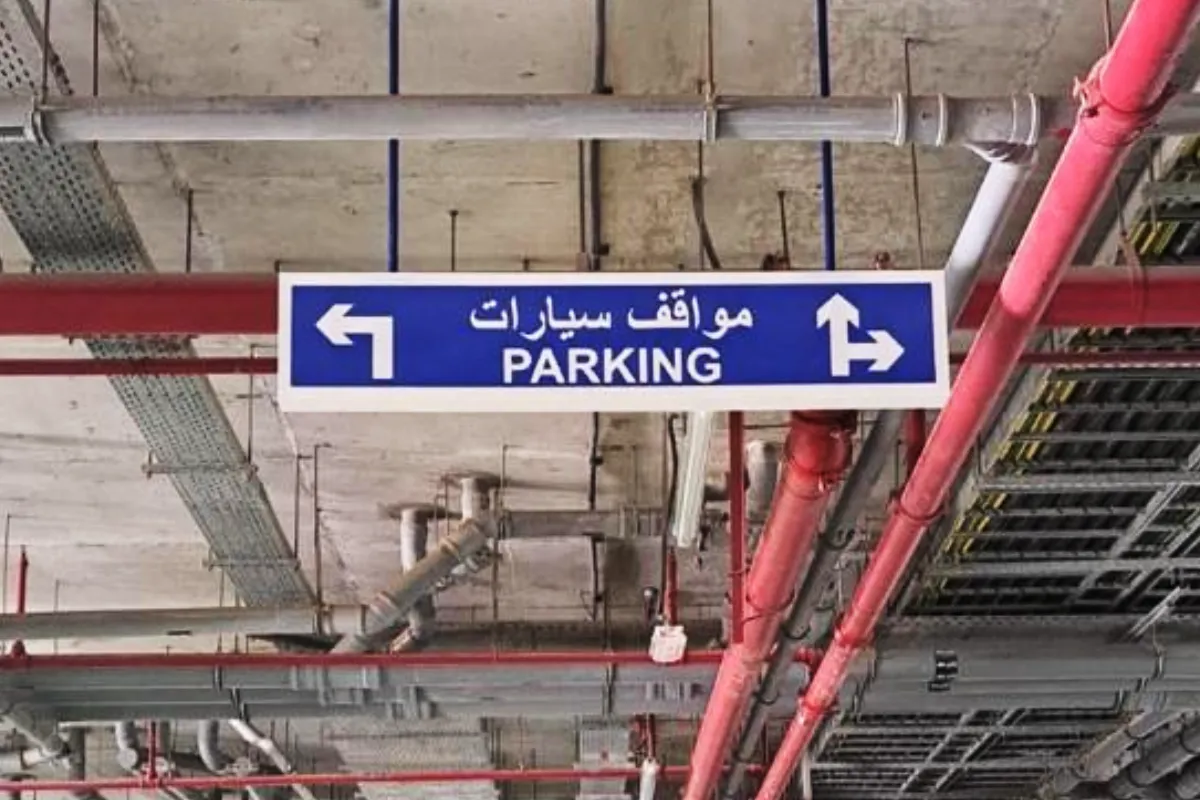


Single & Double-Sided Hanging Formats
- Dead-End Corridor Placements: Single-sided overhead frames mounted flat against exit walls to guide directional footprints.
- Dual-Direction Navigation: Double-sided signs suspended at major walkways to intercept pedestrian traffic from both sides.
- Multi-Angle Wayfinding Arrows: Precision-cut vector graphics pointing clearly toward stairs, elevators, and service zones.
- Balanced Tension Controls: Double-sided internal blocking layers to reduce show-through between the two faces.
Illuminated & Non-Illuminated Formats
- Acrylic panels: Suitable for appropriate interior locations.
- LED options: Components are specified for the project and their product documentation can be supplied when available.
- Directional text: Layouts are planned around visitor routes; emergency signage requirements must be assessed separately against the relevant building rules.


Core Materials & Ceiling Anchor Mounting
- Lightweight Shatterproof Plastics: High-grade acrylic panel profiles built to hang safely from standard false ceilings.
- Heavy Folded Aluminum Housings: Structural cabinets engineered to safely conceal internal power drivers and drop-rods.
- Aircraft Cable Suspension Kits: High-tensile stainless steel wires providing a clean, minimalist floating look.
- Architectural Profile Cutting: Custom-routed panels, curved silhouettes, and logo shapes tailored to match your design.
Our Projects Gallery
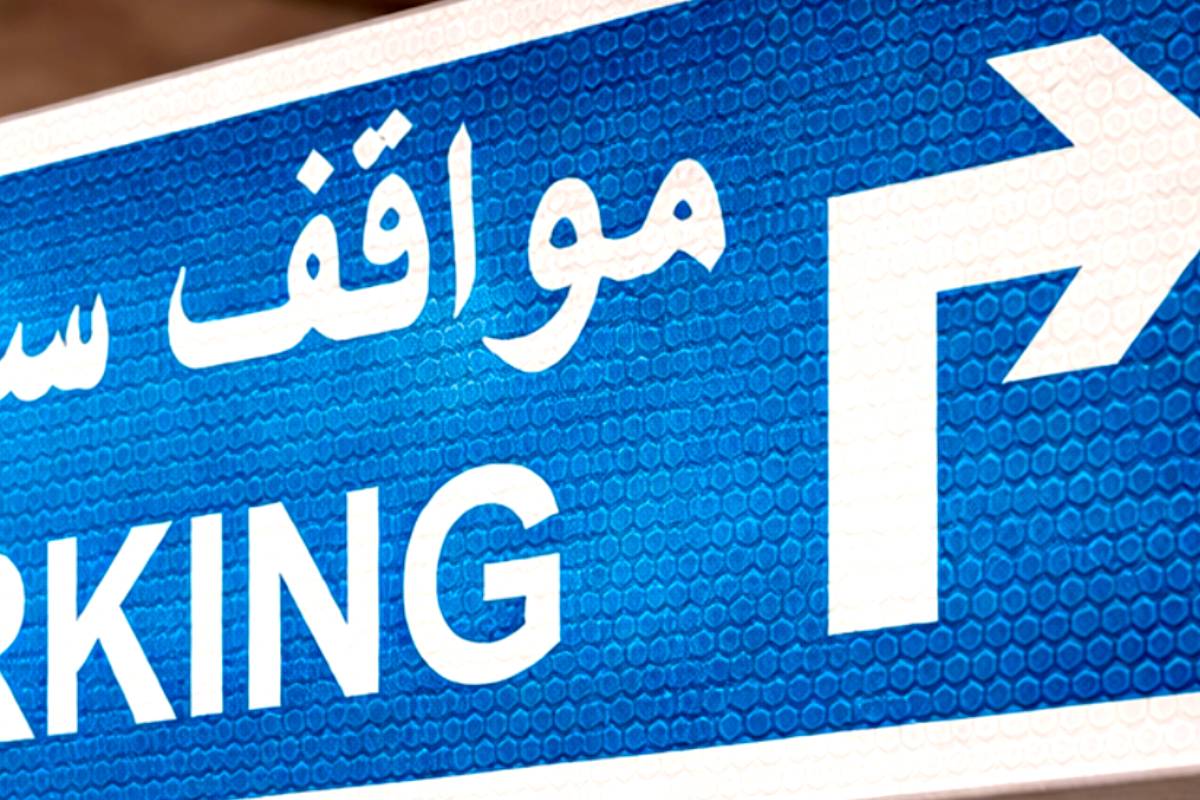
Browse our gallery of completed branding projects across Abu Dhabi. Every photo shown is from a real project delivered by Ninety Nine Advertising LLC, showcasing premium, functional and high-visibility branding solutions in actual business environments.

Why Choose Us for Suspended Ceiling Signs in Abu Dhabi?
As leading overhead rigging and wayfinding sign contractors in Abu Dhabi, we combine advanced digital panel fabrication with professional high-altitude mounting systems.
Our turnkey manufacturing ensures your hanging corridor markers provide clear line-of-sight readability with installation and building requirements reviewed for the location.
Structural Multi-Ceiling Mounting Expertise
- Rigging Specialist Field Teams: Technicians fully trained to anchor overhead fixtures across diverse structures.
- False-Ceiling Grid Toggles: Heavy-duty specialty clips that secure lightweight tracking safely to T-bar grid frameworks.
- Concrete & Truss Anchoring: Industrial drop-rods and concrete anchors built to manage large illuminated aluminum boxes.
- Wobble-Free Mechanical Tension: Suspension arrays locked tightly to eliminate sign swaying.
Double-Sided Graphic & Lighting Options
- Blockout layers: Selected to reduce show-through between printed faces.
- Illumination: LED placement is planned for the cabinet dimensions and expected viewing conditions.
- Printed arrows: Contrast and layout are reviewed against the intended route.
Full-Scale In-House Production & Analysis
- Turnkey Fabricated Logistics: Total manufacturing control from mechanical profile routing to high-altitude rigging.
- Clearance Calculus: On-site height analysis adjusting cable drop-lengths to preserve clear walking paths.
- Property Surface Protections: Specialized application tools protecting expensive acoustic tiles or decorative ceilings from damage.
- Pre-Cured Anti-Cracking Materials: Rigid sub-layers that withstand intense interior building AC climate variations over time.
How Suspended Signs Guide Movement Interiors
- Malls and Retail Atriums — Yas Mall, Al Wahda: Guiding shoppers to anchor stores, exits, and parking across large multi-level developments where wall-mounted signs are blocked by store fronts, kiosks, and foot traffic.
- Hospitals and Healthcare Corridors: Bilingual directional cues navigating patients through clinic wings, labs, and reception zones. Colour-coded systems reduce visitor stress in complex layouts where wrong turns cost time and create anxiety.
- Corporate Office Intersections — Al Maryah Island, ADGM: Directing visitors to boardrooms, elevators, and reception zones in high-rise tower floors where corridors intersect and wall signage is obscured by column positions.
- Supermarkets and Warehouse Retail: Overhead aisle and section identification where wall-mounted signs are blocked by shelving, racking, and product displays. Suspended signs remain visible above the obstruction line from multiple aisles.
Tell us your ceiling height, sign location, viewing direction, and whether you need wayfinding, retail aisle signage, hanging acrylic, aluminium, or illuminated suspended signage. Our salesperson responds the same working day, and the project moves from enquiry to site review to quotation without subcontracting chains between you and the finished suspended sign.
Commercial Advantages of Suspended Signs in Abu Dhabi
- Overhead Position Reaches Sightlines Wall Signs Cannot. In crowded corridors, column-obstructed zones, and open-plan layouts, wall-mounted signs disappear behind people, furniture, and architectural elements. Suspended signs stay visible above the obstruction line — providing continuous directional reference where wall-level signage fails.
- Self-Navigation Reduces Staff Burden. Clear overhead directional signage allows visitors to navigate independently. In hospitals, malls, and corporate towers, every "where is...?" question interrupts reception and floor staff from their primary work. Effective suspended signage reduces that interruption frequency across every operating hour.
- Double-Sided Visibility Serves Both Traffic Directions. Single-sided wall signs serve one approach direction. A suspended double-sided sign serves both — providing directional information to traffic approaching from either end of a corridor or intersection from a single mounting position, eliminating the need for duplicate signage.
This Product is Not What You Want? Explore Our Other Branding Solutions

Directional Pylon Signs
Freestanding pylon and totem signs for Abu Dhabi property entrances. Sign height, visibility, foundation, wind exposure and required approvals are reviewed for the specific site before fabrication.

Directional Blade Signs
Capture dual-direction pedestrian foot traffic with custom double-sided blade signs, round projecting lightboxes, and hanging wall signboards. Positioned perpendicular to your building facade, our premium outdoor flag signs project directly into pedestrian sightlines to capture traffic from both directions. We design, manufacture, and install weather-resistant projecting signs tailored to Abu Dhabi’s retail guidelines and modern brand aesthetics.

Interior Door Signs
Custom fixed and changeable office door signs, room name plates and occupied-vacant sliders for workplaces across Abu Dhabi. Ninety Nine Advertising LLC prepares Arabic-English layouts, matches approved colours and finishes, manufactures each sign in our Musaffah facility and installs it on doors, walls or glass partitions using a fixing method suited to the surface and sign weight.
-p-800.jpg)
Wall Mounted Signs
Streamline your physical marketing and compliance displays with front-loading poster snap frames, floating acrylic sandwich signs, and permanent standoff boards. We supply, print, and install weatherproof lobby info boards, restaurant menu frames, and corporate trade license plaques across Abu Dhabi.
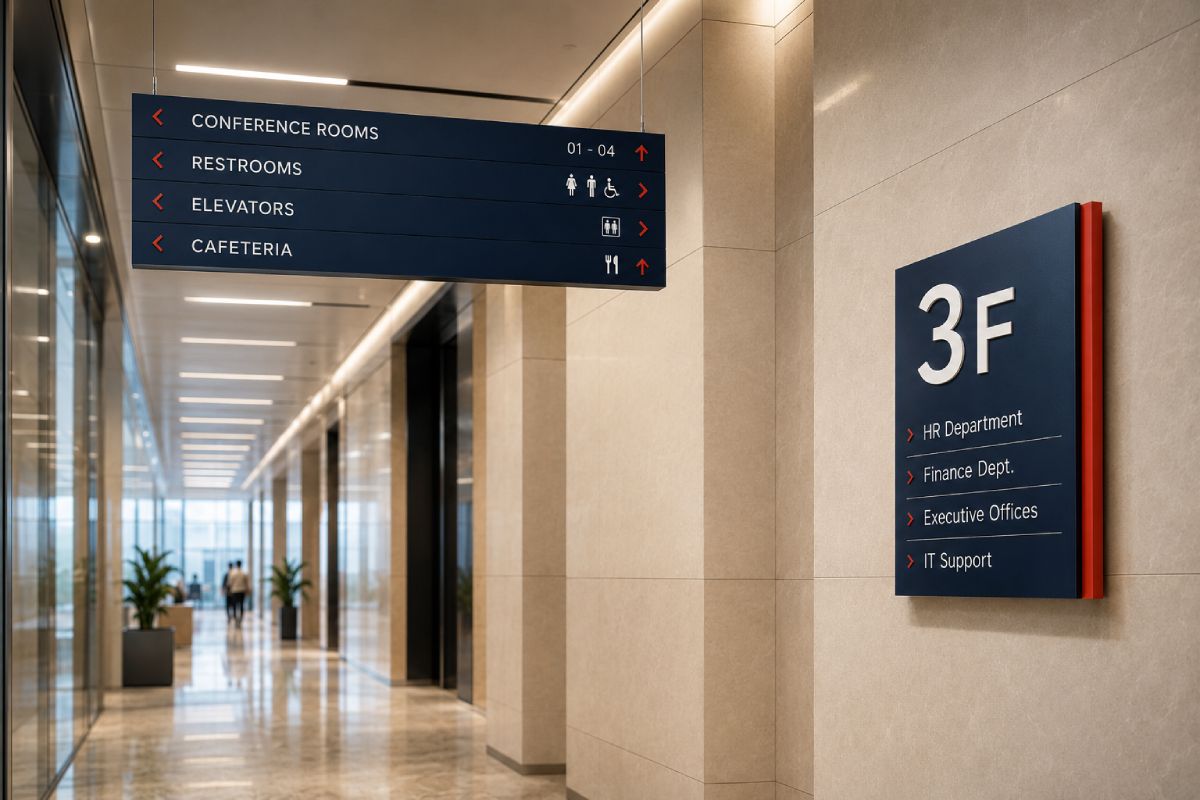
If this sign does not fit your space, explore more wayfinding options for directions, room labels, floor guidance, and visitor navigation.
Frequently Asked Questions
Can suspended signs be relocated if the floor layout changes?
Relocation requires new anchor points in the structural slab at the new position. The sign body and suspension hardware are reusable. Existing ceiling penetrations at the old position must be made good. Relocation is planned as a coordinated scope — not a simple unhook-and-rehang — because anchor load, ceiling condition, and sightline alignment must be reassessed at the new location.
Should I use aluminium or acrylic for the sign body?
Aluminium cabinet construction suits illuminated signs and larger formats — it conceals internal wiring and drivers for a clean presentation. Acrylic panels suit non-illuminated signs in smaller corridors where a lighter, slimmer profile is preferred. Material selection depends on sign size, illumination requirement, and visual brief.
Do suspended signs require a separate electrical supply for illumination?
Illuminated suspended signs require a power feed routed above the false ceiling to the sign position. The power source, cable path, and driver location are planned during the ceiling coordination stage — not after the sign is hung. Non-illuminated suspended signs require no electrical provision. Power availability at the intended sign position is confirmed at site survey.
Can suspended signs be illuminated?
Yes. Aluminium cabinet sign bodies house internal LED strip lighting with translucent acrylic faces. Illuminated suspended signs are specified where corridors have low ambient light, where 24/7 visibility is required, or where the sign must serve as a prominent navigational landmark in large-format interiors.