.svg)
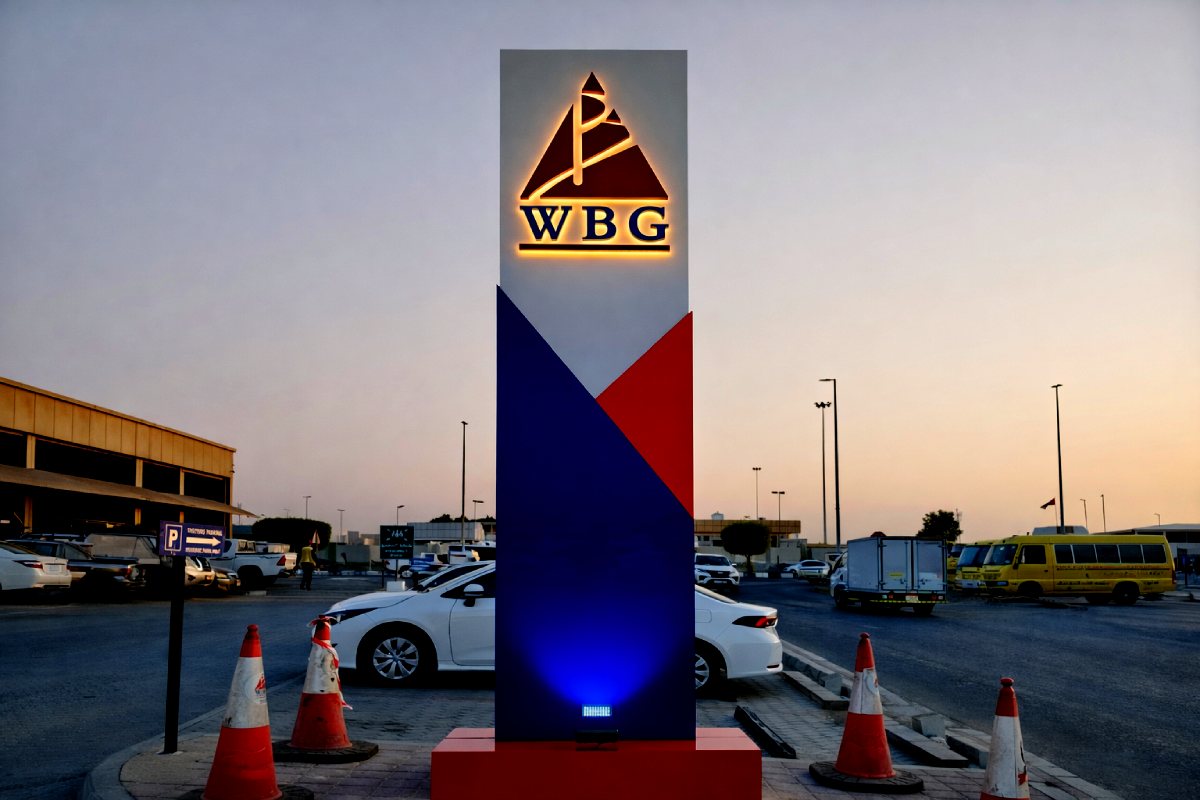
Pylon Signs in Abu Dhabi
Freestanding pylon and totem signs for Abu Dhabi property entrances. Sign height, visibility, foundation, wind exposure and required approvals are reviewed for the specific site before fabrication.
Custom Pylon Signage Options in Abu Dhabi
Freestanding pylon signs solve critical long-range roadside visibility obstacles for multi-tenant commercial centers, automotive showrooms, and industrial real estate across Abu Dhabi.
The right outdoor totem sign board option depends on your specific property zoning laws, the integration of modern digital LED illumination, and—most importantly—the core business objective your property needs to achieve.
As premier pylon sign manufacturers in Abu Dhabi, we build durable landmark structures engineered for high-speed arterial roads that map directly to your operational goals.




Functions of Pylon Signs
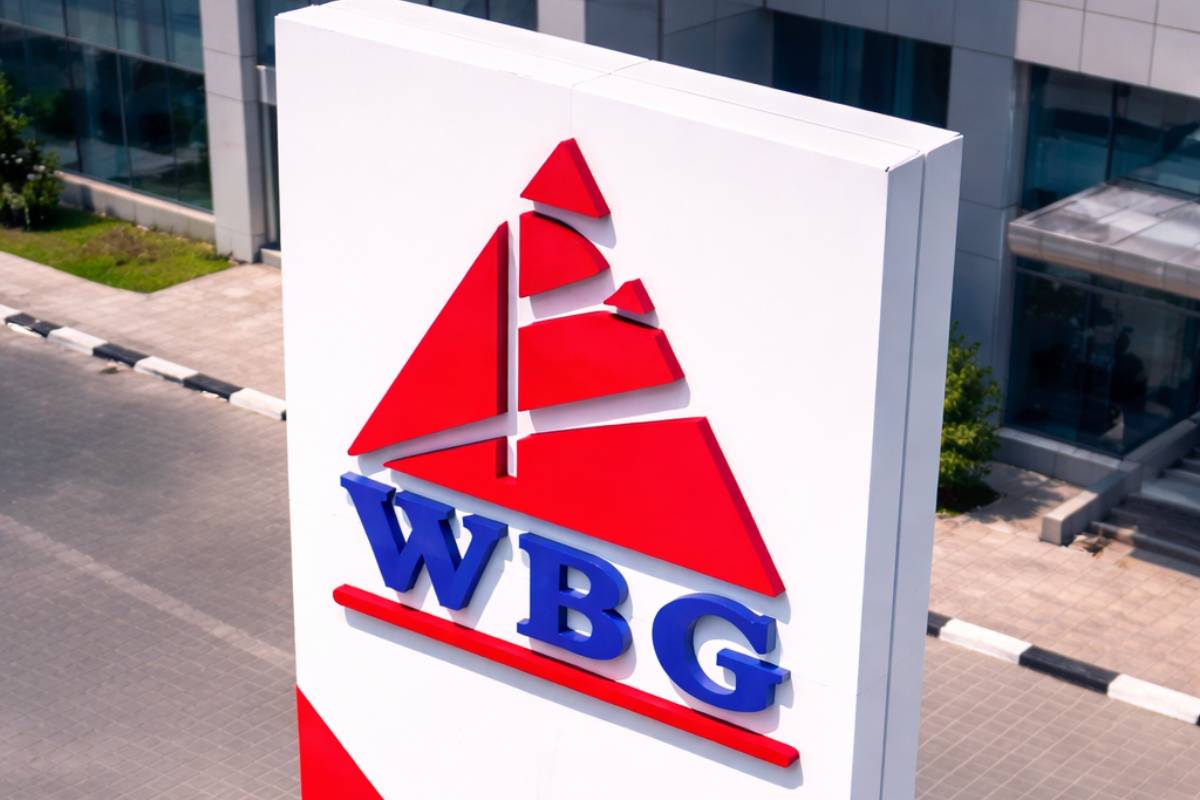
- Entrance identification: A freestanding sign can make a property entrance easier to recognize from an approach road where sightlines permit.
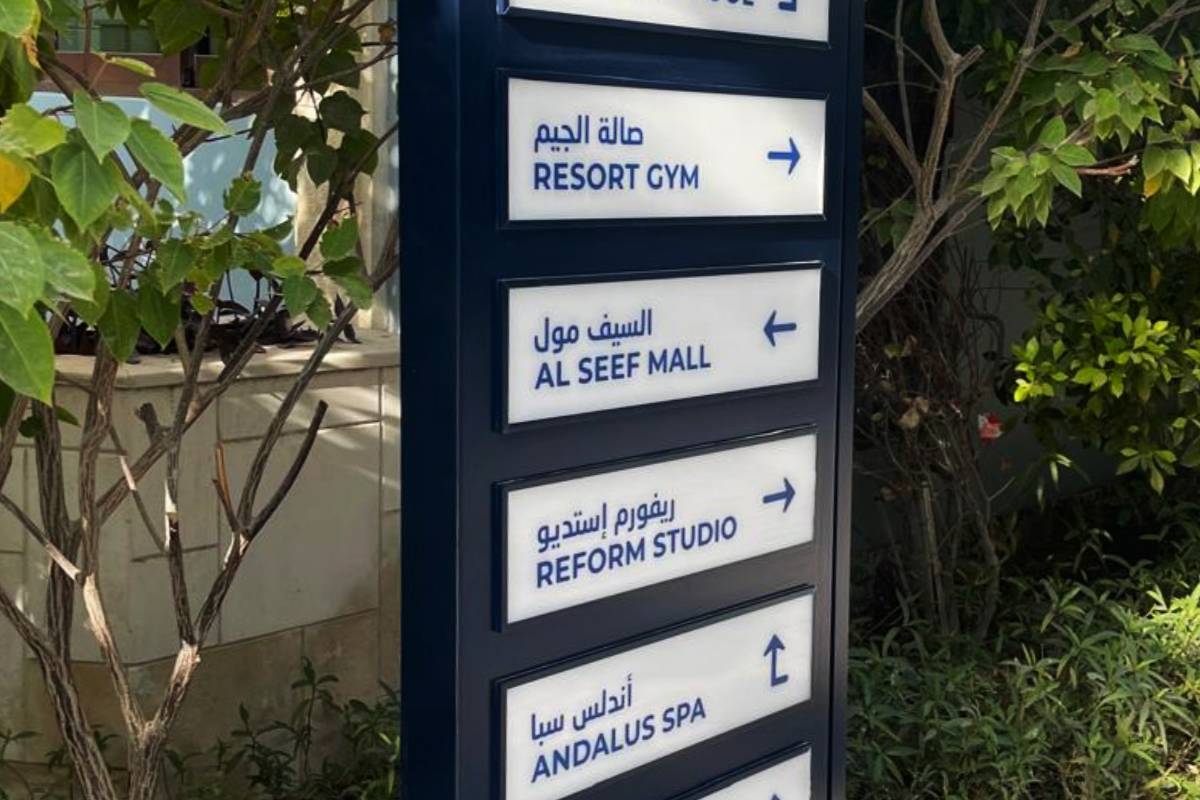
- Multi-tenant directories: Replaceable panels can identify businesses within one property, with allocation and maintenance agreed by the owner.
- Digital elements: Screens or changing messages require separate review of structure, electrical supply, display rules and any additional approvals.
Pylon Sign Design Options
- 3D letters and push-through acrylic: Dimensional branding can be incorporated into the approved pylon face.
- LED illumination: Face-lit, halo-lit or internally lit options are selected according to the sign design and electrical requirements.
- Architectural cladding: ACP and metal finishes can support different shapes and colours, subject to the structural design and permitted dimensions.


Pylon Formats & Configurations
- Single-pole structure: One support column can suit certain sign faces where the engineer confirms the load and foundation design.
- Twin-pole structure: Two supports may be considered for wider panels or multi-tenant formats, subject to the structural calculation.
- Architectural monolith: A clad freestanding structure can provide a different visual treatment while retaining access to its internal frame and services.
Our Projects Gallery
Browse our gallery of completed branding projects across Abu Dhabi. Every photo shown is from a real project delivered by Ninety Nine Advertising LLC, showcasing premium, functional and high-visibility branding solutions in actual business environments.

Pylon Sign Design & Installation Process
We fabricate pylon signs and coordinate their installation for Abu Dhabi properties. The structure, foundation and sign position are planned around the site, visibility needs and required reviews.
Approval and inspection outcomes depend on the completed submission and the relevant authority's review.
Site, Structure & Drawing Review
We review the location, proposed sign height, available sightlines, ground conditions and access. Structural calculations, foundation design and permit drawings are prepared to match the actual project requirements.
Submission documents and approval timing depend on the property and the relevant authority review.
Steel Fabrication & Lighting Options
Steel framing, protective finishes, ACP cladding and LED options are selected for the approved sign design. Material and electrical component specifications are checked against the intended outdoor exposure and access for maintenance.
Foundation & Installation Planning
The foundation size and anchorage must follow the responsible engineer's design and the actual ground conditions. Excavation, lifting access, electrical works and site safety arrangements are planned against the approved project scope before installation.
How Pylon Signs Build Roadside Visibility in Abu Dhabi
- Retail parks and shopping centres: Property managers position pylons at main entrances to display tenant identity above the approach road. Traffic identifies the destination before reaching the site boundary - reducing missed entries and improving multi-tenant visibility.
- Petrol stations and forecourts: High-rise pylons carry brand identity and pricing visible to fast-moving traffic on Abu Dhabi's arterial roads. Building-mounted signs at forecourt height do not reach drivers before the entry passes.
- Industrial and logistics campuses: Manufacturing and logistics operators use pylons for entry identification at multi-gate sites. Multiple positions along the frontage route vehicles to the correct gate before they commit to the wrong access point.
- Set-back commercial properties: Businesses set back from Abu Dhabi's main roads need pylons to project brand presence to the carriageway. A building-mounted sign on a set-back property is not readable at road speed.
Ready to command long-range roadside attention with a high-impact structural totem? Get an accurate estimate from our Musaffah-based civil engineering and fabrication team by sharing a few quick details:
- Specify your plot zone in Abu Dhabi and if the sign sits on a high-speed highway setback, an automotive showroom frontage, or a multi-tenant entrance.
- Target Height & Panels: Provide the approximate desired tower height (e.g., 15ft, 30ft, 50ft+) and the number of brand panels or tenant directory slots required.
- Illumination & Tech: Choose from vibrant face-lit 3D or precision push-through letters, uniform internal lightboxes, or programmable LED digital message centers.
Your project moves seamlessly from enquiry to on-site civil survey to final municipal engineering quotation with zero subcontracting chains between you and the sign going up.
Commercial Advantages of Pylon Signs in Abu Dhabi
- Entrance visibility: A pylon near the site boundary can help identify a property before the final turn, depending on the road and sightline.
- Multiple tenants: Modular directory panels can be changed when occupancy changes if replacement access is included in the design.
- Site-specific approval: Location, structure, foundation and permit requirements should be resolved before production to reduce redesign risk.
This Product is Not What You Want? Explore Our Other Branding Solutions

Blade Signs
Capture dual-direction pedestrian foot traffic with custom double-sided blade signs, round projecting lightboxes, and hanging wall signboards. Positioned perpendicular to your building facade, our premium outdoor flag signs project directly into pedestrian sightlines to capture traffic from both directions. We design, manufacture, and install weather-resistant projecting signs tailored to Abu Dhabi’s retail guidelines and modern brand aesthetics.

Building Facade Signage
Building facade signage and exterior 3D letters for Abu Dhabi commercial properties. We review the elevation, fixing surface, access method and project approvals before detailing fabrication and installation.

Rooftop Signage
Rooftop signs and roof-supported letters for Abu Dhabi buildings. Each proposal requires review of the roof structure, wind exposure, waterproofing, maintenance access and applicable approvals before fabrication and installation.

Frosted Glass Stickers
Custom frosted stickers and frosted privacy film for office glass doors, partitions and windows across Abu Dhabi. We design, print, precision-cut and install plain, blank or gradient frosting stickers, privacy bands, standard-cut, logo-cut and reverse-cut designs, patterned manifestation and full-colour printed options.
If this sign is not the right match, explore more outdoor signage options for visibility, lighting, structure, location, and permit needs.
Frequently Asked Questions
Do pylon signs require a permit in Abu Dhabi?
A freestanding roadside pylon may require an advertising or structural approval, depending on the site and sign design. The responsible authority and the need for wind calculations, foundation drawings or ground information are checked for each project before fabrication. We can coordinate the agreed submission scope.
How is foundation depth for a pylon sign determined?
Foundation depth is calculated per project based on sign height, wind-load exposure, and the site soil test report. Greater wind-surface area requires a deeper foundation to resist uplift. We coordinate excavation, rebar fabrication, concrete pouring, and grout leveling within the installation scope.
Can multiple businesses share one pylon structure?
Yes. Directory pylons use a modular replaceable panel system that allows tenant slots to update as occupiers change - without replacing the structure. This is standard for retail parks and business parks in Abu Dhabi. Panel dimensions, slot count, and allocation are confirmed at design stage.
What is the difference between a pylon sign and a blade sign?
A pylon sign is a freestanding structure on its own foundation, positioned at site boundaries independent of any building. A blade sign is wall-mounted, projecting from a facade for pedestrian-level identification. Pylons serve high-elevation roadside visibility; blade signs serve close-range street-level recognition.