.svg)
Light Box Signage Types & Selection Guide: SEG, Flex Face, Acrylic & Poster
Compare SEG fabric light boxes, flex face sign boards, acrylic light boxes, poster frames and double-sided LED light boxes by location, size, visibility, graphic-change frequency and Abu Dhabi installation conditions.
The right light box depends on where it will be installed, how often the graphic needs to change, how large the sign is, and whether the priority is premium finish, outdoor durability, or fast campaign replacement.
For custom fabrication and installation, see our Light Box Signage in Abu Dhabi product page.
What is a light box sign?
A light box sign is an illuminated display system that uses internal LED lighting to brighten a printed face. The face can be fabric, flex, acrylic, poster film, or another backlit material, depending on the application.
Businesses use light boxes because they keep graphics visible in low-light interiors, evening trading hours, mall corridors, and outdoor commercial environments. They are common in retail stores, restaurants, clinics, exhibitions, offices, showrooms, and building façades.

The main types of light boxes
SEG Fabric Light Box
SEG stands for Silicone Edge Graphics. The printed fabric has a sewn silicone strip around the edge, which pushes into an aluminium profile. This creates a clean, frameless appearance.
Best for:
- Retail interiors
- Mall displays
- Exhibition backdrops
- Showrooms
- Reception feature walls
- Campaign graphics
Choose SEG when:
You want a premium interior finish and expect to replace graphics for future campaigns.
Flex Face Light Box
A flex face light box uses a tensioned PVC face stretched across a structural frame. It is commonly used for larger signs and outdoor frontage applications.
Best for:
- Outdoor storefronts
- Building façades
- Forecourt signs
- Large-format commercial branding
- Oversized illuminated signs
Choose Flex Face when:
The sign is large, outdoor-facing, or needs strong night visibility from distance.
Acrylic Face Light Box
An acrylic light box uses a rigid acrylic panel with internal LED lighting. It can be built as a compact wall sign, reception sign, menu panel, or small exterior display.
Best for:
- Clinics
- Restaurants
- Reception signs
- Menu boards
- Counter displays
- Small storefront signs
Choose Acrylic when:
You need a clean, rigid illuminated face in a smaller or medium-size format.
Poster or Snap Frame Light Box
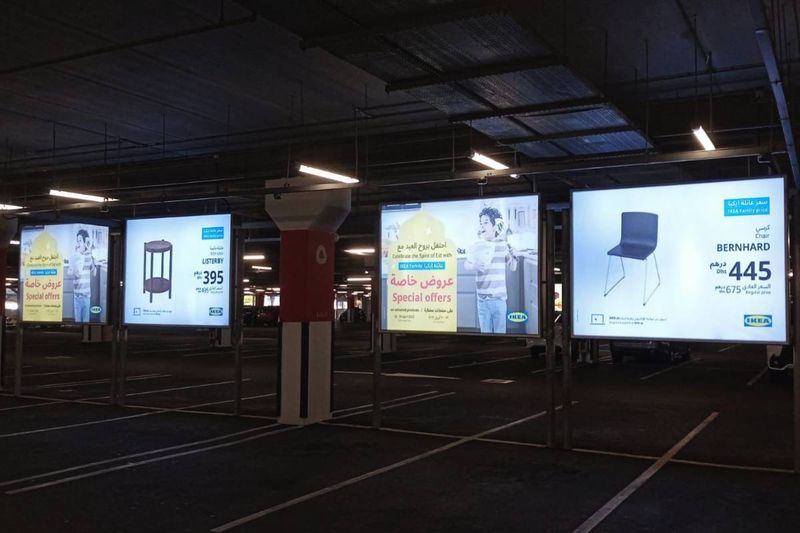
A poster light box uses a slim frame with front-opening access, usually for printed posters or promotional inserts. The graphic can be changed quickly without major dismantling.
Best for:
- Promotions
- Clinic posters
- Restaurant offers
- Mall notices
- Retail campaign updates
- Real estate displays
Choose Poster Light Box when:
The message changes regularly and fast graphic replacement matters more than a fully custom-built sign body.
Double-Sided Light Box
A double-sided light box displays graphics on both faces. It can be hanging, projecting, freestanding, or suspended depending on the location.
Best for:
- Mall corridors
- Retail aisles
- Projecting shop signs
- Directional branding
- Walkway visibility
Choose Double-Sided when:
People approach the sign from two directions and one flat wall-facing display would miss half the traffic.
Freestanding SEG Light Box
A freestanding SEG light box uses the same fabric graphic principle but in a portable or floor-standing structure.
Best for:
- Exhibitions
- Product launches
- Pop-up stores
- Temporary retail displays
- Event backdrops
Choose Freestanding when:
You need a premium illuminated display that can move, travel, or support temporary campaigns.

What These Light Boxes Are Also Called in the UAE
In UAE searches and supplier catalogs, the same product family appears under several names. A SEG fabric light box may also be called an LED fabric lightbox, silicone edge graphics frame, backlit fabric display or frameless fabric lightbox. A flex face light box may be searched as flex face signage, flex face sign board, light box flex, backlit flex signage or outdoor flex light box. Acrylic versions may appear as acrylic light boxes, acrylic light sign boards, backlit acrylic signs or acrylic signage boards. Poster systems are often called poster light boxes, snap frame lightboxes, slim LED frames or LED display frames.
The correct name matters less than the application: where the sign will be installed, how large it needs to be, how often the graphic changes and whether it must survive Abu Dhabi outdoor exposure.
Quick Selection Guide
Choose SEG fabric light boxes for premium mall interiors, retail displays, showroom walls, reception features and exhibition backdrops where the graphic may need future replacement.
Choose flex face light box sign boards for large outdoor shopfronts, building façades, forecourt signs and oversized commercial branding where scale, brightness and outdoor durability matter.
Choose acrylic light box sign boards for reception signs, clinic panels, restaurant menu boards, counter displays and compact illuminated brand panels.
Choose poster light boxes, snap frame lightboxes or slim LED frames when the printed message changes regularly, such as promotions, restaurant offers, clinic notices, real estate displays and mall campaign posters.
Choose double-sided light boxes for mall corridors, projecting signs, retail aisles and walkway areas where people approach from two directions.
Choose freestanding or self-standing SEG light boxes for exhibitions, pop-up stores, product launches, temporary campaigns and portable illuminated displays.

Indoor vs outdoor light boxes
Indoor light boxes focus on visual quality, profile depth, brightness balance, and clean integration with the surrounding interior. SEG fabric systems are popular here because they create a smooth, frameless finish and allow campaign graphics to be replaced later.
Outdoor light boxes need stronger build logic. The frame, face material, LED layout, ventilation, fixing method, and service access must match the site. A light box installed on an outdoor façade has different demands from one installed inside a mall corridor, because apparently sunlight, heat, dust, and gravity still insist on participating.
Light box vs printed board vs digital screen
A light box sits between a standard printed board and a digital screen.
A printed board is cheaper, but it loses impact in low light unless separate lighting is added. A digital screen can change content instantly, but it costs more, consumes more power, and may need software management. A light box gives strong visual presence, clean illumination, and lower content-change cost when the graphic can be reprinted.
For many retail and commercial applications, a light box is the practical middle ground: brighter than a flat print, simpler than a digital screen, and more premium than a basic poster.
What affects light box quality?
LED layout
Poor LED spacing creates hotspots and dark patches. A well-built light box uses the right LED density and distance from the graphic face to create even illumination.
Frame depth
Slim is not always better. If the box is too shallow for the graphic size and LED type, the face may show uneven light. The correct depth depends on the size, material, and illumination method.
Face material
Fabric, flex, acrylic, and poster film all behave differently under light. The face material affects brightness, finish, replacement method, durability, and final appearance.
Site conditions
Wall type, fixing access, power supply, heat exposure, viewing distance, and maintenance access all affect the final specification.
Graphic replacement
Some systems are designed for frequent campaign changes. Others are built for longer-term signage. Choosing the wrong system means paying more later to update what should have been easy to change.
Common mistakes when ordering a light box
Choosing by price only
A low-cost light box can look acceptable on day one and still fail as a brand asset after a few months. Uneven lighting, weak frames, poor access, and low-grade graphics usually become visible after installation.
Using indoor systems outdoors
Indoor light boxes are not automatically suitable for outdoor use. Outdoor signs need more attention to face material, heat, structure, sealing, electrical access, and fixing.
Making the box too shallow
Ultra-slim profiles can look attractive in a catalogue, but larger graphics often need more depth for even diffusion.
Forgetting graphic replacement
If the business changes promotions often, the replacement method should be part of the original specification. Otherwise, every campaign update becomes a miniature tragedy involving tools, labour, and unnecessary cost.
Final recommendation
Choose the light box by application first, not by product name.
Use SEG Fabric for premium interiors and campaign displays.
Use Flex Face for large outdoor storefronts and façades.
Use Acrylic for compact illuminated panels, reception signs, and menu boards.
Use Poster or Snap Frame systems for frequent graphic changes.
Use Double-Sided systems where customers approach from both directions.
Use Freestanding SEG for exhibitions and temporary activations.
For custom specification, fabrication, and installation, visit our Light Box Signage in Abu Dhabi page and request a site survey.
Related Content

The Ultimate Guide to Pickup Branding: Costs, Designs and Materials
Read Full Article →
Custom Office Wall Stickers & Graphics in Abu Dhabi: The Plain English Buyer's Guide
Read Full Article →
Shop Front Glass Stickers Abu Dhabi: The Ultimate Window Branding Guide
Read Full Article →
One-Way Vision Stickers in Abu Dhabi: Technical Specs & Storefront Applications
Read Full Article →
Glass Protection Film in Abu Dhabi: Safety, Frosted & Clear Options
Read Full Article →