.svg)

LED Signboard Types in Abu Dhabi: Front-Lit, Backlit & Halo Signs
Choose the right LED sign board for your Abu Dhabi storefront, whether you need bright front-lit letters, premium halo-lit signage, edge-lit acrylic, or a light box-style shop sign.
LED signboards in Abu Dhabi are usually described by buyers as shop sign boards, 3D LED letters, front-lit signs, backlit signs, halo-lit letters, acrylic LED signs, or light box signage. These names often overlap, but they do not always mean the same build.
For storefronts, restaurants, clinics, salons, offices, and mall units, the real decision is not simply “LED or non-LED.” The important question is how the sign should illuminate, how readable it needs to be from the street or mall corridor, and whether the building facade can support the correct installation method.
This guide compares the main LED signboard types used in Abu Dhabi: front-lit letters, halo-lit or backlit letters, edge-lit acrylic signs, combined front-and-halo signs, and light box-style signboards. The right choice depends on viewing distance, daytime visibility, night readability, facade finish, landlord requirements, DMT considerations, and budget.
For a broader comparison of letter construction, lighting, mounting, and material choices, use our 3D signage selection guide.
What Buyers Mean by LED Signboard Types
In Abu Dhabi, buyers often use several names for illuminated signage. A “LED signboard” may refer to 3D acrylic letters with internal LEDs, a front-lit shop sign, a backlit or halo-lit letter sign, a light box signboard, or a complete fascia signboard with illuminated letters fixed to an ACP backing panel.
The wording matters because each type is built differently.
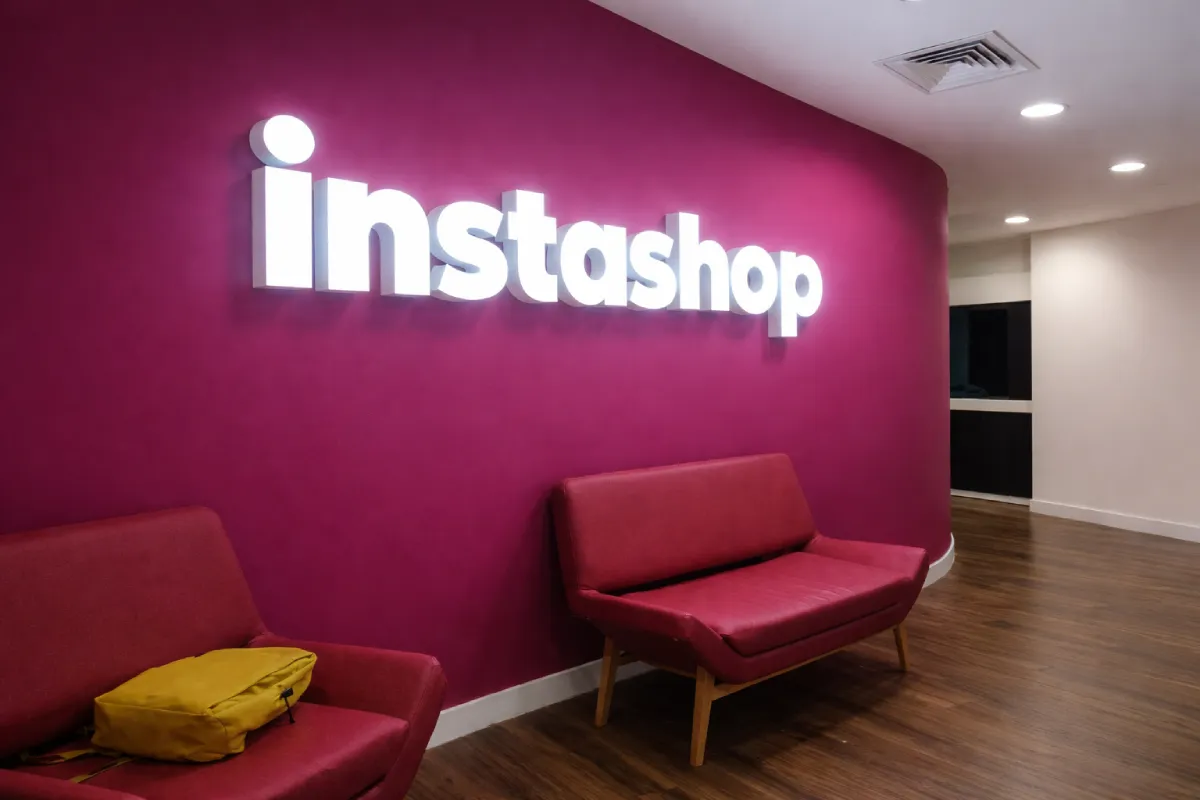
A front-lit LED signboard sends light through the face of the letters, making it strong for street visibility and night readability. A backlit or halo-lit sign sends light backwards onto the wall, creating a softer premium glow around the letters. Edge-lit acrylic signs use light through the edge of an acrylic panel and are more suitable for controlled indoor settings. Light box signboards illuminate a full panel or graphic face rather than individual letter faces.
For a retail shop, restaurant, pharmacy, clinic, salon, or service business facing a road, front-lit 3D LED letters are usually the safest starting point. For a premium office, boutique, hotel, or medical frontage, halo-lit letters may look more refined. For mall interiors, reception areas, and controlled-light environments, edge-lit or light box signage may be suitable depending on the design manual and viewing distance.
If the signboard is only one part of a wider exterior visibility requirement, compare outdoor signage options before locking the final format.
Front-Lit LED Signboards
Front-lit LED signboards are one of the most common illuminated sign types for shops and commercial frontages in Abu Dhabi. In this format, the light passes through the face of the letters or logo, so the front surface becomes the illuminated part of the sign.
This type is often used for storefront signboards, retail shop signs, restaurants, pharmacies, salons, supermarkets, service centres, clinics, and businesses that need clear visibility from the street. When a buyer asks for a “bright LED signboard” or “LED shop sign,” front-lit letters are usually the first format to evaluate.
For storefront signboards in Abu Dhabi, front-lit 3D LED letters are usually the safest starting point when road visibility and night readability matter.
A front-lit sign is typically built using dimensional letters with acrylic faces, side returns, internal LED modules, and concealed wiring. The face may be opal acrylic, coloured acrylic, or printed acrylic depending on the brand design. The side return may be aluminium, stainless steel, painted metal, or another suitable signage material based on the required finish and exposure.
The main advantage of front-lit LED letters is readability. Because the light comes through the face, the sign can remain visible at night and from longer viewing distances. This makes it practical for road-facing shops, corner units, petrol station retail, restaurants, pharmacies, and businesses that depend on fast recognition.
The Al Waqaed Laundry retail station signage project shows illuminated 3D letters alongside blade signage and window branding.
The limitation is appearance. A front-lit sign can look more commercial than premium if the letter shape, depth, material finish, LED spacing, or backing panel is not handled properly. The sign may be bright, but brightness alone does not make it look refined.
When Front-Lit LED Signs Work Best
Front-lit LED signs are usually the best option when visibility is the priority. They work well when the business frontage is seen from moving cars, across a parking area, from a service road, or from a busy pedestrian path.
They are especially suitable for:
- Restaurants and cafés that need evening visibility
- Pharmacies and clinics that need clear public identification
- Salons, supermarkets, laundries, and service shops
- Retail units facing roads or open parking areas
- Convenience stores and small commercial frontages
- Businesses where the trade name must be readable from a distance
For Abu Dhabi storefronts, front-lit LED letters are often used as part of a complete fascia signboard. This may include an ACP backing panel, dimensional letters, concealed wiring, access planning, and coordination with the landlord or building management.
Halo-Lit / Backlit LED Signboards
Halo-lit signs are often called backlit signboards in the UAE market. Technically, for 3D letters, the more accurate term is halo-lit because the light is projected backwards onto the wall instead of glowing through the letter face.
The result is a soft glow around the letters. Instead of relying on strong face brightness, the sign creates a more architectural lighting effect. This is why halo-lit letters are often used for clinics, offices, boutique retail, hospitality frontages, premium restaurants, reception areas, and building entrances.
A halo-lit sign usually uses solid or built-up letters fixed away from the wall using spacers or stand-off supports. LED modules are placed behind the letters, and the light reflects onto the background surface. The wall or backing panel becomes part of the visual result, so the colour, texture, reflectivity, and distance behind the letters matter.
The main advantage is premium appearance. Halo-lit signs can look cleaner and more refined than standard front-lit letters, especially on stone, cladding, painted walls, ACP panels, or smooth architectural surfaces.
The limitation is visibility. Halo-lit letters are usually softer and less readable from long distances compared with front-lit letters. They need the right background, enough letter depth, proper spacing from the wall, and controlled brightness. If the background is too dark, uneven, glossy, textured, or visually busy, the halo effect can become weak or inconsistent.
Backlit Signboard vs Halo-Lit Sign
In common UAE buyer language, “backlit signboard” often means halo-lit letters. Technically, halo-lit letters project light backwards onto the wall to create a glow around the letters.
A light box can also be described as backlit, but it works differently. A light box illuminates a full panel or graphic face, while halo-lit letters illuminate the wall behind individual letters or logos.
This distinction matters because the final result, cost, fabrication method, and installation requirements are different. If the goal is a soft glow around the business name, halo-lit letters are usually the right format. If the goal is to illuminate a complete graphic panel, menu, poster, or full sign face, a light box may be more suitable.
When Halo-Lit Signs Work Best
Halo-lit signs work best when the sign is viewed from a closer distance and the business wants a more premium visual impression. They are not always the strongest option for fast road visibility, but they can be excellent for brand presence.
They are especially suitable for:
- Clinics and medical centres
- Corporate offices and reception entrances
- Boutique retail and premium stores
- Hotels, restaurants, and hospitality environments
- Beauty salons and wellness centres
- Building entrances and lobby walls
- Brands that want a softer, architectural sign effect
For halo-lit signage, the background surface is not a minor detail. It is part of the lighting system. A clean wall, smooth ACP panel, or controlled facade surface will usually produce a better halo than a dark, rough, cluttered, or uneven background.
Edge-Lit Acrylic LED Signs
Edge-lit acrylic signs use LEDs placed along the edge of an acrylic panel. The light travels through the acrylic and highlights engraved, etched, printed, or cut details depending on the design.
This type of LED sign can look clean and modern in the right setting. It is commonly used for indoor signs, reception branding, mall counters, directory panels, small display signs, and controlled-light environments.
Edge-lit signs are usually not the strongest choice for outdoor street-facing shopfronts in Abu Dhabi. Under strong daylight, edge lighting can lose impact, especially if the sign is small, thin, or viewed from far away.
Edge-lit acrylic can work well indoors, at reception level, or inside malls where lighting is controlled and viewing distance is short. For exterior storefront visibility, front-lit or halo-lit 3D letters usually perform better.
When Edge-Lit Acrylic Signs Work Best
Edge-lit acrylic signs are best used where subtle lighting and clean detail matter more than long-distance visibility.
They are suitable for:
- Reception desks and office entrances
- Indoor brand signs
- Mall kiosks and counters
- Directory signs and information panels
- Hospitality and showroom interiors
- Small feature signs in controlled environments
They are less suitable for:
- Large outdoor shopfronts
- Road-facing business signs
- Long-distance visibility
- High-sun exterior locations
- Facades where the sign must compete with surrounding visual noise
Edge-lit acrylic signage should be selected for the right environment, not because it looks impressive in a close-up sample photo. Exterior visibility depends on real distance, daylight, background contrast, and viewing angle.
Combined Front-Lit and Halo-Lit Letters
Combined-lit letters use both front illumination and rear halo illumination. The letter face glows from the front, while the back creates a soft glow onto the wall or backing panel.
This format is usually selected when a business wants both strong readability and a more premium lighting effect. It can work well for flagship stores, restaurants, clinics, high-value retail locations, and commercial frontages where the sign needs to be visible but still look refined.
The advantage is visual impact. The front light improves readability, while the rear halo adds depth and presence. The sign feels more dimensional and more designed than a standard bright shop sign.
The limitation is cost and coordination. Combined-lit signs require more careful fabrication, wiring, LED planning, depth control, access planning, and installation accuracy. They also need a suitable background surface to make the rear glow visible.
For project-level budgeting, compare the main drivers of signboard cost in Abu Dhabi before requesting a quotation.
For many Abu Dhabi storefronts, combined-lit letters can be a strong option when the frontage has enough visual importance to justify the added cost.
Light Box Signboards vs 3D LED Letters
Some buyers use “LED signboard” to describe both 3D LED letters and light box signage. They are not the same format.
3D LED letters are built as individual letters or logos, usually with acrylic faces, metal returns, LED modules, and concealed wiring. They are commonly used for storefront names, fascia signs, restaurants, clinics, salons, offices, and building entrances.
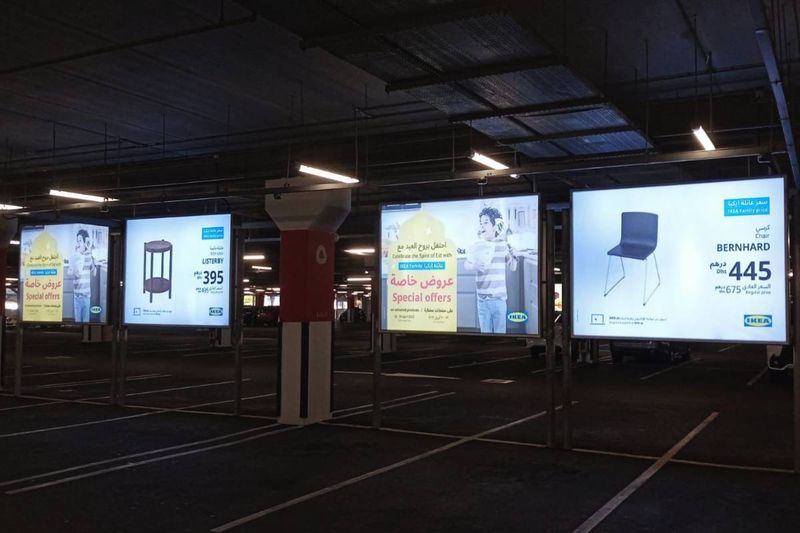
Light box signboards use an illuminated panel or graphic face inside a frame or box. They work well for menu boards, retail promotions, mall displays, large flex-face shopfronts, acrylic light boxes, and campaign graphics that need uniform backlighting.
Choose 3D LED letters when the business name and brand identity are the main focus. Choose light box signage in Abu Dhabi when the sign needs to display a full illuminated panel, printed graphic, menu, poster, or promotional face.
For a deeper comparison of SEG, flex face, acrylic, and poster formats, review the guide to light box signboard types.
In some projects, both formats may be used together. A storefront may use 3D LED letters for the trade name and a light box for secondary branding, product visuals, promotional graphics, or menu display.
Abu Dhabi Climate Factors That Affect LED Signs
LED signboards in Abu Dhabi need to be selected for heat, dust, UV exposure, humidity, and long operating hours. A sign that looks acceptable in a shaded indoor sample can perform very differently on an exposed shopfront.
For exterior signs, material selection matters. Acrylic faces, metal returns, paint finish, LED modules, drivers, cable routing, and sealant details all affect long-term performance. Poor LED spacing can create visible hotspots. Weak sealing can allow dust or moisture entry. Poor driver access can make maintenance unnecessarily difficult.
If you want to understand how LED modules, drivers, letter bodies, and wiring are handled in production, read the guide to illuminated signage manufacturing.
The sign also needs to handle thermal movement. Exterior materials expand and contract under heat. If the sign is built too rigidly, fixed poorly, or sealed without movement tolerance, the finish may suffer over time.
For Abu Dhabi, the issue is not only whether the sign lights up on day one. The real question is whether the sign remains readable, serviceable, and presentable after months of heat, dust, cleaning, and daily operation.
DMT and Permit Considerations for LED Signboards
In Abu Dhabi, an LED signboard is not only a design decision. It also needs to work within the approved signage zone, building facade conditions, electrical routing, landlord requirements, and commercial signage rules.
Before production, review the Abu Dhabi commercial signage regulations so the sign type, placement, wiring, and dimensions are checked early.
The most common compliance issue with illuminated signs is not the LED type itself. It is the way the sign is mounted and wired. Electrical components, lighting, cables, and drivers should be properly contained or concealed. Exposed wiring, visible light fittings, or a sign that covers architectural elements can create approval or inspection problems.
For many shopfronts, this is why the final build becomes a complete storefront signboard assembly rather than loose letters fixed without planning. The backing panel, letter depth, access method, cable route, and driver location all need to be decided before fabrication.
If the signboard is for a commercial storefront, trade name, or trademark, the permit route should be checked before production. Fabricating first and solving approvals later can create cost, delay, and rework.
LED Signboard Type Comparison
Front-lit LED letters are usually the strongest option for shops, restaurants, pharmacies, salons, convenience stores, and street-facing retail units. Their main advantage is strong face brightness and clear night readability, which makes them practical for locations seen from roads, parking areas, and busy pedestrian routes. The limitation is that they can look more commercial than premium if the letter design, material finish, LED spacing, or backing panel is poorly handled.
Halo-lit or backlit letters are better suited for clinics, offices, boutiques, hotels, premium retail, and reception facades. Their main advantage is a softer architectural glow that gives the sign a more refined appearance. The limitation is visibility: halo-lit letters are usually weaker from long distances compared with front-lit letters, especially when viewed from moving vehicles or against a dark or uneven background.
Edge-lit acrylic signs are most suitable for mall interiors, reception signs, directory panels, counters, and controlled indoor spaces. Their main advantage is a slim, clean, modern appearance. The limitation is outdoor performance. In strong Abu Dhabi daylight, edge-lit acrylic signs usually do not provide enough visual strength for street-facing storefronts.
Combined front-lit and halo-lit letters work well for high-profile storefronts, flagship locations, restaurants, clinics, and premium commercial facades. Their main advantage is that they combine strong front visibility with a premium rear glow. The limitation is cost and coordination, because this format requires more careful fabrication, wiring, LED planning, spacing, and installation accuracy.
Light box signboards are suitable for menus, retail graphics, flex-face shop signs, poster displays, mall campaigns, and illuminated promotional panels. Their main advantage is uniform illumination across a full panel or graphic face. The limitation is that they are less dimensional than 3D LED letters unless they are combined with other signage elements.
Best LED Signboard Type by Business
For restaurants and cafés, front-lit LED letters work well when the frontage needs visibility from the road, while halo-lit letters suit premium dining, boutique cafés, and evening-focused locations.
For restaurants and cafés, restaurant signage in Abu Dhabi should connect the shopfront sign, blade sign, menu display, window graphics, and interior branding into one visibility system.
For pharmacies and convenience stores, front-lit LED signboards are usually the practical choice because readability and brightness matter more than subtle facade integration.
For clinics, salons, and beauty centres, halo-lit or combined-lit letters can create a more polished appearance, especially when the frontage is viewed at pedestrian distance.
For offices and corporate entrances, halo-lit letters, edge-lit acrylic signs, or non-illuminated 3D letters may be more suitable than bright front-lit shop signage.
For mall units, the correct choice depends on the tenant design manual. Edge-lit, halo-lit, acrylic light boxes, or internally illuminated letters may all be possible, but sign depth, brightness, projection, and fixing method usually need landlord approval.
For industrial, warehouse, and service-area businesses, front-lit signs or large-format fascia signboards are usually more practical because the viewing distance is wider and the environment is less controlled.
How to Choose the Right LED Signboard
The right LED signboard depends on the business type, viewing distance, facade condition, brand positioning, landlord requirements, and budget.
If your shop is road-facing and needs strong visibility, start by evaluating front-lit 3D LED letters. If your business needs a softer premium look, evaluate halo-lit or backlit letters. If you want both visibility and atmosphere, combined front-and-halo illumination may be worth considering.
If your sign needs to display a full printed graphic, menu, product visual, or campaign message, a light box signboard may be more suitable than individual 3D letters. If the sign is for an indoor reception, mall counter, directory, or controlled environment, edge-lit acrylic may be enough.
Before choosing the sign type, confirm the real installation conditions:
- Where will the sign be viewed from?
- Is the viewer walking, driving, or standing nearby?
- Is the facade smooth, textured, dark, reflective, or cladded?
- Is there enough depth for illuminated letters?
- Can wiring and drivers be concealed properly?
- Does the landlord or mall have a design manual?
- Does the sign need permit approval before production?
- Will maintenance access be possible after installation?
The best LED signboard is not always the brightest or most expensive one. It is the one that fits the building, the viewing distance, the brand, and the approval conditions without creating future maintenance problems.
Common Mistakes When Choosing LED Signboards
One common mistake is choosing a sign only from a close-up sample. A letter sample may look good on a table, but storefront signage is judged from distance, under daylight, at night, and against surrounding buildings.
Another mistake is selecting halo-lit letters for a location that needs strong road visibility. Halo lighting can look premium, but it may not be powerful enough when the viewer is moving quickly or viewing the sign from far away.
A third mistake is treating all “LED signboards” as the same product. A front-lit acrylic letter, halo-lit stainless steel letter, edge-lit acrylic panel, and light box signboard all behave differently. They differ in brightness, structure, maintenance, cost, and visual result.
A fourth mistake is ignoring the facade. The same sign can look completely different on white ACP, dark stone, textured cladding, glass, concrete, or painted plaster. For halo-lit signs especially, the background surface can make or break the effect.
The final mistake is leaving approval and wiring coordination too late. A clean design can become messy if cable routes, driver locations, access panels, and fixing points are not planned before production.
Front-Lit, Backlit, or Light Box: Which Should You Choose?
Choose front-lit LED letters when the business needs maximum readability from the street. This is usually the most practical option for retail shops, restaurants, pharmacies, supermarkets, salons, and service businesses.
Choose halo-lit or backlit letters when the business wants a refined, premium appearance and the sign is viewed from a closer distance. This works well for clinics, offices, boutiques, hospitality spaces, and high-end storefronts.
Choose combined-lit letters when both visibility and premium appearance matter. This is a stronger option for flagship locations, restaurants, premium retail, and commercial facades where the sign needs extra presence.
Choose edge-lit acrylic signs for indoor and controlled environments, not for demanding outdoor storefront visibility.
Choose light box signage when the design needs an illuminated panel, printed graphic, menu, poster, campaign message, or large backlit face.
The best result usually comes from matching the sign type to the location instead of forcing a visual idea onto the wrong facade. The correct format should respond to the building, the viewing distance, the brand requirements, and the approval conditions.
Final Recommendation
For most Abu Dhabi storefronts, front-lit 3D LED letters remain the safest starting point because they provide strong visibility, clear readability, and practical night performance.
For premium offices, clinics, boutiques, restaurants, and hospitality spaces, halo-lit or combined-lit letters can create a more refined sign without looking overly commercial.
For indoor reception areas, mall counters, and controlled environments, edge-lit acrylic or compact light box signage may be suitable.
For promotional graphics, menus, poster displays, and large illuminated panels, light box signboards are usually more appropriate than individual 3D LED letters.
The right LED signboard type should be selected after reviewing the facade, viewing distance, brand requirements, landlord rules, permit path, electrical routing, and maintenance access. That is how an illuminated sign becomes a long-term business asset instead of a future maintenance issue.
FAQs About LED Signboards in Abu Dhabi
What is the best LED signboard for a shop in Abu Dhabi?
For most street-facing shops in Abu Dhabi, front-lit 3D LED letters are the safest starting point because they provide strong night visibility and good daytime readability. Halo-lit signs can work better for premium facades, clinics, boutiques, and offices where the sign should look softer and more architectural.
Is a backlit signboard the same as a halo-lit sign?
In common UAE buyer language, “backlit signboard” often means halo-lit letters. Technically, halo-lit letters project light backward onto the wall to create a glow around the letters. A light box is also backlit, but it illuminates a full panel or graphic face rather than individual letters.
Are LED signboards allowed in Abu Dhabi?
Yes, illuminated signboards can be used in Abu Dhabi when the design, wiring, placement, and installation follow the applicable commercial signage regulations and permit requirements. The sign should not have exposed wiring or protruding bulbs, and electrical components need to be properly contained or concealed.
Which is better: front-lit or backlit signboard?
Front-lit is better when visibility, brightness, and readability from the street are the priority. Backlit or halo-lit is better when the business wants a more premium and subtle glow, especially on a clean wall surface viewed from pedestrian distance.
Are edge-lit signs suitable for outdoor shopfronts?
Usually not for Abu Dhabi street-facing storefronts. Edge-lit acrylic signs can look clean indoors, but the edge glow is weak under strong daylight. For exterior shopfronts, front-lit or halo-lit letters usually perform better.
What is the difference between 3D LED letters and a light box signboard?
3D LED letters are individual illuminated letters or logos, usually used for business names on storefronts and facades. A light box signboard is an illuminated frame or panel used for graphics, menus, posters, promotions, or larger illuminated sign faces.
What is the difference between front-lit and halo-lit letters?
Front-lit letters illuminate through the face of the letters, making them brighter and easier to read from a distance. Halo-lit letters illuminate from the back, creating a glow around the letters on the wall or backing surface.
Can LED signboards be used for restaurants and cafés?
Yes. Restaurants and cafés often use front-lit LED letters for visibility, halo-lit letters for a premium evening look, or combined-lit letters when both readability and atmosphere matter.
Do LED signboards need maintenance?
Yes. LED signboards may need maintenance for LED modules, drivers, acrylic faces, wiring, sealant, cleaning, and fixing points. Good fabrication and access planning reduce maintenance problems, but no exterior illuminated sign should be treated as maintenance-free.
Related Content

Illuminated Signage Manufacturing in Abu Dhabi: How LED Signages Are Built
Read Full Article →
The Complete Guide to Abu Dhabi Commercial Signage Regulations (2026)
Read Full Article →
Restaurant Signage in Abu Dhabi: Shopfront Signboards & Menu Displays
Read Full Article →

B2B Procurement Guide: Hiring an Outdoor Signage Manufacturer in Abu Dhabi
Read Full Article →