Illuminated Signage Manufacturing in Abu Dhabi: How LED Signages Are Built
How Ninety Nine Advertising manufactures LED-illuminated signage at its Musaffah facility — storefront signboards, 3D facade letters, pylon identification, and reception signs — for Abu Dhabi commercial projects.
Ninety Nine Advertising manufactures illuminated signage in Abu Dhabi — storefront signboards, 3D facade letters, pylon identification systems, and reception signs that use LED illumination as a core component. Fabrication takes place at the company's Musaffah facility, with installation coordinated under Department of Municipalities and Transport (DMT) Version 5 regulations and permit approvals.
Ninety Nine Advertising is a signboard manufacturer, not an LED module producer or LED lighting distributor. The company specifies LED components from multiple qualified suppliers based on the illumination demands of each sign type — outdoor high-brightness modules for facade work, interior-grade LED strips for reception signs, weather-rated drivers for all exterior signage installations. Established in 2014, Ninety Nine Advertising has delivered over 3,300 signage projects across Abu Dhabi, and LED-illuminated systems represent a substantial share of that volume.
This article describes what Ninety Nine Advertising manufactures in the illuminated signage category, how the signs are built, and the regulatory environment that governs their installation in Abu Dhabi's commercial and institutional properties.
Before specifying the build, compare materials, lighting methods, and mounting formats in our 3D signage selection guide.
The four categories of illuminated signage
Ninety Nine Advertising's LED-illuminated signage work divides into four operational categories. Each category has its own fabrication method, LED specification profile, and regulatory context.
Illuminated storefront signboards
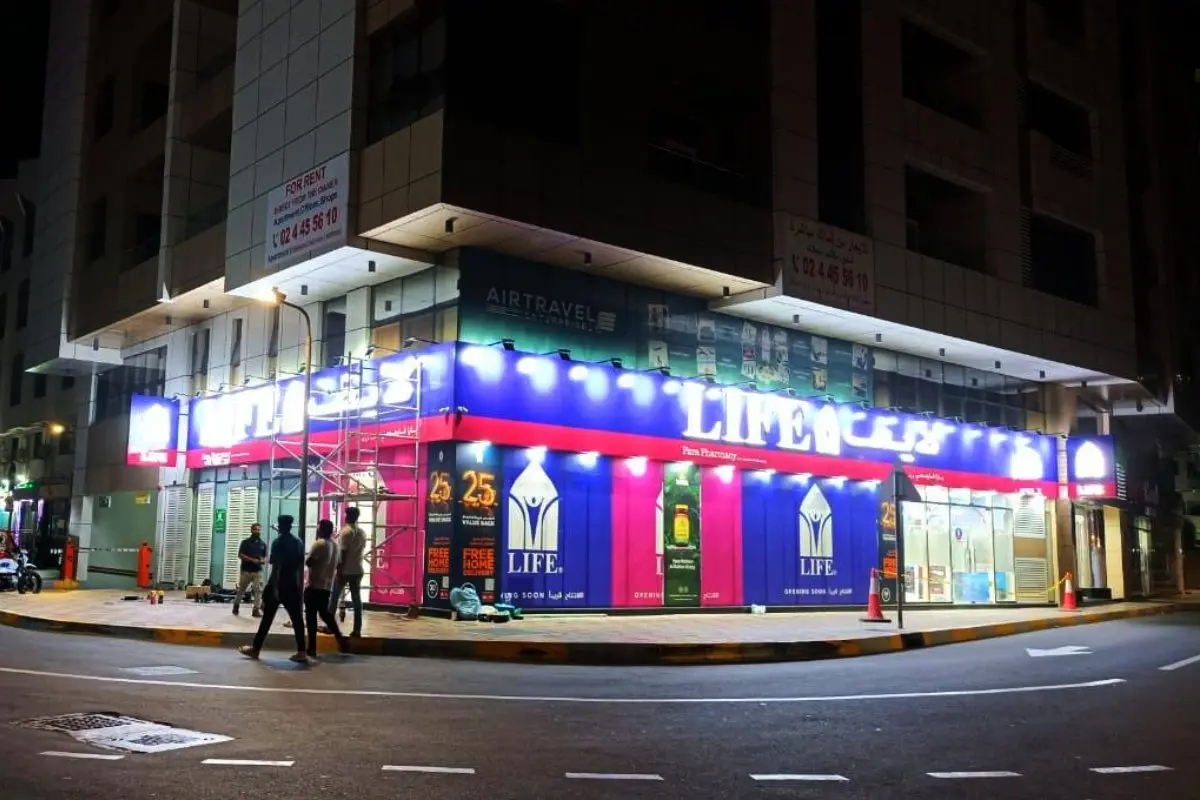
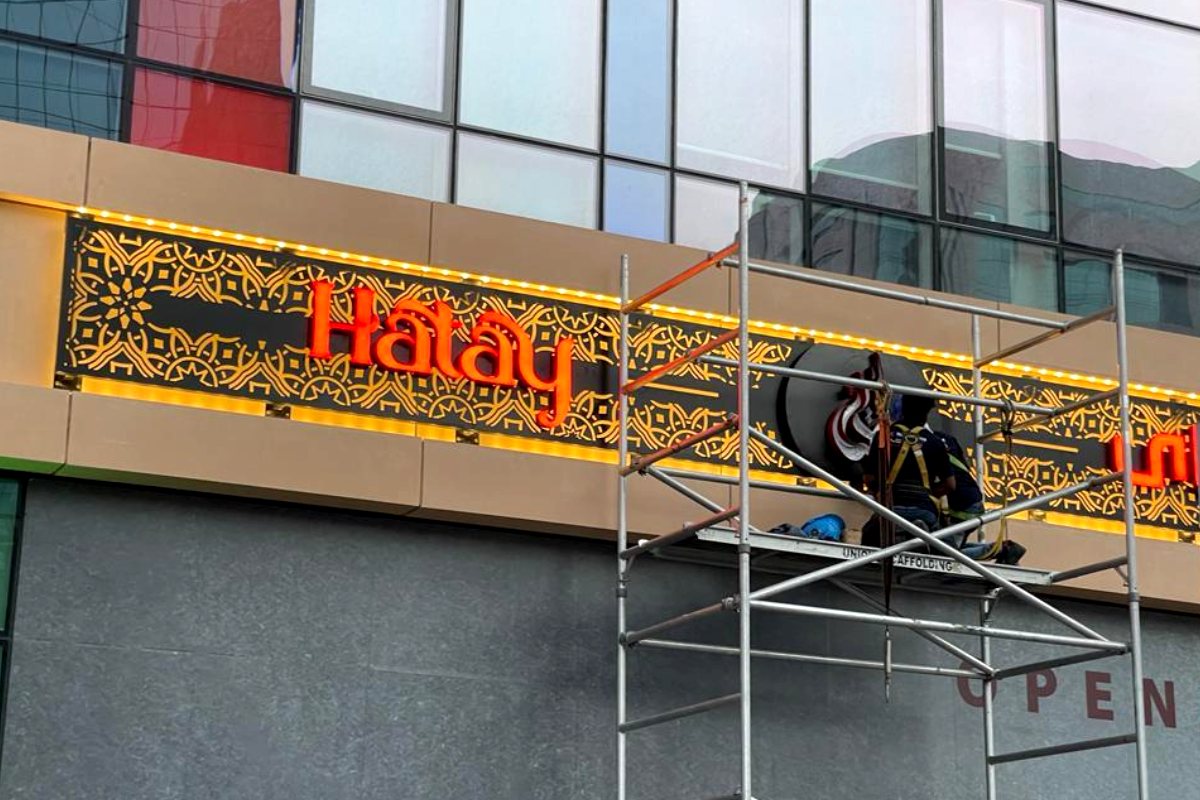
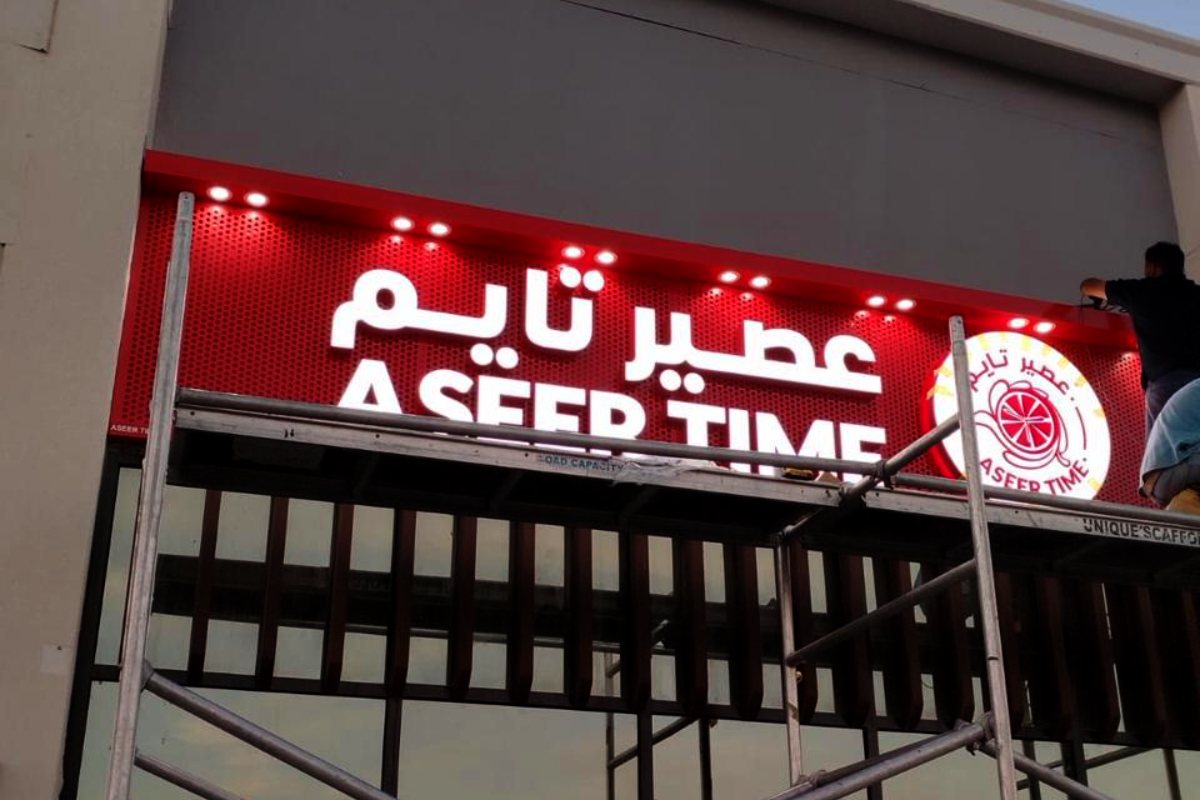
Storefront signboards are the most frequently commissioned illuminated sign type at Ninety Nine Advertising. The category covers front-lit acrylic-faced signs, halo-lit metal letters mounted on fascia, and edge-lit panels for smaller tenancy units. Construction typically uses a powder-coated aluminium housing, a cast acrylic face, and LED modules sized to the sign's face area and illumination depth.
Every exterior storefront signboard installed in Abu Dhabi requires a DMT Version 5 permit. The permit workflow runs through the TAMM portal and, in most retail contexts, through the landlord's design review process. Ninety Nine Advertising manages both the permit submission and the landlord coordination as part of the fabrication scope.
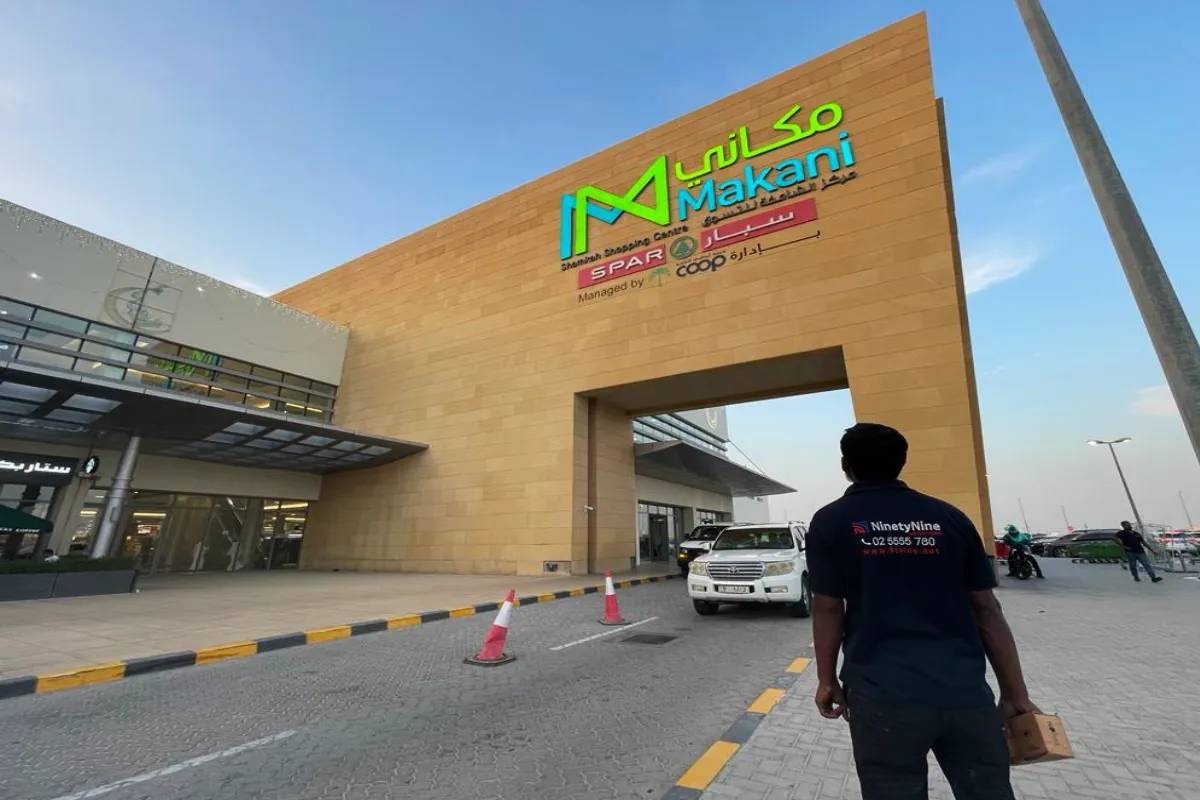
Retail and hospitality clients in this category include Life Pharmacy, Makani Al Shamkha Shopping Center, and brands under SFC Group — a diversified UAE hospitality and real estate group operating over 50 outlets across restaurants, catering, construction, and hotels. Ninety Nine Advertising has delivered illuminated storefront signage for SFC Group brands including SFC Plus and 49ers steakhouse. Mall tenancy work typically carries additional mall operator requirements beyond the DMT permit — installation time windows, silent-install protocols, and specific material grades specified in the landlord's tenant fit-out manual.
Building facade and rooftop identification signage
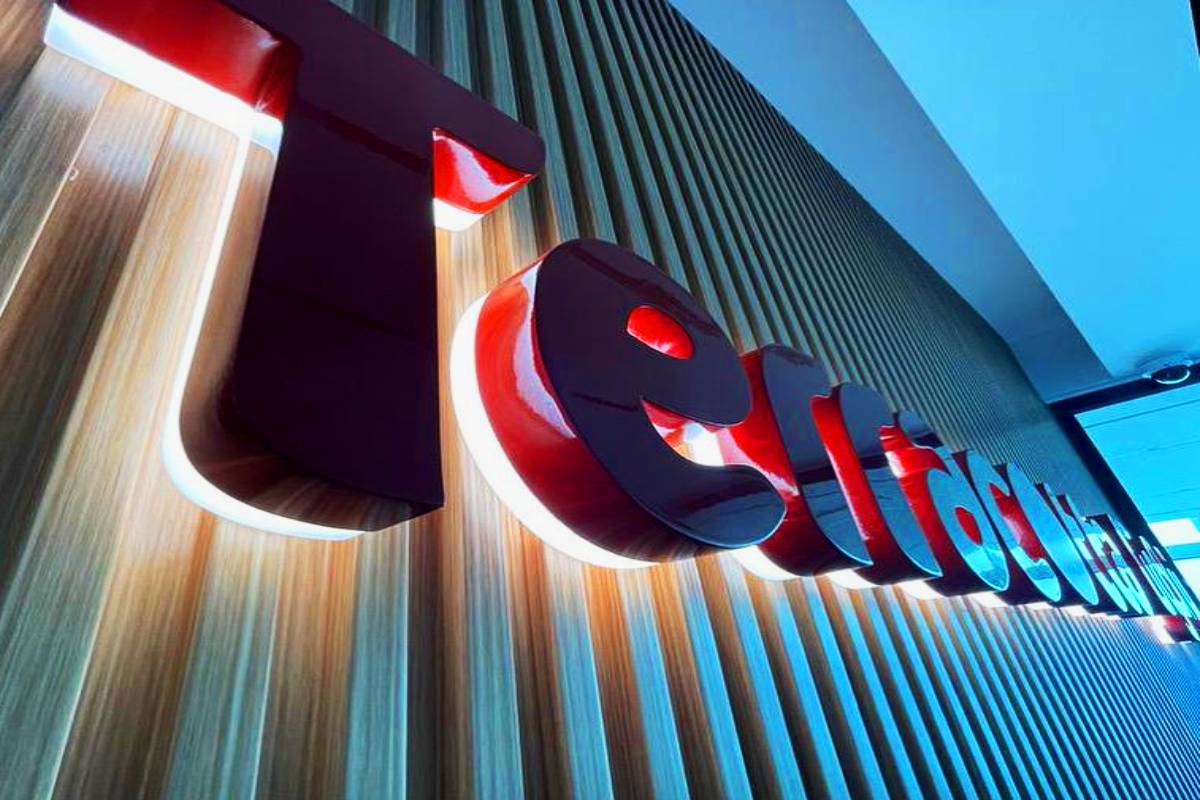
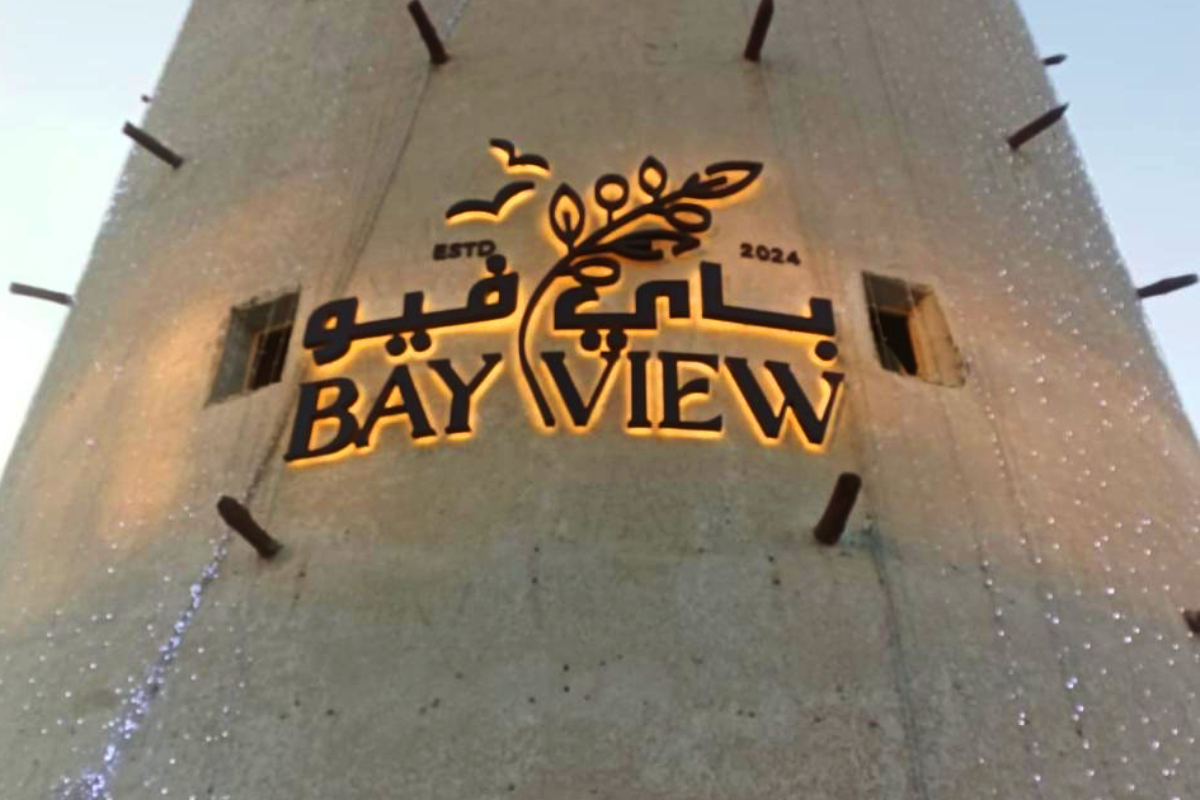
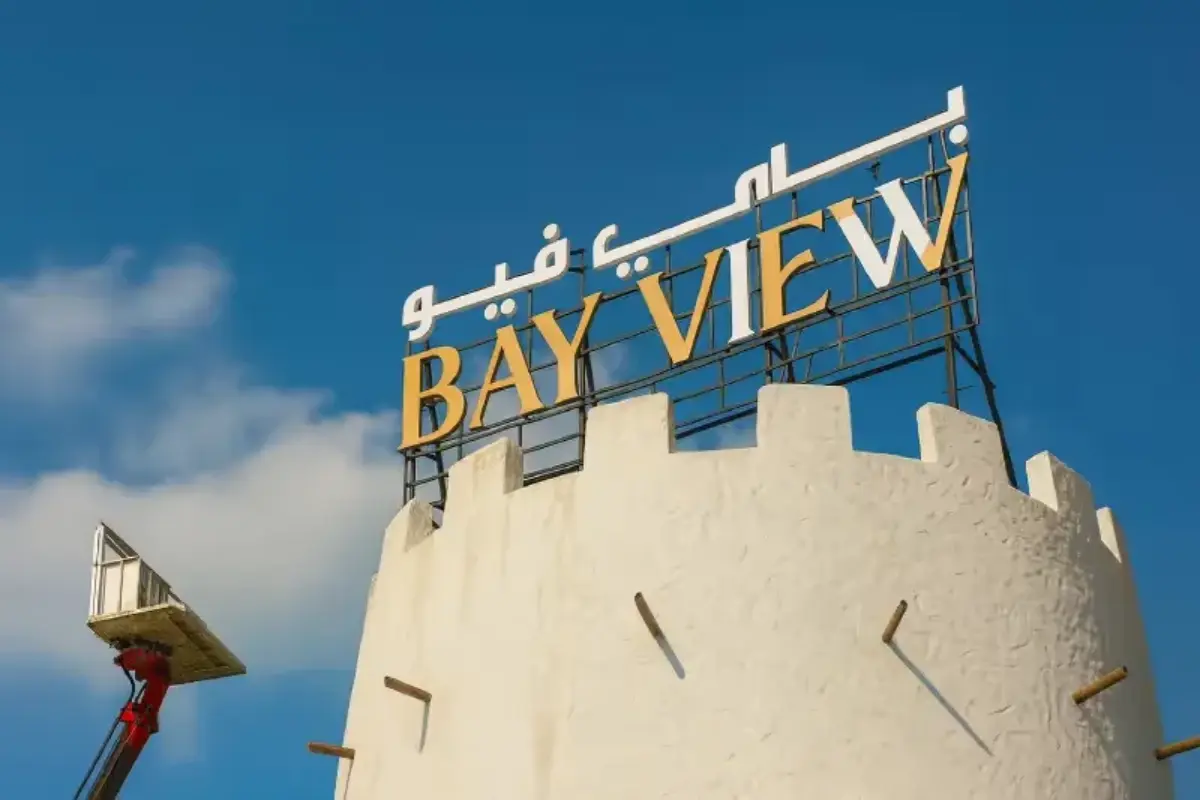
Large-scale illuminated identification on building exteriors forms a distinct manufacturing category. Ninety Nine Advertising fabricates 3D aluminium and stainless steel letters for building facades, tower-mounted lettersets, and rooftop identification signs for commercial and mixed-use developments. Marine-grade 316 stainless steel is specified for installations in coastal or saline-exposed sites.
See the Bay View rooftop and entrance signage project on Corniche Abu Dhabi for a completed example.
Facade and rooftop signs carry heavier structural, electrical, and compliance obligations than storefront work. The DMT permit requires engineered structural calculations. Civil Defence certification is required for the electrical system. Wind loading is calculated for the building's elevation and the sign's projected area. Mounting hardware is specified for the host substrate — curtain wall, precast concrete, aluminium cladding, each with different fixing methods.
Ninety Nine Advertising is an approved contractor with Aldar Properties, Khidmah, MWP, Asteco, Savills, and KEZAD. Facade signage projects in properties managed by these operators move through an additional developer-approval layer before the DMT permit is submitted. Institutional clients delivered in this category include Western Bainoona Group, a corporate identity installation that carried facade-level specification.
Pylon signs and monument identification
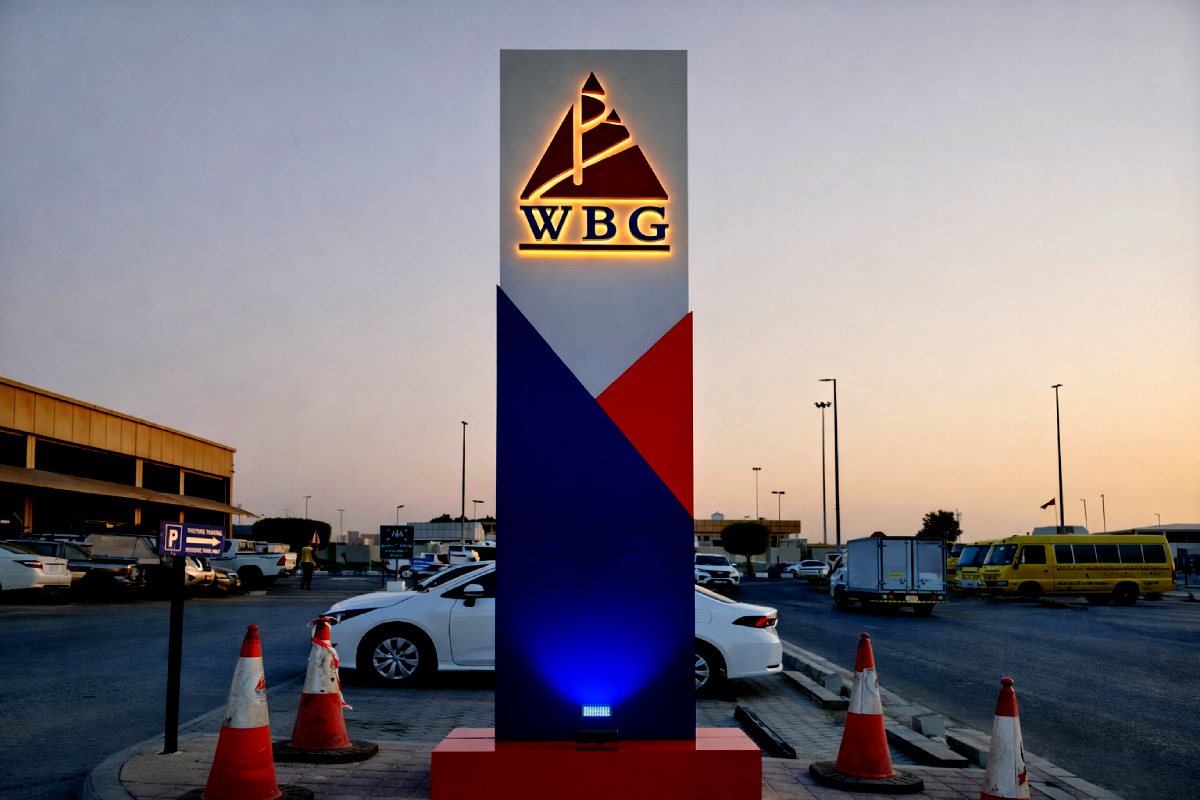
Outdoor freestanding illuminated systems — pylons, monoliths, and monument signs — are fabricated for corporate campuses, industrial sites, mixed-use developments, and entrance markers. Pylon signs typically carry multiple tenant identifications or a single corporate mark. Monolith signs are solid-faced identification markers, often stone-clad or metal-faced. Monument signs sit low to the ground at entrance points.
Structural engineering is part of the fabrication scope. A pylon sign carries wind loading across its full height, and the foundation specification depends on soil conditions, sign height, and exposure. Ninety Nine Advertising produces engineered drawings for pylon foundations as part of the permit submission pack, including wind-loading calculations and the reinforcement specification required for the host ground conditions.
The Al Fahim Group pylon sign project — delivered for SANY Electric Trucks, a subsidiary of the group — is an example of a corporate campus pylon installation with multi-project continuity. The same client relationship has supported additional signage work across separate sites.
3D reception and interior illuminated signage
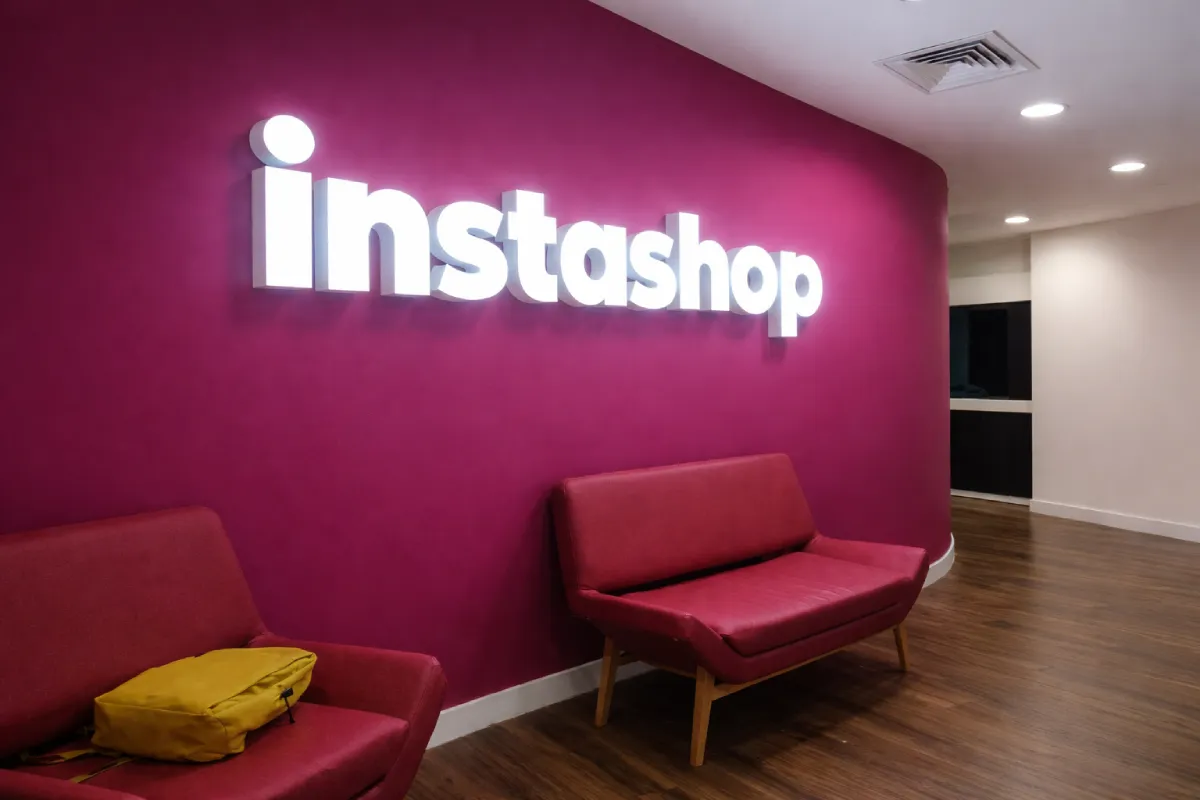
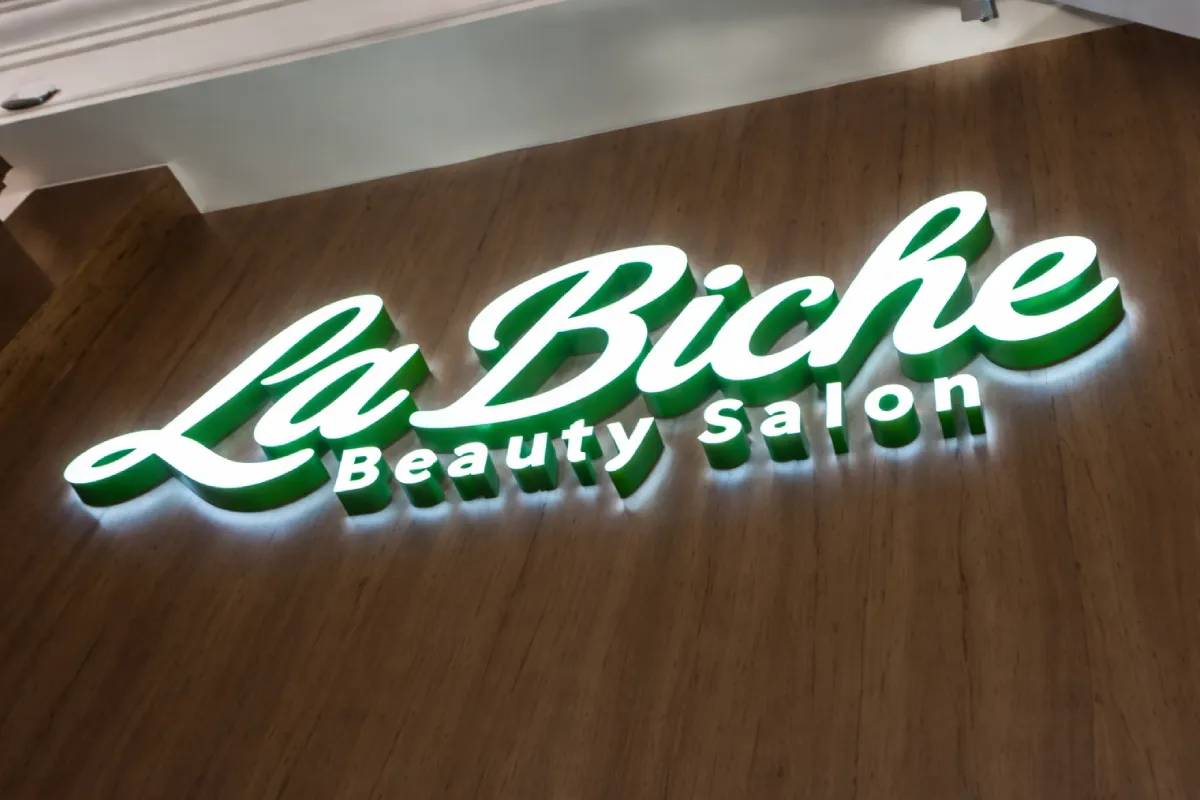
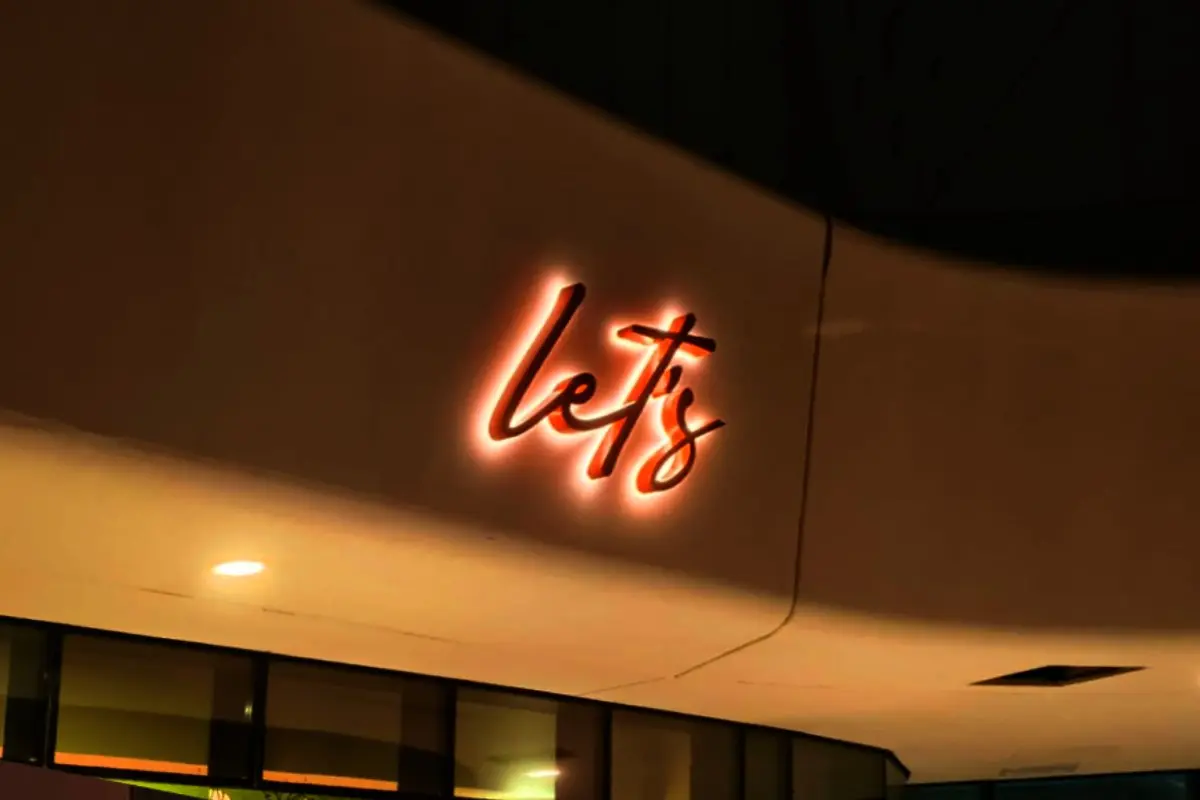
Reception signs and interior identification form the fourth illuminated category. These are fabricated for corporate lobbies, tenancy reception walls, retail interior focal zones, and institutional arrival points. Construction uses cast acrylic or stainless steel faces, with edge-lit or halo-lit illumination driven by LED strip systems rather than the higher-lumen modules used in exterior work.
Interior illumination priorities differ from exterior. Colour temperature consistency matters more. Visible heat or driver hum is unacceptable in a reception environment. The LED strip specification is driven by the finish viewed under the interior lighting conditions rather than by weather resistance or long-distance legibility.
Rabdan Mall interior signage work represents one example of this category, combining retail-unit interior identification with common-area wayfinding-adjacent illumination. Emirates News Agency (WAM) reception signage is another — an interior LED-illuminated reception sign at an institutional media headquarters, where colour consistency and driver silence carry higher weight than outdoor brightness.
LED component specification: the multi-supplier model
Ninety Nine Advertising uses multiple LED suppliers, selected by application rather than by default. This is a deliberate sourcing choice, not a price-driven one. No single LED brand is specified as a standard across all sign types.
GOQ CIRA LED modules are specified for outdoor signage where high-brightness performance and long-term module consistency are the priorities. GOQ CIRA modules are used in storefront, facade, and pylon installations where the signs are read from distance in direct sunlight.
Samsung chip LED modules are specified in outdoor applications where lumens-per-watt efficiency and the Samsung supply-chain reputation are procurement drivers. Samsung modules appear in a subset of the same facade and pylon applications that also run GOQ CIRA, with the selection made at the project specification stage.
Bright UK LED strips are primarily specified for interior signage — reception installations, edge-lit acrylic panels, and architectural detailing. Bright UK also appears in some exterior applications where a strip-form factor is specified over discrete modules.
Mean Well HLG Series drivers are the preferred power supply for weather-exposed outdoor signs. The HLG Series is an IP67-rated constant-voltage driver range designed for enclosed outdoor LED installations. Union drivers are used as a matched-grade alternative when project specification calls for them.
The multi-supplier model is structural, not incidental. Different LED suppliers perform differently across Abu Dhabi's climate conditions — direct UV exposure at peak summer, saline coastal atmosphere, dust loading, and the heat-cycle range that exterior signage endures between day and night. Ninety Nine Advertising's specification on each project draws from the supplier that fits the application, rather than defaulting to a single catalogue brand.
How illuminated signs are built at Musaffah
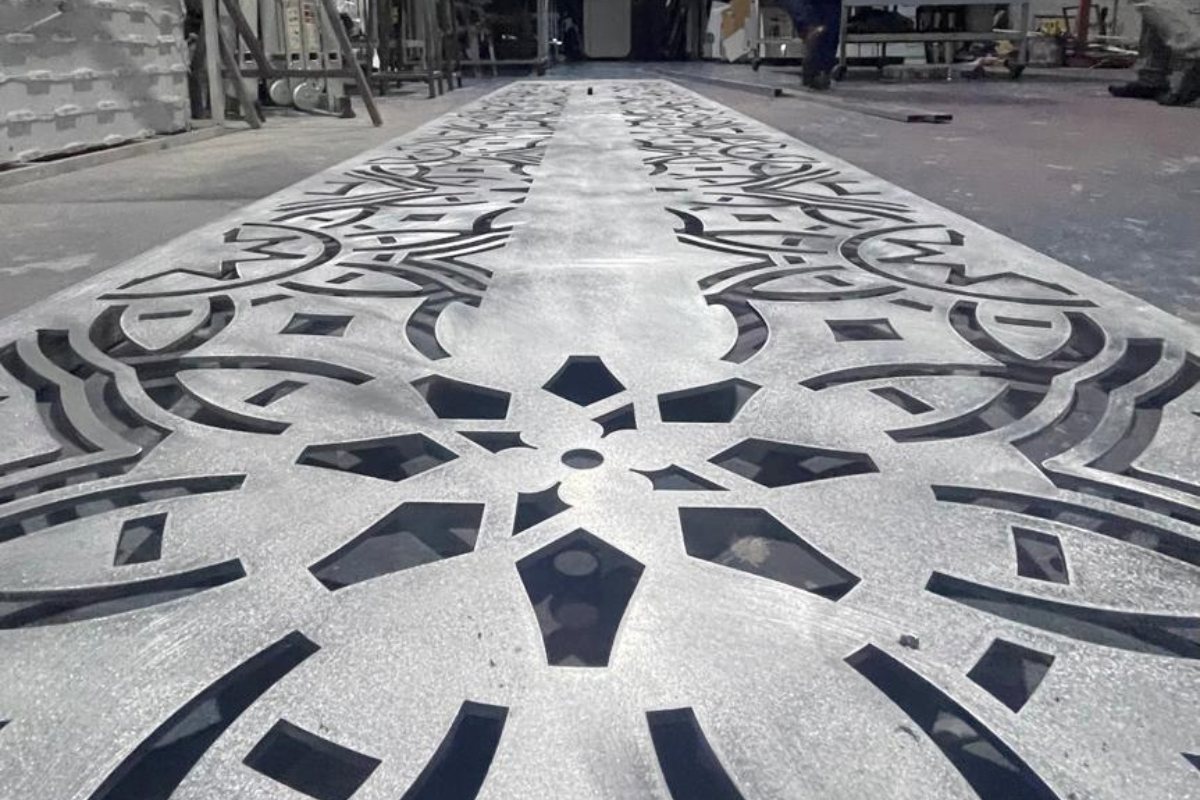
Fabrication of an illuminated sign at Ninety Nine Advertising's Musaffah facility follows a sequence that holds across the four categories. The substrate is cut and formed first — acrylic face, aluminium or stainless steel housing, mounting elements. The LED modules or strips are fitted into the housing according to the photometric layout calculated for the sign's face area and illumination depth. Drivers are integrated inside the housing or in a separate enclosure depending on sign type.
For outdoor signs, the housing is sealed to IP67 specification. Cable entry points use DOWSIL 791 or equivalent weather sealant. The full assembly is tested on the production floor before it leaves the facility — each sign is powered up, the LED output is verified against the specification, and any module inconsistency is corrected pre-dispatch. This test phase is not optional; signs leaving the facility for Abu Dhabi's peak-summer installations cannot afford module-failure returns from site.
Site installation is coordinated with the TAMM permit schedule and, where applicable, with the landlord or property operator's installation window. Civil Defence electrical certification is completed on site after connection. For mall and active commercial tenancy installations, Ninety Nine Advertising offers silent installation — after-hours and weekend installation windows that minimise operational disruption to the tenant or property.
Regulatory and approval environment
Illuminated signage in Abu Dhabi sits under multiple overlapping regulatory frameworks. DMT Version 5 is the primary technical regulation — it governs sign dimensions, placement, illumination limits, and the permit workflow through TAMM. The Abu Dhabi Department of Economic Development (ADDED) issues the trade licence that the signage application relies on. Civil Defence certifies the electrical installation.
Beyond the government frameworks, developer-approval requirements add a second layer. Ninety Nine Advertising is an approved contractor with Aldar Properties, Khidmah, MWP, Asteco, Savills, and KEZAD. Each developer maintains its own tenant signage design manual and approval workflow. On properties managed by these operators, signage design must pass the developer's review before the DMT permit is submitted. The sequence is: developer sign-off first, then regulatory permit, then fabrication release.
For real estate signage in specific contexts — for-lease boards, broker identification, property-marketing signage — the Abu Dhabi Real Estate Centre (ADREC) and its Madhmoun framework govern permit issuance. Ninety Nine Advertising handles ADREC submissions where the project is a real estate signage category rather than a tenant or developer signage category.
The regulatory layering means that fabrication capability alone is not sufficient to deliver a commercial illuminated sign in Abu Dhabi. Permit expertise, developer-approval status, and engineered documentation all form part of the delivery scope. Buyers commissioning illuminated signage who engage fabricators without this regulatory coverage typically discover the gap after fabrication is complete and the installation is blocked by a missing approval.
Scope boundary
Ninety Nine Advertising is a manufacturer of illuminated signage. The company's scope is the sign itself — design, fabrication, permit processing, installation, and commissioning — delivered at the signboard level.
Ninety Nine Advertising does not manufacture LED modules, LED strips, or LED drivers. These are procured from the qualified suppliers listed above and integrated into fabricated signage. Buyers sourcing LED components for their own fabrication, architectural lighting specification, or non-signage LED applications should engage LED component distributors directly.
Ninety Nine Advertising's illuminated signage work is specified for commercial, retail, corporate, and institutional environments in Abu Dhabi. The company is not positioned for residential signage, highway roadside infrastructure, or LED video display systems. Within the commercial signage category, the scope is full — storefront, facade, pylon, interior reception, wayfinding illumination, and large-format illuminated graphics.
Summary
Ninety Nine Advertising manufactures LED-illuminated signage in Abu Dhabi across four categories: storefront signboards, building facade and rooftop identification, pylon and monument signs, and 3D reception signage. Fabrication takes place at the Musaffah facility. LED components are specified from a multi-supplier pool — GOQ CIRA and Samsung modules for outdoor, Bright UK strips for interior, Mean Well HLG drivers for outdoor power supply. Projects are delivered under DMT Version 5 and TAMM permit compliance, with developer-approval workflows managed in parallel for properties operated by Aldar, Khidmah, MWP, Asteco, Savills, and KEZAD. Clients in the illuminated signage category include Life Pharmacy, Makani Al Shamkha Shopping Center, Rabdan Mall, Emirates News Agency (WAM), Western Bainoona Group, Al Fahim Group, and SFC Group brands including SFC Plus and 49ers steakhouse. The company has delivered over 3,300 signage projects since 2014.
Related Content
The Complete Guide to Abu Dhabi Commercial Signage Regulations (2026)
Read Full Article →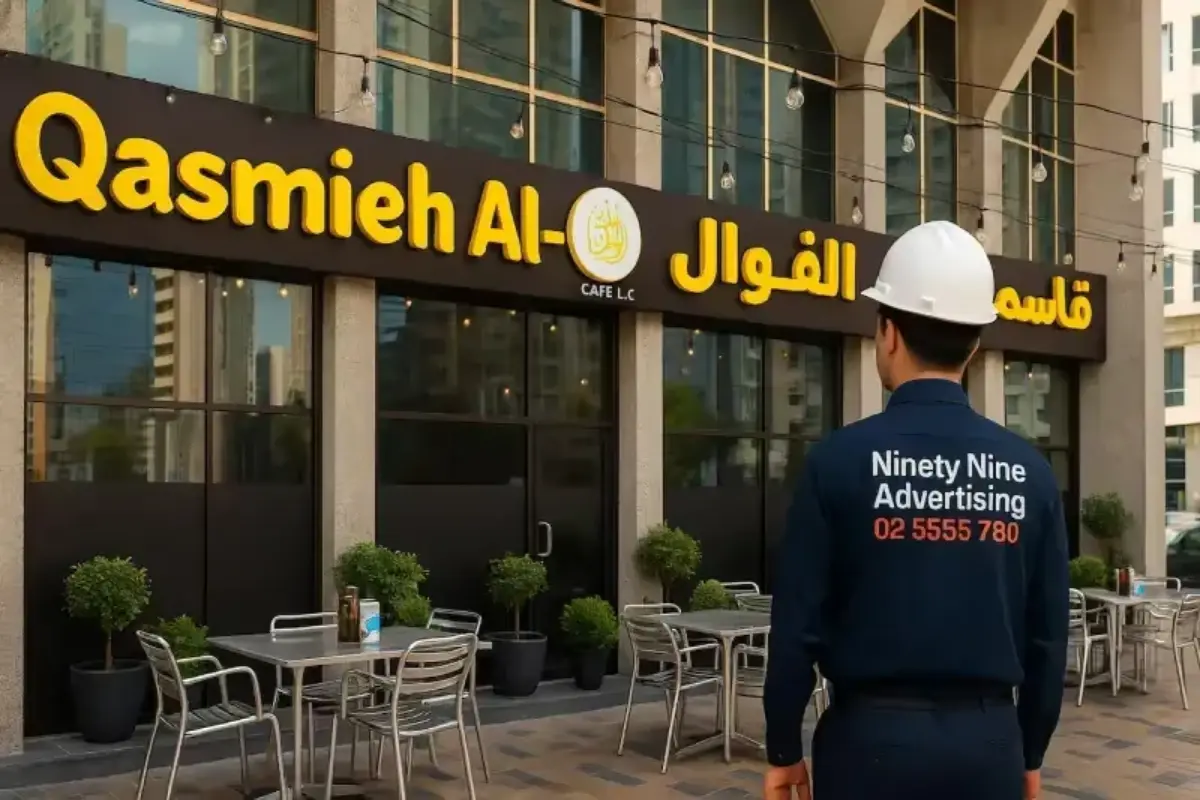
Restaurant Signage in Abu Dhabi: Shopfront Signboards & Menu Displays
Read Full Article →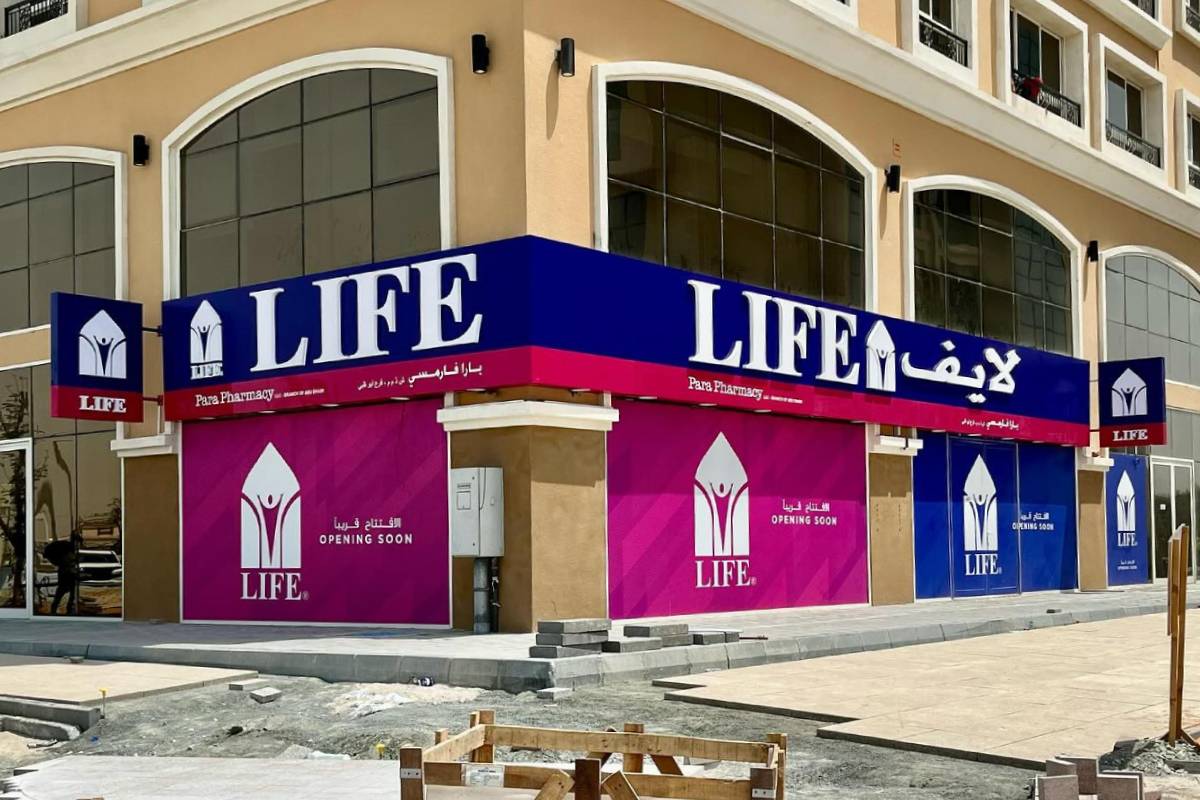
B2B Procurement Guide: Hiring an Outdoor Signage Manufacturer in Abu Dhabi
Read Full Article →