.svg)

Printed Opaque vs One Way Vision Sticker for Shop Windows
Two ways to cover shop glass with printed branding. One blocks the view both ways. The other keeps your staff seeing out while the street sees your brand. A practitioner's guide for Abu Dhabi shops.
Two different products do the same category of job on your shop glass — full-coverage printed branding — with two different functional outcomes. Printed opaque window vinyl blocks the view both ways. One way vision sticker keeps your staff and customers seeing out while the street sees your brand. Which one is right depends entirely on what you need the glass to do.
The two approaches this article compares
Printed opaque window vinyl and one way vision sticker are both full-coverage printed films applied to shop glass, differing in what happens to the view. Both carry full-colour printed graphics at shopfront scale. Both cover most or all of a window. What separates them is sightline.
Printed opaque window vinyl is solid. The film itself is non-transparent, so whatever you print on it blocks the view from outside to inside and from inside to outside. Full stop, both directions.
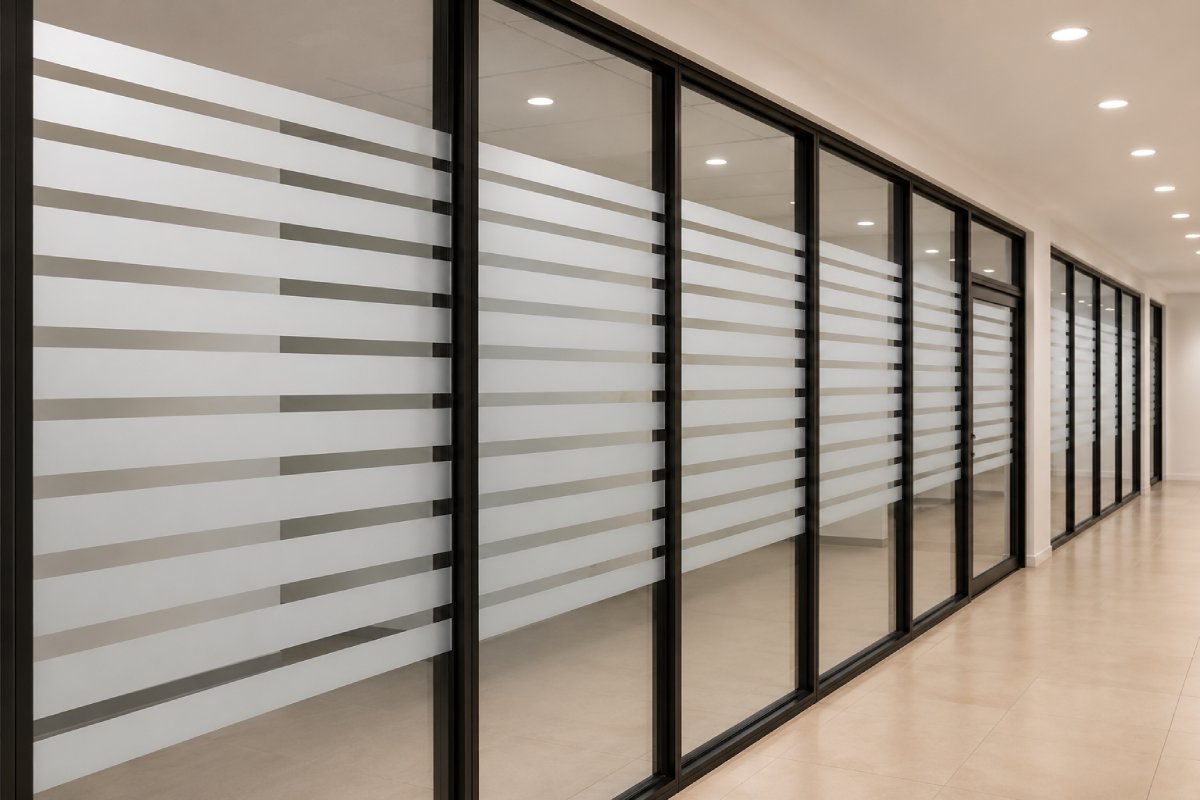
One way vision sticker — also called one way vision film or perforated window film — is micro-perforated. From the street, the printed image reads as full coverage. From inside the shop, you see past the film to the street because the eye focuses through the tiny perforations toward the brighter light outside.
A note on terminology before you speak to a supplier. "Contra Vision" is a brand name that some shop owners in the UAE use generically for one way vision film, in the same way people say "Kleenex" for tissues. The underlying product category is micro-perforated window film regardless of who makes it.
This article does not cover frosted window film, privacy film, mirror film, or static-cling products. Those serve different functions and are treated separately.
What each approach does on your glass
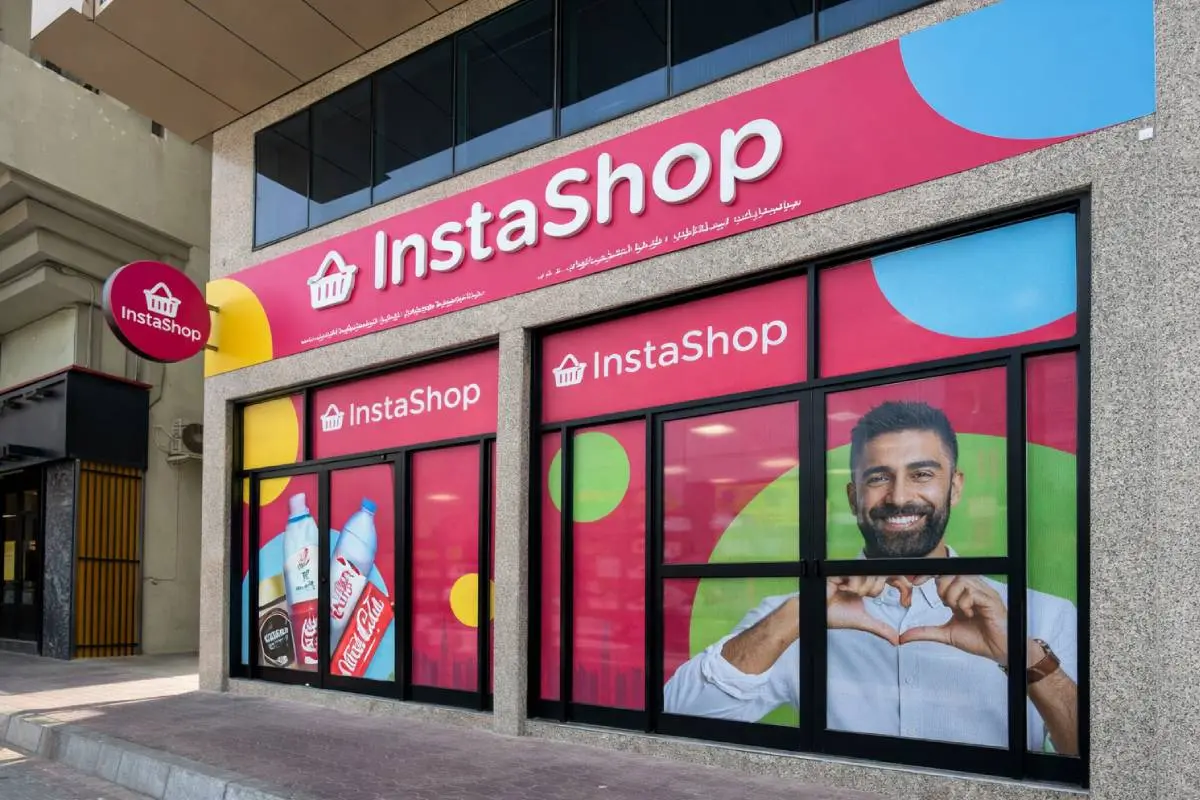
Printed opaque window vinyl covers your glass completely and carries the heaviest colour saturation of any shopfront graphic option. Because the film is solid, there's nothing competing with the printed image — no light bleeding through, no perforation pattern softening the colour. A deep red reads as deep red. A dark navy reads as dark navy. This is the right choice when the brand needs maximum colour impact and when the interior behind the glass either doesn't need to be visible or actively shouldn't be. The printed opaque window vinyl page covers the film options and where they're typically installed.
One way vision sticker covers the glass at the same scale but preserves interior visibility in one direction. Staff inside see out through the film to the street. Passers-by outside see your printed branding. The effect works because the printed side is brighter than the unprinted interior side during daylight hours — the eye goes toward the light. Colour saturation is slightly softer than full opaque because some light passes through the perforations, but for most brand applications the difference is not visible at street distance. The one way vision sticker page covers the perforation options Ninety Nine supplies.
The decision between them is not about which product is better. It's about which functional outcome your shop needs.
The four questions that decide between them
Four questions tell you which product fits your shop. Answer them in order. Most shops find that two or three answers point clearly to one product or the other.
Question one — do your staff and customers need to see out during business hours?
In a cafe, showroom, clinic, or boutique, yes. Staff read the street for arriving customers, for operational awareness, for the feel of an open shop. In a warehouse retail space, stockroom with street frontage, or construction hoarding during a fit-out, no. The first case points to one way vision. The second points to printed opaque.
Question two — does the interior work for the brand when visible from the inside looking out, or from the street looking in through perforations?
If your interior is clean, well-lit, and on-brand, visibility is an asset. If your interior has operational clutter, awkward back walls, empty stock rooms, or doesn't match the brand tone, visibility is a liability. Asset points to one way vision. Liability points to printed opaque.
Question three — does the frontage need the heaviest possible colour impact, or is balanced impact with interior function more valuable?
Maximum colour is printed opaque's unique strength. One way vision carries strong colour but not the same density at close viewing. For a brand where colour saturation is a core identity choice — think deep jewel tones, high-contrast graphics, photographic campaigns — printed opaque wins. For brands where the visual effect is more about presence and scale than colour intensity, one way vision is usually enough.
Question four — is this a permanent brand treatment, or temporary?
Construction hoarding, fit-out covers, "coming soon" campaigns, seasonal installations — printed opaque is the default. The brand is behind the film, not through it. Permanent shopfront brand treatments can go either way depending on the answers to questions one through three.
Write your answers down before the design conversation starts. If two or more answers point to the same product, you have your answer. If they split, the shop has a genuinely dual requirement and the conversation moves to which compromise you can live with.
When printed opaque window vinyl is the right call
Printed opaque window vinyl is the right call when interior visibility isn't a business need, when colour impact matters most, or when the interior works against the brand.
Construction and fit-out hoarding is the clearest case. When your shop is a building site behind the glass, the interior is not something to expose. A full printed opaque wrap with brand messaging and a "coming soon" campaign does two jobs at once — it hides the work and turns the disruption into a pre-launch marketing surface. Abu Dhabi fit-out timelines run for months; that's months of free shopfront impressions that would otherwise be wasted on a construction site.
Loud-brand positioning is the second case. Volume retail, promotional-led brands, sale-driven stores — these brands compete on visibility, colour, and street presence. Subtlety is not the goal. Printed opaque carries the saturation and the scale these brands need.
Interior-that-works-against-the-brand is the third case. If the passer-by would see stockrooms, operational areas, empty display units, or back walls that don't match your brand, covering the glass is not a retreat. It's a correct decision. You don't need to renovate the interior; you need to stop the street from reading it.
Permanent branding where interior visibility has no business value is the fourth case. Warehouse retail, wholesale showrooms with street frontage, stockrooms, or service-delivery spaces where the glass is architectural rather than functional — printed opaque treats the glass as a surface to brand, not a window to look through.
When one way vision sticker is the right call
One way vision sticker is the right call when staff and customers benefit from seeing out, when interior daylight matters, or when the brand wants heavy exterior presence without closing off the interior.
Cafes, clinics, showrooms, and boutiques are the clearest case. Staff need to see the street — to spot arriving customers, to read the flow of foot traffic, to keep the shop feeling connected to the outside rather than boxed in. One way vision sticker gives you the full exterior brand presence without losing that connection. The interior still feels like an open shop.
Shops where interior daylight matters are the second case. Natural light in a retail space affects how merchandise reads, how staff work, and how customers experience the shop. Full opaque blocks this entirely. One way vision sticker reduces it but doesn't eliminate it — some light still passes through the perforations. For a boutique where lighting is part of the product experience, or a clinic where daylight affects the clinical feel of the space, this difference matters.
Mall tenants working under design manuals that require interior visibility are the third case. Many Abu Dhabi mall landlords cap how much of the shopfront glass can be fully blocked — typically specifying that a percentage must remain visually permeable for safety, wayfinding, or tenant-mix aesthetics. One way vision sticker reads as full coverage from the mall walkway but technically maintains visual permeability, which often satisfies the rule when full opaque wouldn't. Check your tenant fit-out manual; the specific thresholds vary.
Brands wanting heavy exterior presence without a closed-box interior feel are the fourth case. Some brands are built on bold shopfronts but open, bright interiors — the exterior and interior tell different parts of the same story. One way vision sticker is the tool that makes this possible on glass.
What each approach costs you
Both approaches give something up. Honest trade-offs are worth naming before the design phase, not after installation.
Printed opaque costs you interior connection to the street, natural light transmission, and flexibility if the business model shifts. Once the film is down, staff cannot see out. Daylight inside drops to artificial lighting levels. If you later decide the shop needs to open up visually, the film has to be removed and replaced.
One way vision sticker costs you some colour intensity and introduces two specific visual behaviours worth understanding. First: up close, within two or three metres, passers-by can see the perforation pattern. At street distance, the pattern disappears and the image reads as solid. Decide whether your frontage is read from close up or from across the road — a mall-interior shopfront reads from close; a high-street shopfront reads from further. Second: at night with interior lights on and the street dark, the one-way effect reverses. People on the street can see into the shop. This is the single most common source of client disappointment with one way vision. It is physics, not a product defect, and it matters for any shop trading after dark — cafes, restaurants, clinics with evening hours, retail in mall corridors lit differently at night.
Both products can be removed without damaging the glass under normal conditions, though films that have been installed for several years in direct UAE sun may leave adhesive residue that takes work to clean. Neither should be treated as permanently irreversible.

Both approaches in Abu Dhabi conditions
Abu Dhabi adds three conditions that shape the choice beyond what generic global advice covers. Year-round direct sun on south and west-facing shopfront glass. Daily dust and sand on exterior surfaces. Mall and landlord design manuals that constrain what goes on the window in the first place.
Sun and UV are the first condition, and they behave differently on the two products. Printed opaque carries printed ink across the full film surface — meaning the full surface is exposed to UV equally. Over time, specific pigments fade before others; deep reds and oranges tend to go first, which affects brand colour fidelity. One way vision sticker has a black backing on the inside face that absorbs UV before it reaches the printed layer, which gives the printed surface a slightly different fade profile. Both products benefit from UV-rated film grades for Abu Dhabi conditions, and both have finite service lives in direct sun. The specific grade options are on each product's page.
Dust is the second condition, and it's the one most owners don't think about until after installation. Printed opaque has a smooth exterior surface that shows dust evenly and cleans with standard window-washing. One way vision sticker has a perforated surface where dust can settle in the micro-holes. This is visible on close inspection and affects how the shopfront reads at close distance. For high-dust street frontages — industrial-area retail, construction-adjacent locations, roads without landscaped buffers — this is a live consideration. For malls and clean commercial streets, it's negligible.
Mall and landlord design manuals are the third condition. The rules vary by landlord and by mall fit-out zone. Some allow full opaque on street-facing glass. Some cap opaque coverage at a percentage and require the remainder as visible glass or one way vision. Some specify particular film grades, colour palettes, or illumination compatibility. Check the tenant design manual before briefing the job — or ask your signage partner to check it for you. Budget for this as part of the timeline; permit and landlord approval can add one to three weeks depending on how responsive the approver is.
A final Abu Dhabi note on evening trading. The reverse-visibility behaviour of one way vision at night is more pronounced in shop locations with high interior lighting and dark exterior streets. For F&B shops trading into the night on brightly-lit mall corridors, the effect is minimal. For clinics, salons, and retail on residential-adjacent streets with low ambient lighting outside, the effect is more visible. If your shop trades after sunset and the street outside is darker than the shop inside, factor this into the decision.
When you're ready to specify either product for an Abu Dhabi shopfront, the printed opaque page and the one way vision sticker page cover the material grades that handle UAE conditions.
What to bring when you're ready to brief the job
Seven things make the design conversation faster and land on better answers.
First, photos of your current shopfront from three angles — across the street, from the pavement directly in front, and from inside the shop looking out. These frame the decision more concretely than any verbal description.
Second, photos of the interior as it is now. Not staged, not cleaned up for the photo — as a passer-by would see it through clear glass. This tells the designer whether interior visibility is an asset or a liability, which is half the decision.
Third, brand assets in their final form. Logo files, brand colour codes, any typography the brand uses. If the brand has a style guide, bring it.
Fourth, photos of your three or four nearest neighbour shopfronts. The decision of full-coverage versus one way vision is partly a competitive-context decision.
Fifth, any landlord or mall fit-out design manual that applies. If you don't know whether one exists, ask your landlord or tenant coordinator before the design conversation starts.
Sixth, a target timeline. Permit processing and landlord approval for exterior shopfront branding in Abu Dhabi have their own schedules, and the sticker or wrap work plugs into that schedule rather than driving it.
Seventh, your trading hours and evening-lighting context if you trade after dark. This is the information that decides whether one way vision's reverse-visibility behaviour at night will matter for your shop.
With those seven together, any design conversation moves faster. Without them, the conversation stays abstract — and abstract conversations produce generic shopfronts.
Frequently asked questions
Can you see into the shop through one way vision sticker at night?
Yes, under certain conditions. One way vision sticker relies on the printed side being brighter than the unprinted side. During daylight hours, with the street outside brighter than the shop interior, the one-way effect works as described. At night, with the interior lit and the exterior dark, the effect reverses — people on the street can see into the shop through the film. The severity depends on how bright the interior is and how dark the exterior street is. For shops trading only during daylight, this is not an issue. For evening-trading shops on dimly-lit streets, it is, and printed opaque may be the better choice if interior privacy after dark matters.
How long does printed window vinyl last on an Abu Dhabi shopfront?
Service life on Abu Dhabi shopfront glass depends on film grade, glass orientation (south and west faces receive more direct sun), and the specific inks used for printing. UV-rated films intended for exterior commercial application generally carry service ratings in years, with specific figures on the product pages. South and west-facing glass will reach end-of-service earlier than north-facing. The printed opaque page and one way vision page both carry the grade options and their specific ratings.
Can both products be removed without damaging the shop window glass?
Both printed opaque window vinyl and one way vision sticker can be removed from shop window glass without damaging the underlying glass under normal conditions. Fresh removals within the first year are routine. Films that have been in place for several years in direct UAE sun may leave adhesive residue that takes effort to clean, but the glass itself is not harmed.
Related Content

One-Way Vision Stickers in Abu Dhabi: Technical Specs & Storefront Applications
Read Full Article →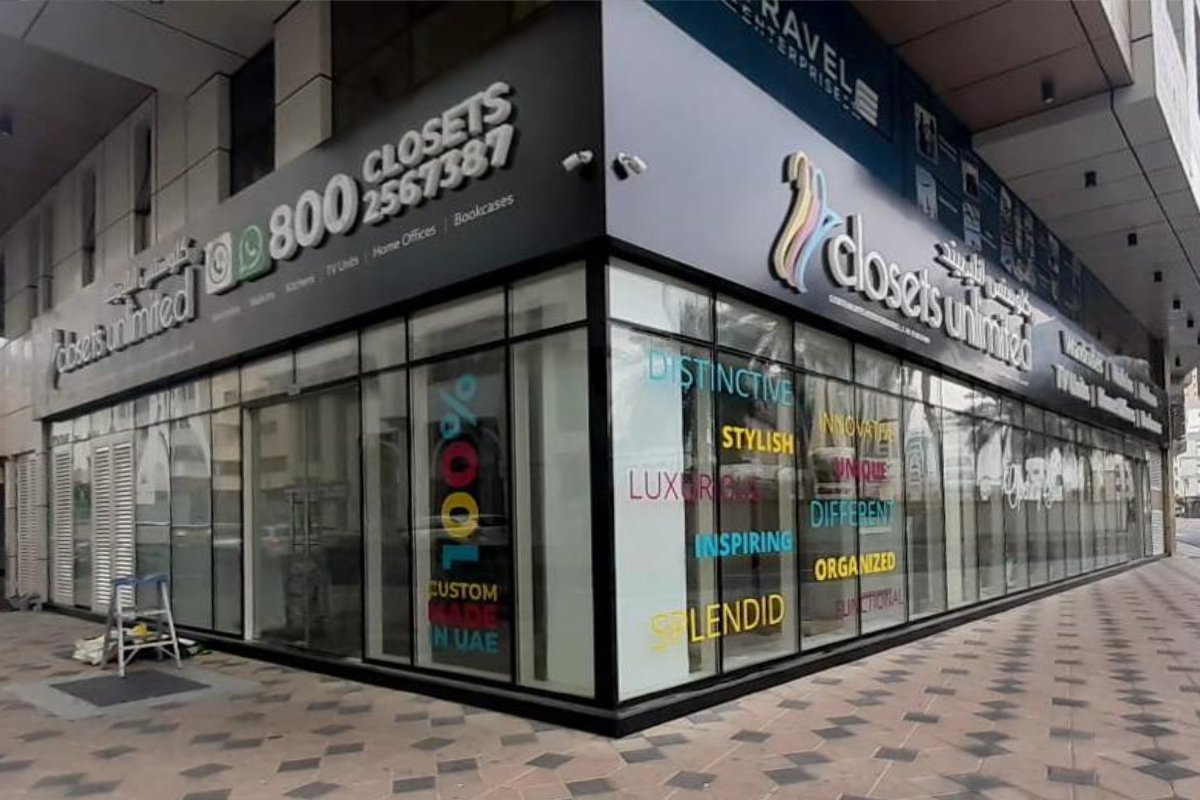
Shop Front Glass Stickers Abu Dhabi: The Ultimate Window Branding Guide
Read Full Article →
Office Glass Frosting & Etching Services in Abu Dhabi: The Technical Comparison
Read Full Article →