.svg)

Building Facade Signage in Abu Dhabi
Building facade signage and exterior 3D letters for Abu Dhabi commercial properties. We review the elevation, fixing surface, access method and project approvals before detailing fabrication and installation.
Exterior Facade Signboards & Building Elevation Options
At Ninety Nine Advertising LLC, we engineer exterior facade signboards that place your corporate identity directly on the vertical elevation of the property.
Distinct from rooftop installations, building facade signage serves as a macro-level landmark across the city grid, with placement and sightlines reviewed for the particular building.
Review our 3D signage selection guide for mounting, illumination and material considerations before technical planning.
We deliver building identification designed around the elevation, mounting condition and approved project scope.

.jpg)

.jpg)
Building Facade Signage Functions
Facade-mounted letters can identify a property from its main approaches. The appropriate size, illumination and material depend on the building elevation, intended sightlines, exposure and permitted sign position.
- Corporate building identification: Signs positioned for visitor and client wayfinding.
- Upper-level branding: Exterior letters planned around the available structural support and access.
- Night identification: Front-lit or halo-lit options assessed against the building and surrounding light conditions.
High-Level Facade Illumination Options
- Front-lit letters: Light projects through the letter face and can provide clear nighttime identification where the viewing distance and surroundings suit the design.
- Halo-lit letters: Light reflects onto the backing surface to form a softer outline; the result depends on mounting distance and wall finish.
- Non-illuminated letters: An option for locations where daylight identification meets the project need.


Facade Fixing Methods
Fixing to concrete, steel or a curtain-wall support system requires a different structural approach. The connection must be designed for the actual sign load and building structure, with the property owner's and engineer's review where required.
Glass panels are not treated as a default structural fixing point. Weatherproofing, access and any effect on the facade warranty are checked before a detail is approved.
Our Projects Gallery
Browse our gallery of completed branding projects across Abu Dhabi. Every photo shown is from a real project delivered by Ninety Nine Advertising LLC, showcasing premium, functional and high-visibility branding solutions in actual business environments.


Tower Sign Design, Permitting & Installation in Abu Dhabi
We fabricate building-mounted signage and coordinate installation planning for Abu Dhabi properties.
Fixing design, access, weather exposure and future servicing are reviewed for the particular elevation before fabrication and site work proceed.
Facade Review & Engineering Drawings
The sign position, weight, wind exposure and supporting building structure are reviewed before a fixing design is selected. Project-specific engineering drawings and authority submissions are prepared where required.
Structural calculations and the approval path depend on the actual building and the responsible engineer's and authority's review.
Exterior Sign Fabrication & Electrical Specification
Aluminum, stainless steel and illuminated letter options are selected according to the approved design and exposure conditions.
For illuminated signs, LED modules, drivers, enclosures and access for servicing are specified for the project. The ingress rating and electrical layout are confirmed against the chosen components and installation environment.
High-Level Installation Planning
Crane, cradle or rope access may be considered after reviewing the building, sign load, working area and site restrictions. The access plan, specialist qualifications and any required permissions must be confirmed before installation.
Tenant access and public safety arrangements are coordinated with property management for the scheduled work window.
How Facade Signage Turns Buildings into Landmarks
- Corporate headquarters along Abu Dhabi highway corridors need identification from approach distance. Facade-mounted 3D letters at elevation deliver reading range matched to architectural scale.
- Hotels across Abu Dhabi need illuminated facade branding visible as a landmark day and night. Elevated letter and logo builds serve wayfinding and brand identification before the visitor reaches the entrance.
- Retail parks and shopping centres need facade letters legible at several hundred metres at vehicle speed. Large-format builds on Abu Dhabi elevations require fixings selected for sign scale and structural condition.
- Hospitals, campuses, and institutional buildings need large-format exterior identification from multiple entry approaches. Facade letters serve directional identification at campus scale within a wider wayfinding system.
Ready to dominate the city skyline with a heavy-duty architectural landmark? Get an accurate engineering estimate from our Musaffah-based fabrication and high-altitude installation team by sharing a few quick project details:
- Building Location & Elevation: Specify the tower's plot zone in Abu Dhabi and the approximate floor level or target height
- Illumination Preference: Choose from high-intensity face-lit 3D letters for maximum skyline color pop, sophisticated halo-lit backlit configurations, or integrated structural architectural crown lighting.
Complete Your Commercial Property Branding in Abu Dhabi
Looking for different signage options or ready to maximize your entire property exposure? Explore our premium, in-house Abu Dhabi advertising solutions:
- Heavy-Duty Roadside Pylon Signs: Complement your tower facade lettering and support entrance identification with freestanding Pylon Signs and entrance monolith totems.
- Suspended Directional & Ceiling Signs: Guide incoming vehicular and pedestrian traffic safely through parking garages and transit bays with heavy-duty overhead Ceiling Signs and Suspended Directional Signs.
- Compliant Office & Door Signs: Complete your internal facility wayfinding with durable, code-compliant Door Signs.
- Privacy Frosting: Shield sun-exposed glass elevations, HR cabins, and executive boardrooms from harsh UV glare and direct horizontal sightlines with premium Frosted Glass stickers.
This Product is Not What You Want? Explore Our Other Branding Solutions

Rooftop Signage
Rooftop signs and roof-supported letters for Abu Dhabi buildings. Each proposal requires review of the roof structure, wind exposure, waterproofing, maintenance access and applicable approvals before fabrication and installation.
Pylon Signs
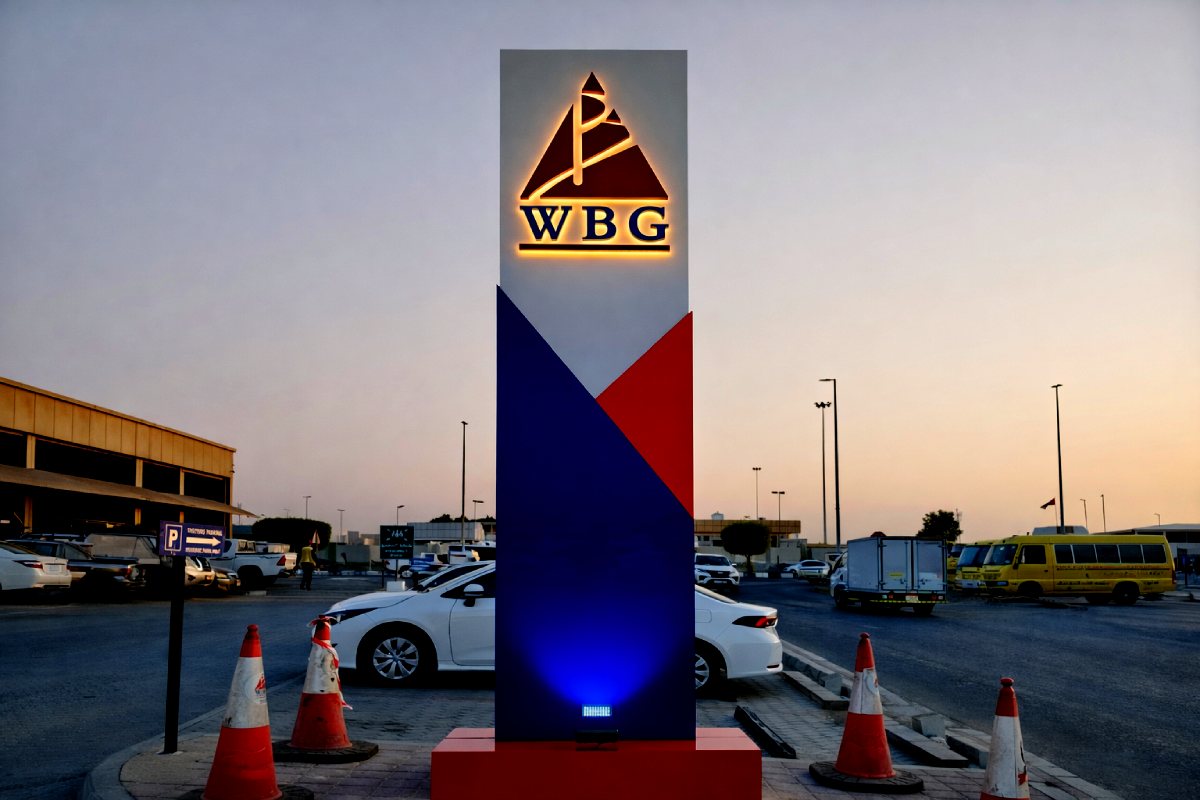
Freestanding pylon and totem signs for Abu Dhabi property entrances. Sign height, visibility, foundation, wind exposure and required approvals are reviewed for the specific site before fabrication.

Blade Signs
Capture dual-direction pedestrian foot traffic with custom double-sided blade signs, round projecting lightboxes, and hanging wall signboards. Positioned perpendicular to your building facade, our premium outdoor flag signs project directly into pedestrian sightlines to capture traffic from both directions. We design, manufacture, and install weather-resistant projecting signs tailored to Abu Dhabi’s retail guidelines and modern brand aesthetics.

Frosted Glass Stickers
Custom frosted stickers and frosted privacy film for office glass doors, partitions and windows across Abu Dhabi. We design, print, precision-cut and install plain, blank or gradient frosting stickers, privacy bands, standard-cut, logo-cut and reverse-cut designs, patterned manifestation and full-colour printed options.
If this sign is not the right match, explore more outdoor signage options for visibility, lighting, structure, location, and permit needs.
Frequently Asked Questions
Can building facade letters be mounted on a glass curtain wall?
Curtain wall elevations require an engineered fixing approach to structural members rather than direct fixing to glass. The exact strategy is confirmed after reviewing building condition, access requirement, and sign load. This forms part of the structural review and TAMM permit submission.
Do I need a permit for exterior facade signage in Abu Dhabi?
Exterior building signage in Abu Dhabi is subject to the applicable DMT commercial signage rules and any required authority or property approval. The submission route and sequence depend on the building, sign type and location. We confirm the required documentation and approval stage before releasing fabrication.
How is maintenance planned for high-level illuminated signs?
Maintenance is planned during project engineering and access review, not left to guesswork after installation. The servicing route depends on the building condition, sign design, and available access method, so driver and power-supply positioning are determined per project to allow appropriate maintenance access. For illuminated signs, all wiring and associated electrical equipment are enclosed within the sign body in line with Abu Dhabi exterior-signage requirements.
What determines the maximum letter height?
Letter dimensions and fixing are determined through the building's structural review and the applicable sign-position rules. The feasible size depends on the elevation, support system, wind exposure and authority review; it is confirmed for each project before fabrication.