.svg)
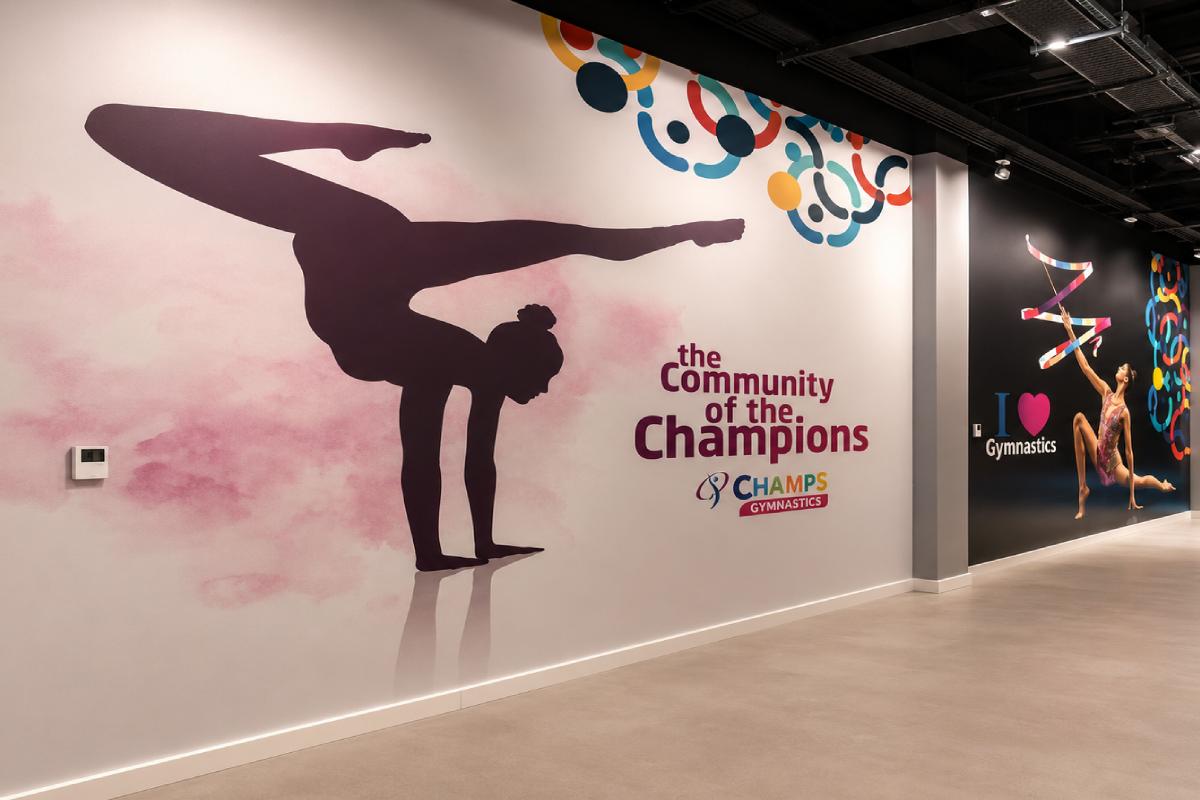
Wall Wraps & Full Wall Murals in Abu Dhabi
Custom full wall stickers, printed wall murals and floor-to-ceiling vinyl wall wraps for offices, retail showrooms and fit-out projects in Abu Dhabi. We print, laminate, prepare panel layouts and install large-format wall graphics from our Musaffah facility, with material options for sharp branding, soft low-glare interiors, or durable high-traffic wallcovering.
Choose the Right Wall Graphic Material: Vinyl Wraps, Fabric Murals or Commercial Wallcoverings
Our large-format printers produce edge-to-edge vinyl panels applied with flawless, seamless precision so your finished surface reads as one continuous graphic.
Replicating the look of high-end architectural materials, our full-coverage wall wraps eliminate the mess of traditional paint while transforming entire commercial interiors across Abu Dhabi.
Produced locally at our Musaffah workshop, every project includes professional on-site wall preparation, grey blockout backing to hide underlying paint, and expert installation by our specialized local crew.

.jpg)

Custom Vinyl Wall Wraps & Full-Wall Printed Stickers
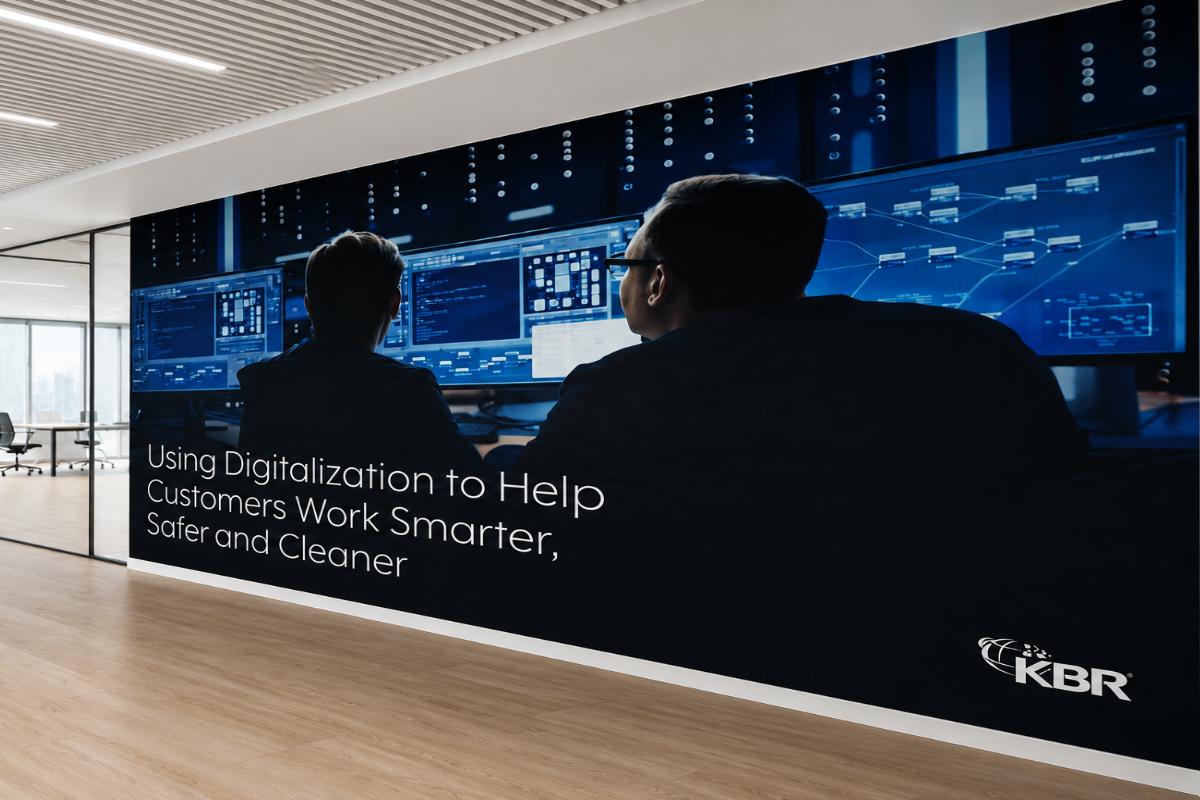
Best for: Full-surface corporate office branding, large-scale printed wall murals, and seamless corridor branding wraps.
This option is a full-surface, heavy-duty self-adhesive vinyl wrap printed in high-definition. It acts as a full-coverage wall sticker that completely blanks out your existing drywall color, delivering sharp color contrast, high impact, and easily readable text on a massive scale.
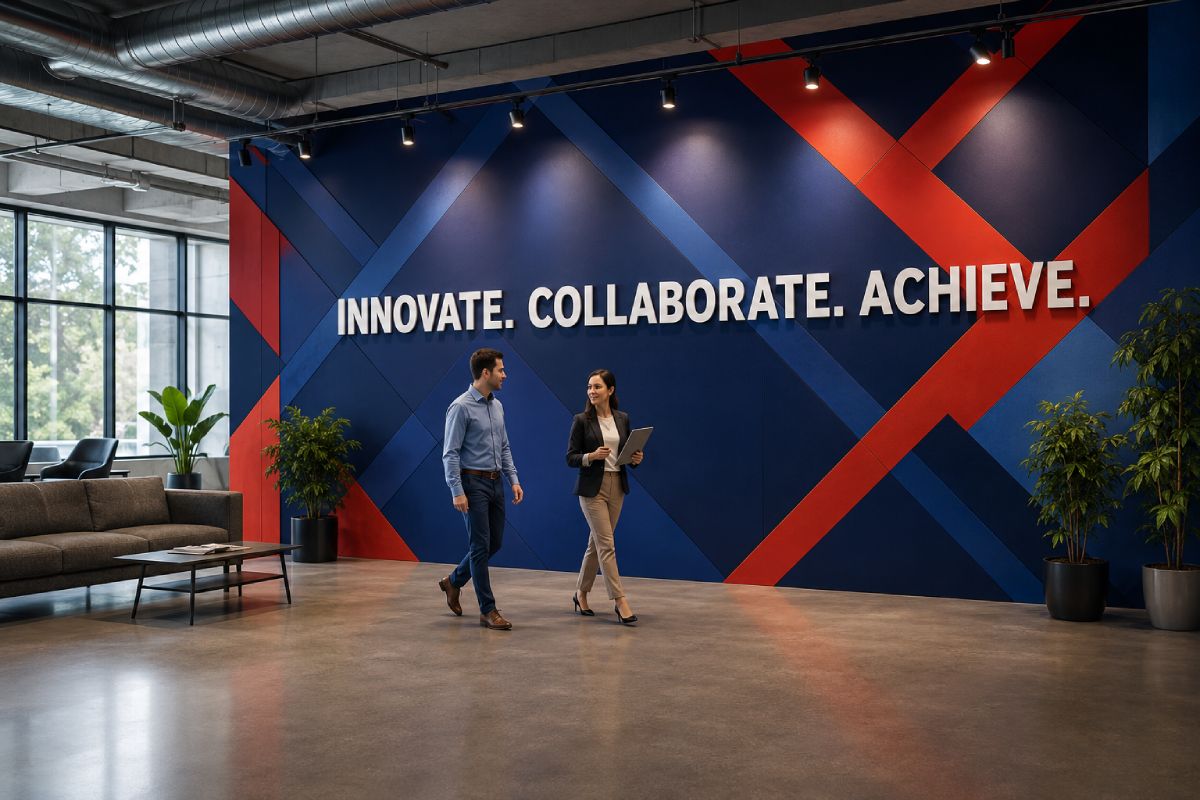
- Full-Wall Office Murals: Suitable for corporate timeline wraps, large core values wall stickers, and full-surface company logo background wraps in reception lobbies.
- Corridor & Wayfinding Wall Wraps: Ideal for continuous directional wall stickers, floor-to-ceiling zone graphics, and seamless printed panels running down long walkways.
- Lamination & Material Finishes: Available in anti-glare matte vinyl or high-gloss finishes, featuring scratch-resistant topcoats and heavy-duty anti-graffiti protective layers.
Custom Fabric Wall Murals & Texture Wall Wraps
Best for: Video-conferencing backgrounds, executive office boardrooms, and luxury hotel feature walls.
This option is a premium woven textile wall wrap that completely replaces standard vinyl. It is an edge-to-edge canvas sticker with a heavy fabric texture that naturally diffuses harsh overhead office lights to eliminate camera reflection, creating a high-end matte finish.
- Boardroom Textured Wall Wraps: Provides a non-reflective, glare-free printed backdrop for executive meeting rooms, Zoom backgrounds, and private office walls.
- Hospitality Fabric Accent Walls: Designed for seamless textile branding inside hotel lobbies, luxury restaurant feature walls, and high-end commercial lounges.
- Removable Office Wallpapers: Features a premium matte satin finish available in canvas or linen-look weave textures, using clean-peel adhesives for rented office walls.


Custom Printed Commercial Wallcoverings
Best for: High-traffic building lobbies, hospital corridors, school walls, and permanent architectural fit-outs.
This option is a heavy-duty, commercial contract-grade wallpaper printed with your custom digital artwork. Unlike peel-and-stick vinyl, this is a thick, scratch-proof traditional wallcovering applied with industrial wallpaper paste for permanent facility installations.
- High-Traffic Public Area Walls: Built to withstand daily impact, scuffs, and cleaning inside busy lift lobbies, main building receptions, and healthcare corridors.
- Bespoke Textured Wallcoverings: Replaces plain paint with structural depth by printing your custom logos and graphics onto heavy sand, stucco, plaster, or linen textures.
- Traditional Seamless Installation: Manufactured on a heavy, non-woven backing designed for permanent commercial wallpaper rollouts across entire building floors.
Our Projects Gallery
Browse our gallery of completed branding projects across Abu Dhabi. Every photo shown is from a real project delivered by Ninety Nine Advertising LLC, showcasing premium, functional and high-visibility branding solutions in actual business environments.

Wall Graphics Printing & Installation in Abu Dhabi
Ninety Nine Advertising LLC provides full wall sticker printing, wall graphics production, wall wrap finishing, and on-site installation for commercial interiors across Abu Dhabi and the UAE. From our Musaffah workshop, we manage site measurement, artwork scaling, large-format printing, lamination, panel preparation, packing, and installation so the finished wall graphic fits the actual surface, not just the design file.
Site Measurement & Artwork Alignment
- Wall Measurement Check: We confirm wall height, width, corners, returns, sockets, switches, vents, skirting, and surface condition before final print setup.
- Panel Seam Planning: Large wall graphics are divided into practical print panels with controlled overlap and seam placement for a continuous final look.
- Artwork Scaling Proofs: We check image resolution, logo size, text placement, and design proportions before production to avoid pixelation or awkward cropping.
- Paint & Surface Check: Fresh paint, dusty walls, weak emulsion, heavy texture, moisture marks, and old patch repairs are checked before confirming the film route.
Print Protection & Blockout Media
- Matte Protective Lamination: Reduces overhead light glare and helps protect printed wall graphics from fingerprints, light scuffs, and daily contact.
- Cleanable Surface Finish: Suitable laminated wall graphics can be wiped by facility teams using mild cleaning methods after installation.
- Grey-Back Blockout Option: Helps stop old paint colors, surface marks, patched areas, or previous graphics from showing through the new wall sticker.
- Finish Selection: Matte, gloss, textured, metallic, removable, or long-term adhesive routes are selected based on the wall, usage, and project duration.
Installation & Removable Options
- Straight Panel Installation: Installers align each vinyl panel carefully so vertical drops, pattern joins, maps, timelines, and mural graphics stay visually continuous.
- Bubble-Free Application: Soft-edge tools, controlled squeegee pressure, and proper wall preparation reduce bubbles, edge lifting, and visible installation marks.
- Removable Film Option: For rented spaces, campaigns, or temporary fit-outs, removable wall stickers can be selected after surface testing to support cleaner removal.
Wall Sticker & Wall Wrap Formats We Print and Install in Abu Dhabi
Different buyers call this product by different names: full wall stickers, wall graphics, wall wraps, printed wall murals, full wall graphics, or vinyl wall stickers.
- Full Wall Stickers: Large adhesive vinyl graphics printed to cover complete wall sections from edge to edge.
- Printed Wall Murals: Multi-panel wall graphics for photographic artwork, brand patterns, maps, timelines, and illustrated interiors.
- Vinyl Wall Wraps: Durable wall film used to cover painted walls, gypsum partitions, corridors, and commercial interior surfaces.
- Corridor Wraps: Long wall graphics for offices, schools, universities, clinics, gyms, and workplace circulation areas.
- Office Wall Graphics: Full-wall graphics for meeting rooms, workspaces, reception back walls, internal corridors, and collaboration areas.
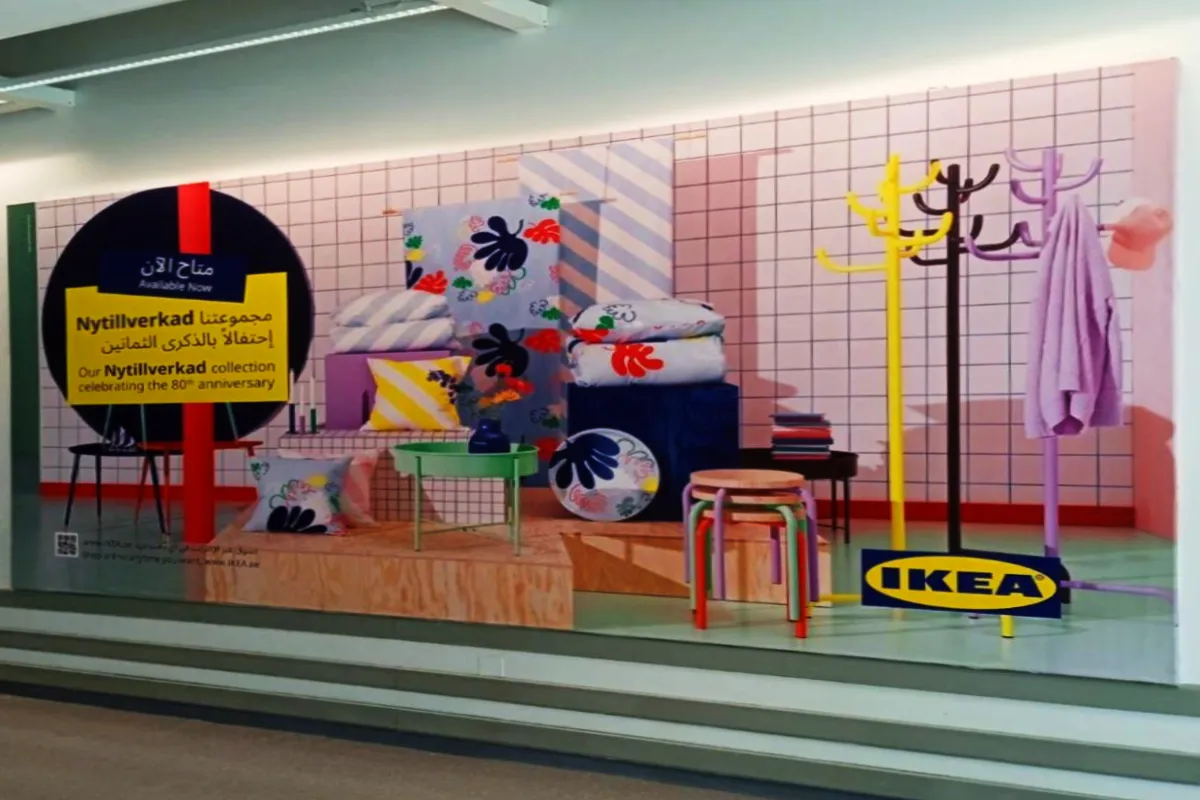
- Retail & Showroom Wall Graphics: Printed wall wraps for product launch walls, campaign areas, showroom backdrops, and mall fit-out spaces.
- Restaurant & Café Wall Wraps: Custom restaurant wall wraps for menu walls, interior themes, dining areas, and hospitality feature walls.
- Removable Campaign Wall Stickers: Short-term wall graphics for events, seasonal offers, temporary retail campaigns, and leased commercial spaces.
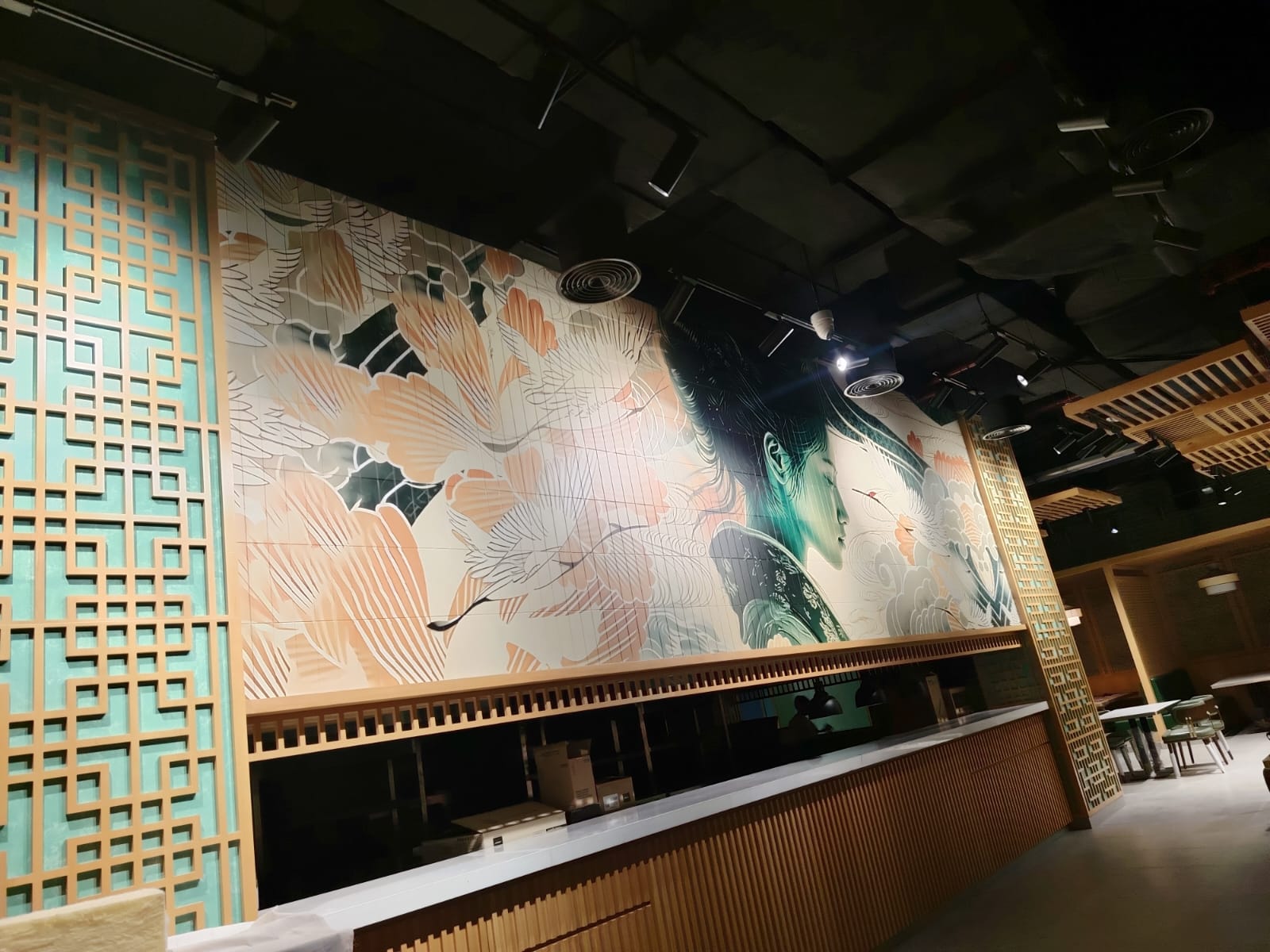
See the Golden Dragon restaurant wall graphics project at Deerfields Mall for an example of a printed mural applied across tiled interior walls. Media and finish for tiled surfaces are assessed project by project.
To price your full wall sticker, wall graphic, wall wrap, or full wall mural accurately, send us the wall size, surface type, artwork status, and project location. Our team will confirm the best vinyl route, finish, lamination, and installation method before production.
- Wall Surface: Smooth gypsum wall, painted plaster, concrete wall, wood panel, or existing painted commercial wall.
- Wall Dimensions: Approximate wall height and width, or site photos with rough measurements.
- Coverage Type: Single feature wall, full corridor wrap, office wall graphics, restaurant wall wrap, school wall wrap, or retail wall graphic.
- Finish Required: Matte laminated, gloss laminated, textured, metallic, solid-colour vinyl, removable film, or long-term adhesive.
- Artwork Status: Print-ready file, brand guideline, rough concept, existing wall photo, or design support required.
Complete Your Workspace Fit-Out with Ninety Nine Advertising In Abu Dhabi
- Glass Manifestation & Privacy: Secure meeting rooms and glass conference partitions with premium frosted glass stickers and office window films Abu Dhabi.
- Corporate Typography: Apply background-free mission statements and floating quotes directly onto painted surfaces using custom wall vinyl lettering in Abu Dhabi.
- Wayfinding & Identification: Ensure seamless workplace navigation with premium office door signs and room name plates Abu Dhabi for meeting spaces and executive suites.
- First Impression Branding: Create a high-end corporate entrance by installing dimensional, backlit custom 3D reception signs and office logo signage Abu Dhabi.
- Floating Panel Displays: Mount durable, premium brand panels or corporate directories using Standoff Wall Signs and architectural spacer fixings for main reception walls.
- Custom Acrylic Signs: For decorative cutout acrylic signs, 3D acrylic and illuminated acrylic signs, explore our Custom Acrylic Signs page.
This Product is Not What You Want? Explore Our Other Branding Solutions

Interior Door Signs
Custom fixed and changeable office door signs, room name plates and occupied-vacant sliders for workplaces across Abu Dhabi. Ninety Nine Advertising LLC prepares Arabic-English layouts, matches approved colours and finishes, manufactures each sign in our Musaffah facility and installs it on doors, walls or glass partitions using a fixing method suited to the surface and sign weight.

Reception Signs
Make a powerful first impression with premium 3D reception letters, backlit corporate logos and luxury reception signs. We custom-fabricate and install high-impact stainless steel and powder-coated aluminum wall 3D signs for upscale corporate offices, showrooms and luxury clinics across Abu Dhabi.

Frosted Glass Stickers
Custom frosted stickers and frosted privacy film for office glass doors, partitions and windows across Abu Dhabi. We design, print, precision-cut and install plain, blank or gradient frosting stickers, privacy bands, standard-cut, logo-cut and reverse-cut designs, patterned manifestation and full-colour printed options.

Wall Lettering & Decals
Display your corporate brand values, company logos, and custom office wall quotes with crisp, borderless precision. Designed, plotter-cut, and installed by our in-house Musaffah workshop team, we deliver paint-safe, premium vinyl text and graphic decals for corporate workspaces, lobbies and commercial interiors across the UAE.
If this wall finish is not the right match, explore more wall branding options for printed graphics, murals, decals, panels, and brand spaces.
Frequently Asked Questions
What is the difference between full wall stickers, wall graphics and wall wraps?
Full wall stickers are large adhesive vinyl graphics printed to cover major wall areas. Wall graphics is the broader service term for printed visuals applied to walls. Wall wraps usually refer to edge-to-edge vinyl coverage across a full wall, corridor, feature wall, or interior surface. On this page, all three terms refer to large-format adhesive wall coverage, not small cut vinyl lettering.
Do you print custom wall stickers in Abu Dhabi?
Yes. Ninety Nine Advertising LLC prints custom wall stickers in Abu Dhabi for commercial interiors, offices, corridors, retail spaces, restaurants, schools, clinics, gyms, and fit-out projects. We can print full wall stickers, full wall graphic panels, mural panels, corridor wraps, and removable campaign wall graphics based on your artwork and wall dimensions.
Can full wall stickers cover an entire office wall or corridor?
Yes. Full wall stickers can be printed in multiple aligned panels to cover complete office walls, long corridors, meeting rooms, reception back walls, school corridors, restaurant walls, and showroom interiors. We scale the artwork to the actual wall size and plan panel seams before printing.
What is the difference between wall wraps and wall vinyl lettering?
Wall wraps cover large wall areas with printed or finished vinyl panels. Wall vinyl lettering uses individually cut letters, logos, icons, or quotes without full background coverage. Use wall wraps for complete visual transformation and use wall vinyl lettering for simple text, slogans, mission statements, or logo decals.