.svg)

Vehicle Branding Permit in Abu Dhabi: TAMM Process & Requirements
Master the Abu Dhabi vehicle advertising permit process — ADDED document checklist, design rules that cause rejections, and the Muroor Mulkiya update most guides skip
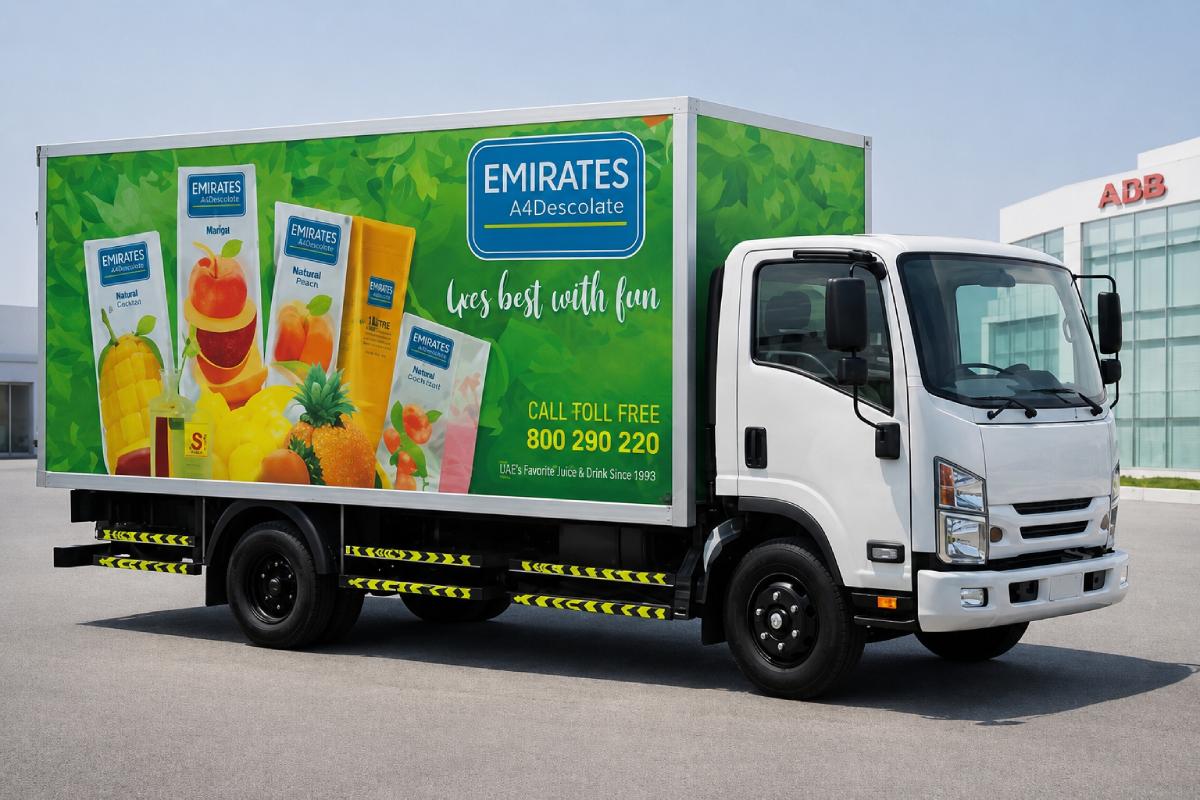
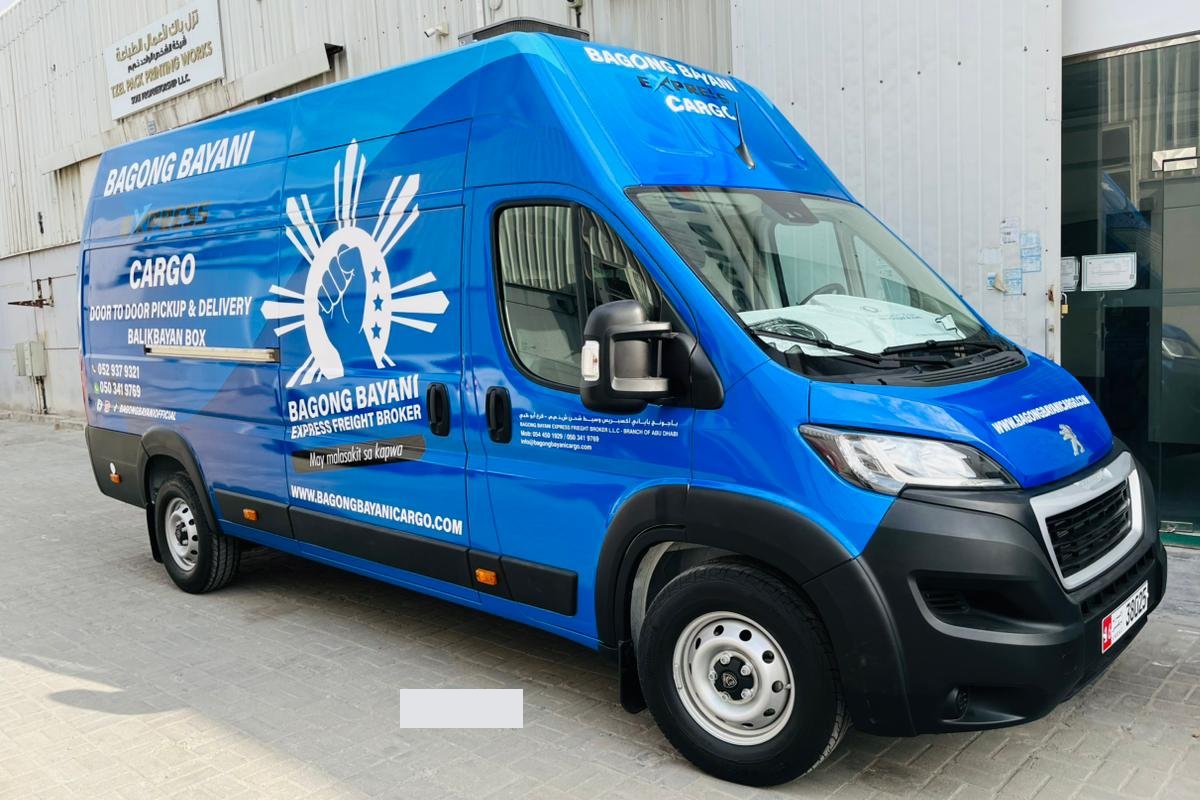
Any commercial branding on a vehicle operating in Abu Dhabi — logos, contact details, advertising graphics — requires a vehicle advertising permit before the first sticker touches the bodywork. This is not optional. The permit is issued by the Abu Dhabi Department of Economic Development (ADDED) through the TAMM portal, and the process involves three distinct stages that most guides collapse into one.
This guide walks you through the full sequence: document preparation, TAMM submission, ADDED design review, installation, and the Muroor Mulkiya update that marks the process as fully compliant. If you skip a stage or get the order wrong, you risk fines, forced removal, or a branding project that stalls before it starts.

Who Needs a Vehicle Advertising Permit in Abu Dhabi?
Every business displaying commercial branding on an Abu Dhabi-registered vehicle needs a permit from ADDED. This applies whether you own one car or manage a fleet of fifty.
The rule is simple: if the vehicle carries your company's visual identity — your logo, your phone number, your tagline — you need the permit. This includes full wraps, partial wraps, vinyl lettering, and even small logo decals.
There is one important jurisdictional point to understand early. The permit must come from the emirate where the vehicle is registered. Abu Dhabi-registered vehicles go through ADDED via TAMM. Dubai-registered vehicles go through RTA. A Dubai RTA permit does not cover an Abu Dhabi-registered car, and vice versa. If your fleet includes vehicles registered across multiple emirates, each group needs its own permit from the relevant authority.
A separate rule applies to mobile advertising — where the vehicle itself is the advertising medium for third-party brands. This requires a "mobile car advertising" activity on your trade license. Most businesses branding their own company vehicles do not need this activity.
What Documents Do You Need Before Applying?
You need seven documents ready before you open the TAMM portal. Missing even one will stall the application.
For every application:
- Trade license of the business
- Copy of the vehicle registration card (Mulkiya) — or customs document if the vehicle is not yet registered
- Design mockup showing the proposed graphics on the vehicle from all sides
- A sample of the advertising sticker to be affixed, shown from all sides
- Logo registration certificate from the Ministry of Economy — required if your business logo appears in the design
For rented or leased vehicles:
- NOC from the vehicle owner (the name on the registration card), authorising the permit applicant to brand the car
For third-party trademarks (e.g., distributing a well-known brand):
- NOC from the trademark owner allowing you to use their trademark in the design
- Copy of the trademark ownership certificate
The trademark requirement catches many first-time applicants off guard. If your design includes your company logo, that logo must be registered as a trademark with the Ministry of Economy. Trademark registration in the UAE takes three to six months through the Ministry of Economy and Tourism (MOET). If your logo is not yet registered, start this process well before you plan to brand any vehicles.

How to Apply Through the TAMM Portal
The application is submitted digitally through the TAMM portal (tamm.abudhabi). You will need UAE PASS credentials to log in.
Once logged in, search for the "Issue Vehicles Advertisements Permit" service. Upload your documents, attach the design mockup, and submit the application. ADDED reviews the design against its content and placement rules.
For businesses branding multiple vehicles, batch processing is available. You can add more than one vehicle to the same permit application. Fees are calculated per vehicle regardless of batch size — there is no fleet discount on the permit fee itself. This matters for fleet budgeting: a 20-vehicle program means 20 sets of per-vehicle fees. For the complete planning framework for multi-vehicle programs, see our fleet branding rollout guide.
Fees are determined based on vehicle weight and category. They are processed through the Abu Dhabi Registration Authority (ADRA) as part of the unified economic permit system. For current fee amounts, check the TAMM portal directly or consult your permit processing partner.
What Gets Your Design Rejected
ADDED imposes specific design and content rules that are stricter than what many businesses expect. These are the conditions that cause rejections:
No stickers on the glass:
Branding is restricted to the vehicle's body panels. Front, rear, and side windows must remain completely clear. Unlike Dubai, which permits perforated film on rear windows, Abu Dhabi's rule is absolute — no glass, no exceptions.
No stickers on the front of the vehicle:
The front bonnet and bumper area must remain unbranded.
No photographs on the vehicle:
This is the rule that nobody warns you about. ADDED prohibits affixing photographs to vehicles. Your branding must use graphic design, logos, text, and stylised imagery — not photographic images. If your marketing team designed a wrap featuring product photography or portrait shots, it will be rejected.
Arabic trade name is mandatory:
Your company trade name must appear in Arabic, exactly as it reads on your trade license. This is not a "50% Arabic content" rule — it is a specific requirement that your legal business name appears in both Arabic and English.
No misleading or promotional language:
ADDED prohibits vague promotional keywords, superlatives like "The Best" or "#1," and any misleading claims. Your vehicle is a public-facing advertisement — the same content standards that apply to other commercial advertising apply here.
Ministry of Economy consent for logos:
If your design includes a business logo, ADDED requires evidence that the logo is registered with the Ministry of Economy as a trademark. No registration, no logo on the vehicle.
ADDED reserves the right to cancel or amend the permit at any time if the applied branding violates these conditions. A design that passes initial review but is later found non-compliant can still be ordered removed.
Special Cases: Rented Vehicles, Leased Fleets, and Third-Party Brands
You do not need to own the vehicle to brand it. But you do need the right paperwork.
Rented or leased vehicles:
This requires an NOC from the legal owner — the person or company named on the vehicle registration card. This NOC authorises you, as the permit applicant, to apply branding to their vehicle. Without it, the application will not be accepted. For leased fleet vehicles, coordinate this NOC with your leasing company early. Some lease agreements restrict exterior modifications, and the NOC needs to be arranged before you invest in design work.
Third-party brand advertising:
where you display another company's trademark on your vehicle — requires both an NOC from the trademark owner and a copy of their trademark ownership certificate. This applies to distributors, franchise operators, and authorised dealers displaying a parent brand's identity.
If your core business is placing advertisements on vehicles for other companies (mobile advertising), your trade license must include the "mobile car advertising" activity. Standard commercial businesses branding their own vehicles do not need this activity.
After the Permit: The Muroor Mulkiya Update
Getting the ADDED permit is not the end. It is the midpoint.
After the permit is issued and the branding is physically applied to the vehicle, the owner must take the car to the Muroor (Abu Dhabi Police traffic department) to replace the existing Mulkiya with a new one. The new registration card will include a note recording that the vehicle carries an advertising sticker.
This Muroor step is where the compliance inspection happens. During the Mulkiya update visit, the traffic department has the right to inspect the branding on the vehicle. They verify that the applied graphics match the approved permit and comply with ADDED's conditions. This is the actual enforcement checkpoint — not the TAMM submission stage.
Driving a branded vehicle without an updated Mulkiya leaves you non-compliant, even if you hold a valid ADDED permit. Roadside inspections check the Mulkiya, not the permit document. If the registration card does not record the sticker, you risk fines.
The full process sequence is:
- Prepare documents and design
- Submit through TAMM → ADDED reviews and issues permit
- Apply the branding to the vehicle
- Visit Muroor → inspection → updated Mulkiya issued
- Vehicle is now fully compliant
How Long Does the Process Take?
The TAMM permit itself typically processes within two to three business days when all documents are correctly prepared and the design meets ADDED's conditions. Incomplete documentation or design corrections extend this.
The timeline factors that catch businesses off guard are upstream:
Trademark registration
Three to six months if your logo is not already registered with the Ministry of Economy. This is the single biggest timeline risk. Start it before everything else.
NOC coordination:
If branding rented or leased vehicles, securing the NOC from the vehicle owner adds days or weeks depending on the leasing company's internal processes.
Design revisions:
If your initial design includes photographs, window graphics, or prohibited content, you will need to redesign and resubmit. Each resubmission resets the 2–3 day review clock.
Muroor Mulkiya update:
Typically same-day once you visit the traffic department with the branded vehicle and the issued permit.
Permit validity:
The permit is valid for one year from the date of issuance. Renewal follows the same process as new issuance — same documentation, same submission. There is no simplified renewal path. For a fleet, this means annual renewal for every vehicle.
If your vehicle branding project involves permit processing, Ninety Nine Advertising LLC handles the full TAMM workflow — from document preparation and design compliance review through permit issuance, so you can focus on the branding itself.
For a breakdown of what vehicle branding costs in Abu Dhabi — including permit fees as part of the total project budget — see our vehicle branding cost guide.
Abu Dhabi Vehicle Advertising Permit FAQ
Can I brand a vehicle registered in my personal name?
There is no officially published rule restricting permits to company-registered vehicles only. In practice, permits have been issued for vehicles registered under the personal name of a business owner, provided the applicant holds a valid trade license and supplies an NOC authorising the branding. However, company-registered vehicles are the standard pathway. If your vehicle is personally registered, confirm eligibility directly with ADDED or your permit processing partner before investing in design work.
What happens if I change the branding design after the permit is issued?
The permit covers the specific design that was submitted and approved. If you change the design — even partially — you need to submit a new application through TAMM with the updated design. The existing permit does not transfer to a different graphic layout.
Can I transfer a permit from one vehicle to another?
No. The permit is issued per vehicle, linked to the specific vehicle registration card. If you replace a vehicle in your fleet, the new vehicle requires its own permit application with its own documentation and design submission.
How many vehicles can I include in one permit application?
Batch processing is available. You can add multiple vehicles to the same application. Fees are still calculated and charged per vehicle — batch submission simplifies the paperwork but does not reduce the cost. For fleet programs, this is the most efficient approach.
Do I need to renew the permit every year?
Yes. The permit is valid for one year. Renewal follows the same submission process as the original application — same documents, same TAMM workflow. There is no expedited renewal path. For fleets, factor annual per-vehicle renewal into your operating budget.
Related Content

The Ultimate Guide to Pickup Branding: Costs, Designs and Materials
Read Full Article →
Custom Office Wall Stickers & Graphics in Abu Dhabi: The Plain English Buyer's Guide
Read Full Article →
Shop Front Glass Stickers Abu Dhabi: The Ultimate Window Branding Guide
Read Full Article →
One-Way Vision Stickers in Abu Dhabi: Technical Specs & Storefront Applications
Read Full Article →
Glass Protection Film in Abu Dhabi: Safety, Frosted & Clear Options
Read Full Article →