The Complete Guide to Abu Dhabi Commercial Signage Regulations (2026)
A guide to the DMT Commercial Signage Regulations for building signs in Abu Dhabi, with a link to the official manual and a reminder to check the current approval for each site.
DMT Commercial Signage Regulations: Key Points
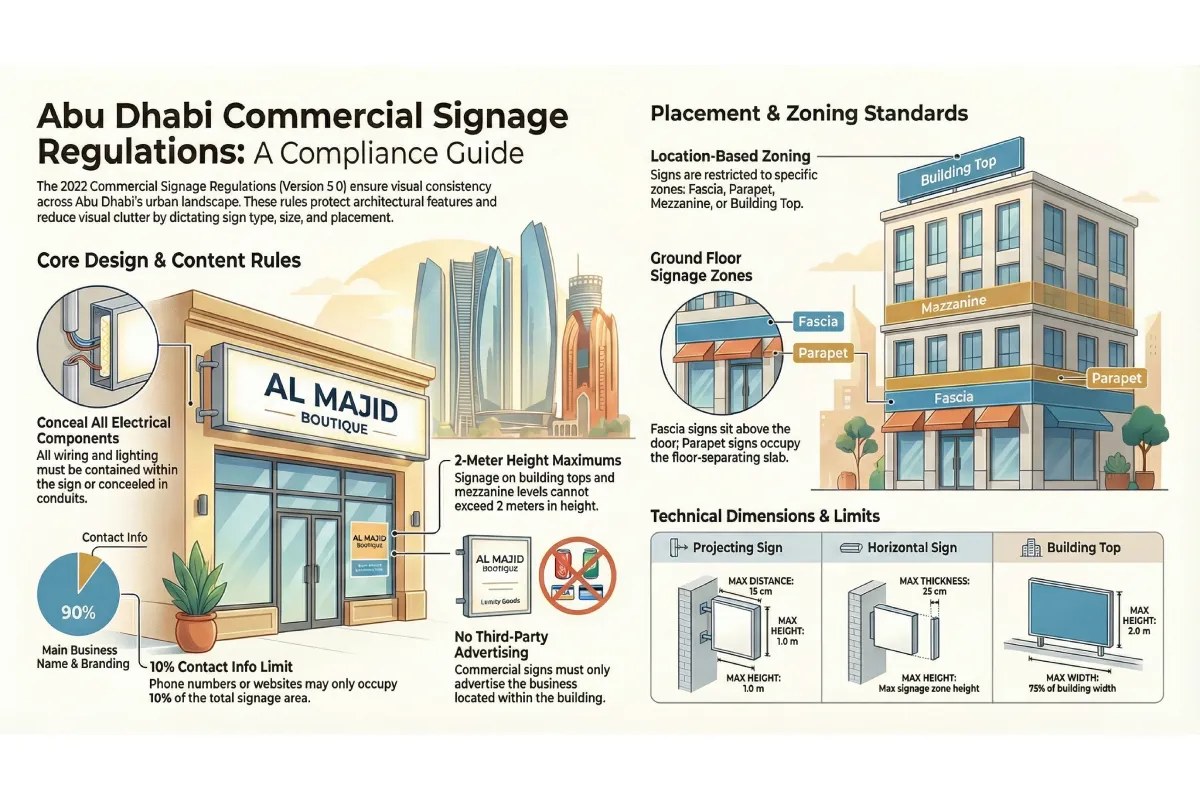
If you are planning to install outdoor signage in Abu Dhabi, the DMT Commercial Signage Regulations (Version 5, 2022) provide the rules for permanent signs on buildings advertising businesses within those buildings. Review the current requirements and the actual building's signage zone with the relevant authority before design or installation.
- Allowed Types: The DMT manual lists six standard sign types for permanent commercial signs on buildings; other sign formats are addressed separately in the manual.
- Content Limits: Contact details (phone/website) can cover a maximum of 10% of the signage area. Advertising 3rd party products is strictly prohibited.
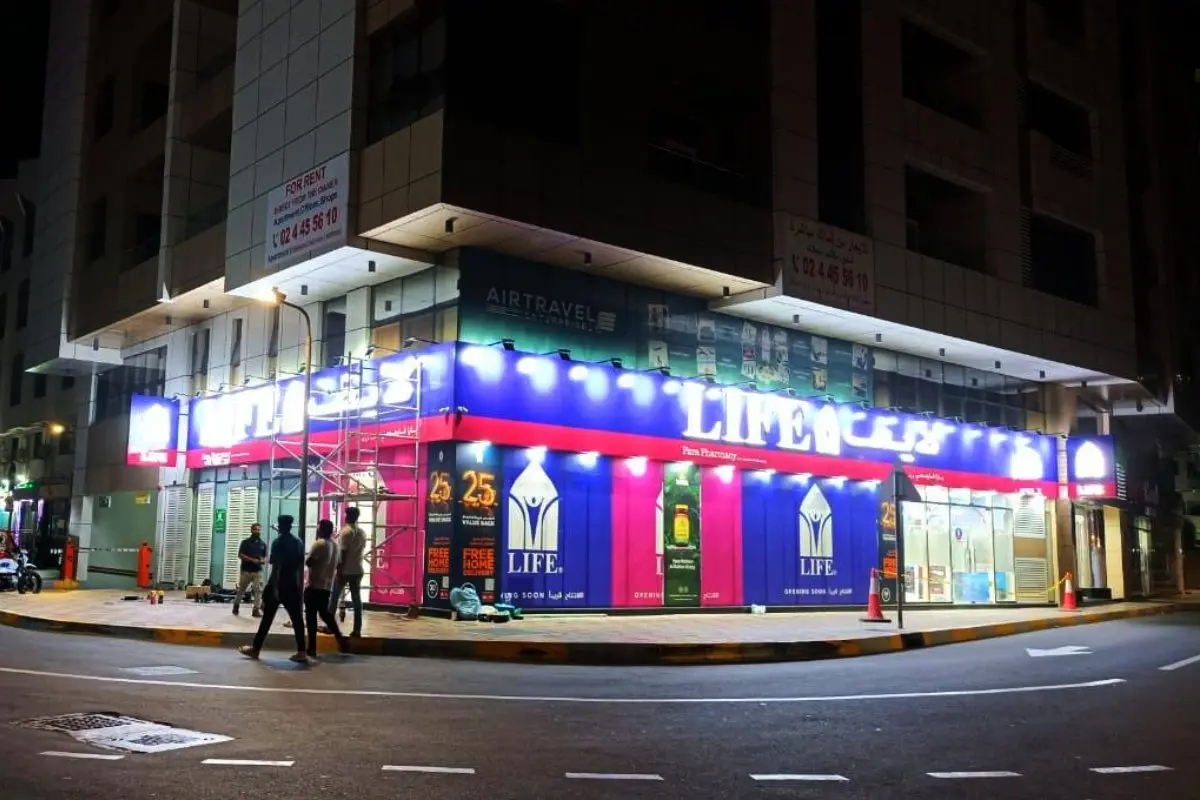
- Illumination: No exposed light bulbs are allowed; all lighting and wiring must be contained within the sign. Only 3D signs without backgrounds and banners may be externally illuminated.
1. Permitted Sign Typologies
The DMT defines a commercial sign as a permanent sign on a building that advertises a business operating within that building. The manual describes six standard types in this scope:
Primary Signs (Ground Floor Predominant):
- 3D Stencil Cut: Letters with a minimum depth of 0.5 cm cut into a background.
- 3D with Background: 3D letters mounted onto a background panel.
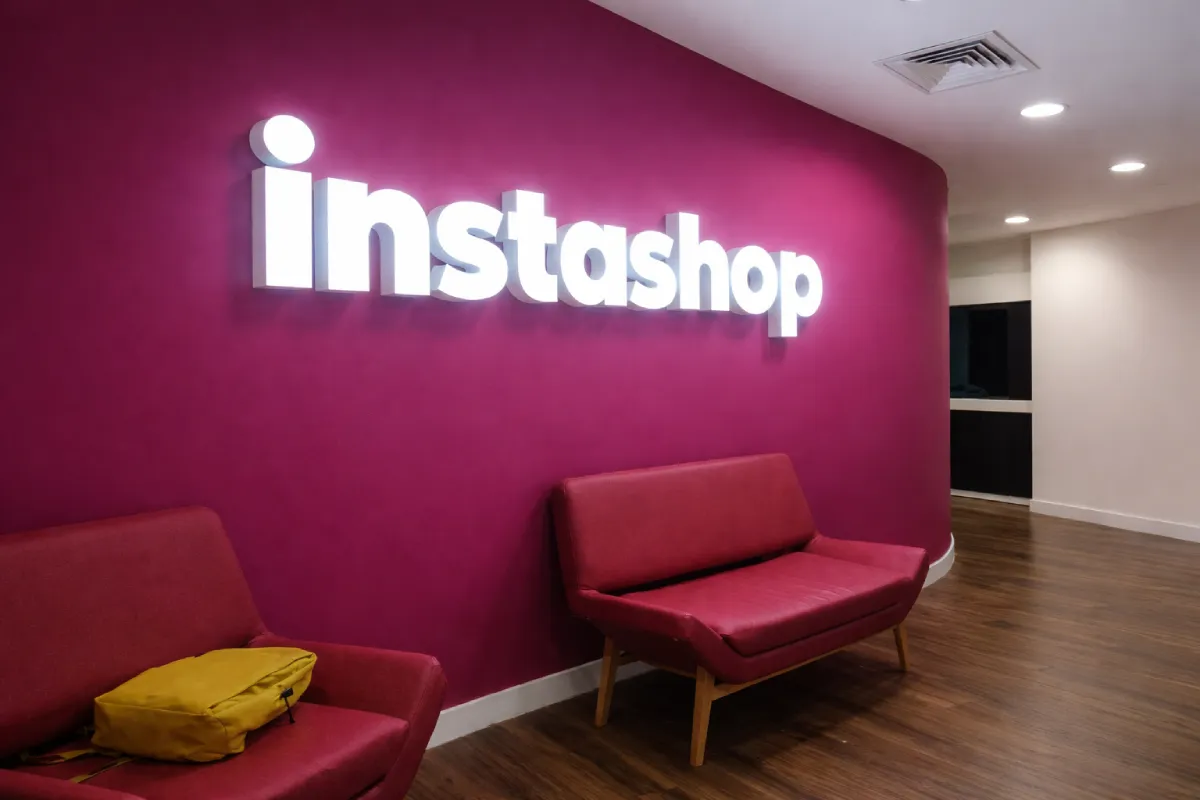
- 3D without Background: Building-mounted letters (3D letters) mounted directly onto the building surface without a backing board.
Before finalising the permitted format, compare sign types, materials, visibility and application needs in our commercial signage selection guide.
Secondary Signs (Mezzanine or Colonnades):
- Internal Window Sign: 3D internally lit letters mounted inside a window.
- Banner: A sign displayed perpendicular to the building.
- Projecting Sign: Stencil cut or 3D letters on a background, displayed perpendicularly (commonly known as a blade sign).
2. Signage Rules by Building Zone
Your permitted sign size and placement depend entirely on where your business sits within the building. Signs must be mounted directly against the building surface and must never obstruct major architectural elements.
A. Ground Floor Businesses
- Fascia >= 80 cm: If the fascia height is 80 cm or greater, your storefront signboards must be placed directly on the fascia.
- Fascia < 80 cm: If the fascia is under 80 cm, the sign may be located on the parapet.
- Glass Storefronts: If there is no defined fascia, the sign must sit at a minimum height of 2.5 meters from the ground.
B. Mezzanine Businesses
- Signs must be separated from any parapet sign below by a minimum clearance of 20 cm.
- The maximum height of the sign is 2 meters, or the physical height of the mezzanine, whichever is less.
C. Building Body & Building Top
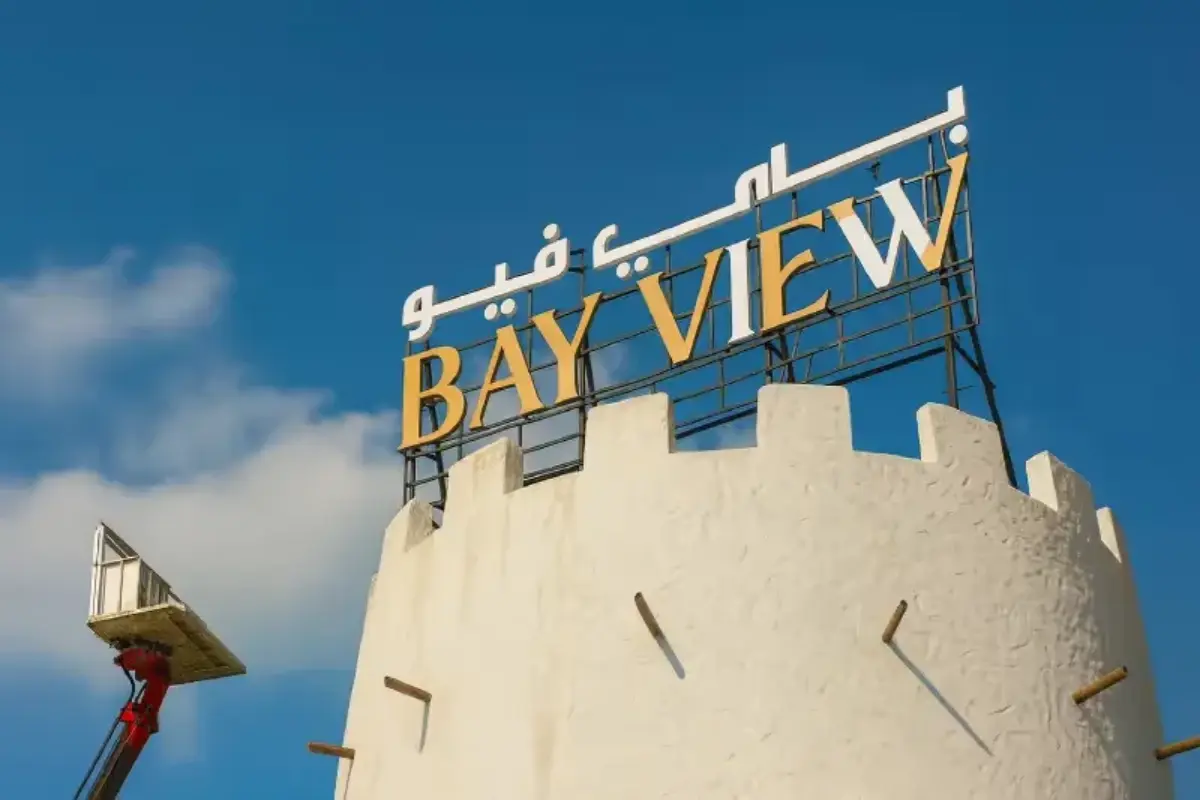
- Building Top: Reserved exclusively for the anchor tenant seeking high-visibility building branding. The sign must not exceed 2 meters in height and 75% of the building's width. It may only feature a business name, building name, or logo. This is the primary classification for legal rooftop signs and elevated building-top installations.
- Building Entrance: For tenants in the building body, a building entrance sign is permitted with a maximum area of 0.56 m² (e.g., 75 cm x 75 cm).
3. Retail Malls
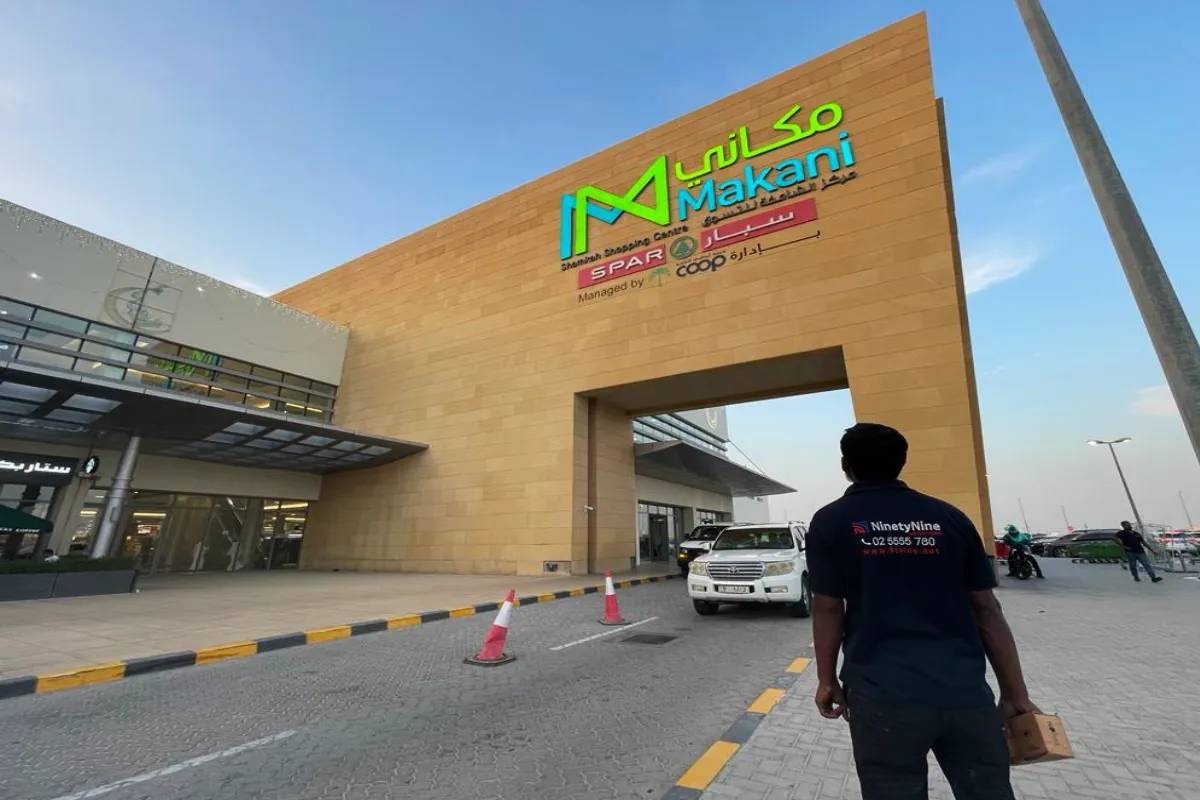
Retail malls require comprehensive store branding solutions. Mall owners must define specific signage zones covering a maximum of 20% of each facade and submit this master plan to DMT through TAMM. The size of individual tenant signs depends on the mall's facade height:
- Facades Over 15 Meters: Signs must be 3D. The maximum area per sign is 12 m². The height of the letters must not exceed 2 meters.
- Facades 15 Meters and Under: Signs must be 3D. The maximum area per sign is 6 m². The height of the letters must not exceed 1 meter.
4. Villas and Industrial Complexes
- Villas: Businesses operating in a villa can place one sign on the street frontage. This can be on the building body (maximum 3.75 m²) or the boundary wall (maximum 1.5 m²). Only 3D without background signs are permitted.
- Warehouses: For open clearspan warehouses, signs must be securely attached to the structure and mounted a minimum of 4 meters from the ground to allow sufficient vehicle clearance.
- Industrial Access Zones: For complexes with multiple businesses, signs located above driveways must have a 4.0-meter minimum ground clearance. The height of the sign itself must not exceed 0.5 meters.
5. Special Categories (ATMs & Baqala Stores)
- Bank ATMs: May feature a projecting sign above the ATM or entrance door. The maximum surface area is strictly limited to 0.56 m².
- Baqala Grocery Stores: Must strictly adhere to the signage regulations outlined in the Abu Dhabi Government Retail Program manual ("Licensing & Operational Requirements For Retail Stores In Abu Dhabi").
Frequently Asked Questions (FAQ)
Can I put my phone number and website on my signboard?
Yes, you may include contact details. However, phone numbers and websites must only cover a maximum of 10% of the total signage area and can be 2-dimensional.
Am I allowed to use external spotlights for my sign?
No external lighting (like gooseneck lights or spotlights) may be installed onto standard signs. Only 3D signs without backgrounds and banners may be externally illuminated, and the external light fixture must not protrude more than 15 cm from the sign surface. All other signs must have internal illumination.
Can I display brands that I sell on my main signboard?
No. The DMT regulations state that no sign or portion of a sign shall advertise 3rd party products. Your sign must exclusively advertise the specific business operating within that building.
Related Content
Illuminated Signage Manufacturing in Abu Dhabi: How LED Signages Are Built
Read Full Article →
Restaurant Signage in Abu Dhabi: Shopfront Signboards & Menu Displays
Read Full Article →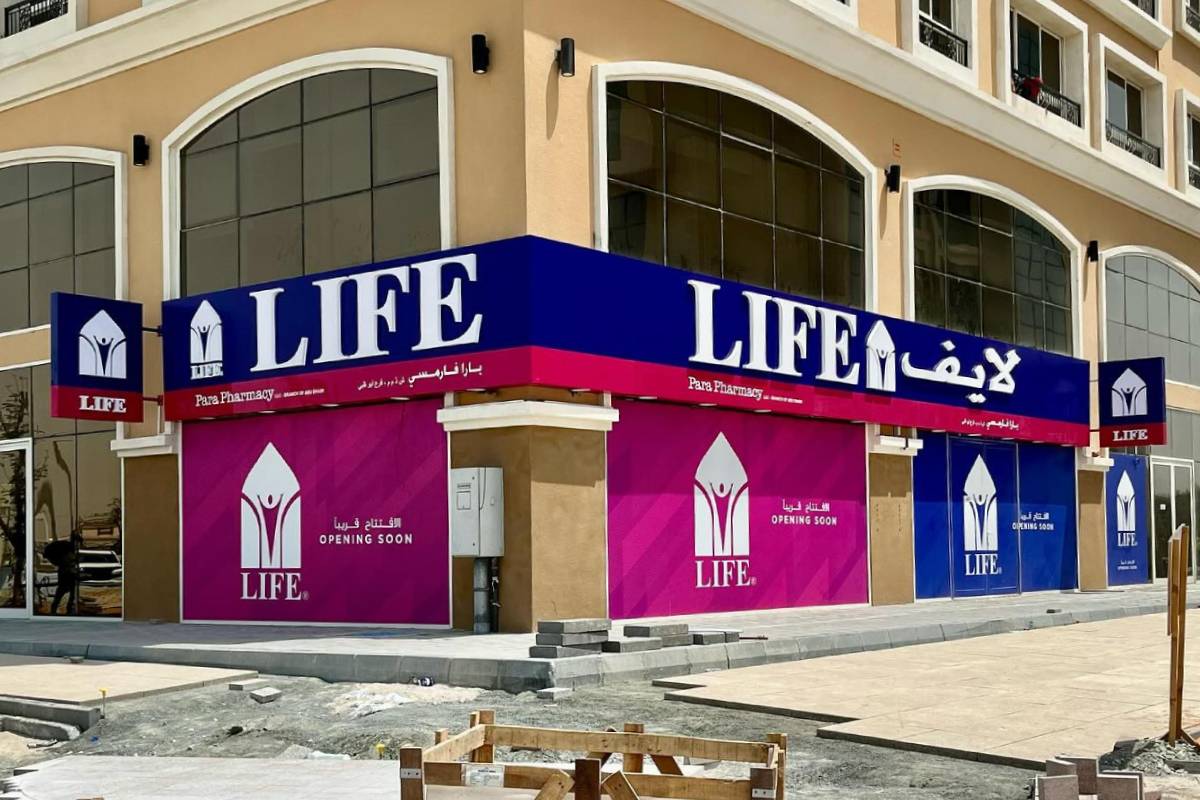
B2B Procurement Guide: Hiring an Outdoor Signage Manufacturer in Abu Dhabi
Read Full Article →