.svg)

Shop Window Stickers: When Less on the Glass Sells More
Most shop owners fill the window because the space is free. The shopfronts that actually stop people cover far less glass than that. A guide to vinyl lettering, clear window stickers, and knowing how much to leave empty — written for Abu Dhabi shops.
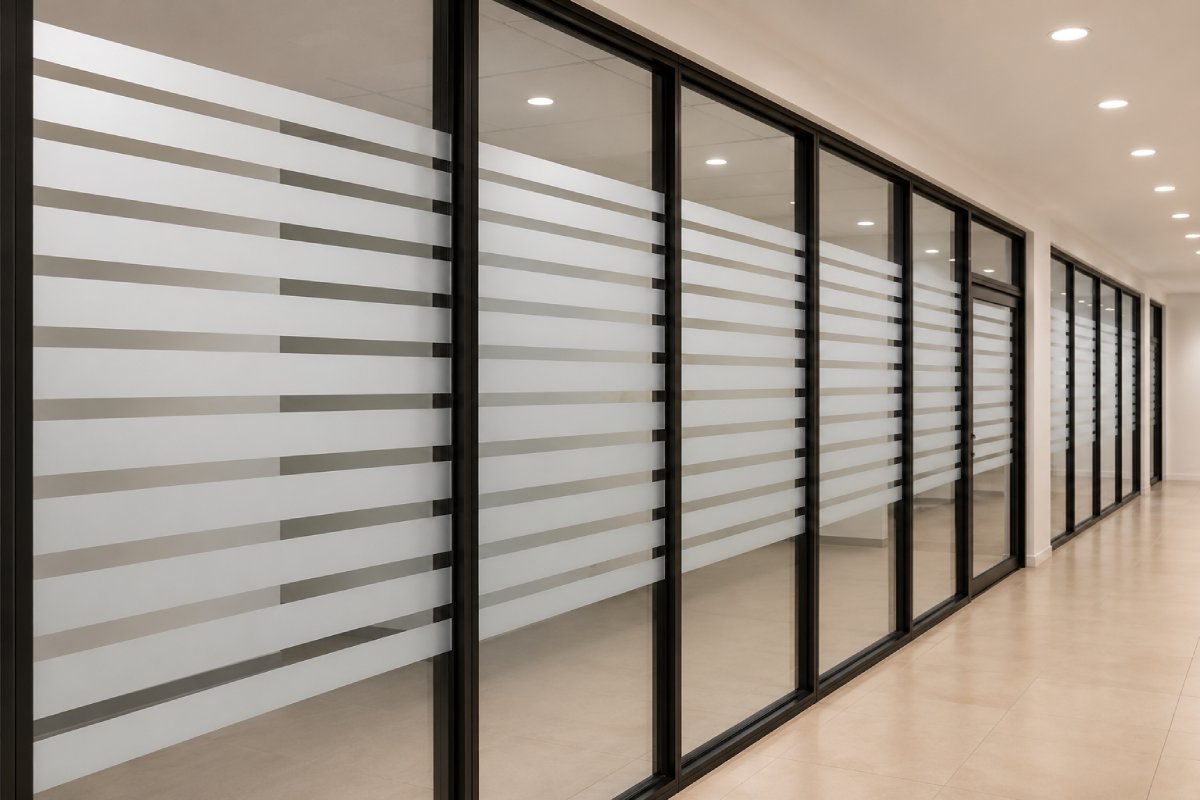
If you're trying to figure out what to put on your shop window — stickers, lettering, graphics, printed vinyl, any of it — the first question isn't which material to use. It's how much of the glass you actually want to cover. Less is usually more, but not always.
Window branding and window display are two different decisions
Window branding is what you put on the glass; window display is what sits behind the glass, and the two are completely different decisions. Most content about "shop window ideas" mixes them together. It talks about mannequins, props, lighting, and product arrangement. That's useful if you're a visual merchandiser. It's not what this article covers.
This article is about the graphics, lettering, and stickers that go directly on the glass of your shop window. The vocabulary changes — shop window stickers, vinyl lettering, window vinyl, window decals, window graphics, window signage — but it all refers to the same thing. A branded surface applied to the glass itself.
What goes on the glass is a brand decision first and a material decision second. Most shops flip that order and then wonder why their shopfront doesn't look right.
.webp)
Why shop window stickers work best when they cover less
Shop window stickers often work best when they cover less of the glass, because a mostly-empty shopfront reads as more confident and more worth stopping for than a fully-covered one. The instinct of most new shop owners is to fill the window. Free advertising space, so use it. The logic feels airtight until you walk past a row of shopfronts and pay attention to which ones you actually look at.
High-end brands cover almost nothing. A name, a mark, maybe a short line of type. The glass stays mostly empty. Passers-by stop anyway.
The reason is about signalling. Covering glass costs real estate — your brand spends visible shelf space to say something. A brand that only needs a small mark on a large window is signalling confidence. That it doesn't need to shout. That's the "less is more" effect at street level.
The opposite signal also works, but in the opposite direction. A storefront that covers every inch of glass with printed vinyl is competing for attention against everything else on the street. It wins that fight through volume, not through perceived quality.
For a shop positioning itself on perceived quality — a boutique, a specialty food shop, a clinic, a gallery, a showroom — restrained shop window stickers or vinyl lettering almost always signal higher than full coverage. Exceptions exist. A later section covers them.

The three questions that decide how much glass to cover
How much glass to cover comes down to three questions: what your brand currently signals, what your street needs, and what your interior looks like from outside.
The first is positioning. Is your shop competing on perceived quality, or on volume and price? If you're positioning up, less is usually more. If you're positioning down, more coverage is usually right.
The second is street. On a quiet boutique street or a premium retail block, you have time to make a subtle argument — passers-by slow down, look, read. On a busy retail row or a mall corridor with competing shopfronts, restraint is harder to pull off. You need more visual weight just to be noticed.
The third is interior. What does the passer-by already see through your glass? If your interior is clean, curated, and well-lit, it's part of your brand — and covering it wastes an asset. If your interior has operational clutter, awkward back walls, or empty stock rooms visible from the street, covering some glass isn't restraint. It's necessity.
Write down your answer to each question before any design conversation. The answers shape direction before a single vinyl is cut.

Vinyl lettering and clear window stickers: the two main choices
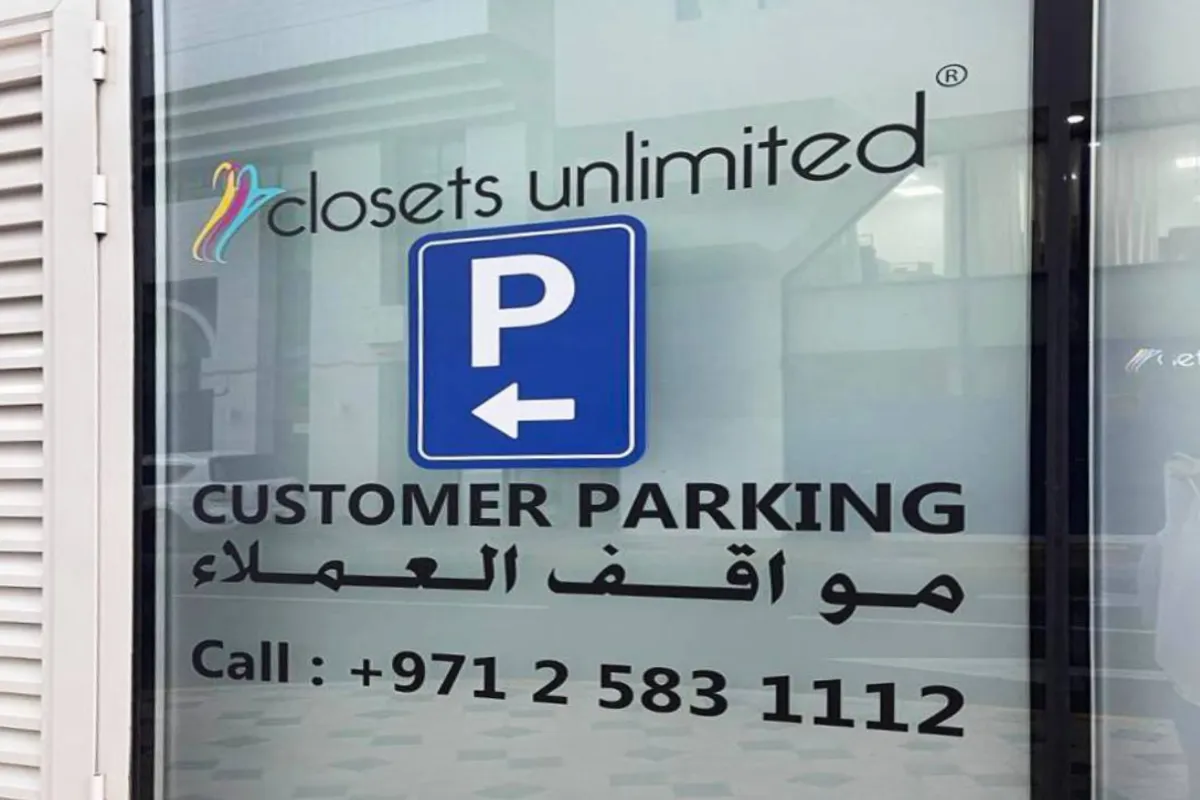
Vinyl lettering and clear window stickers are the two main tools for restrained shop window branding. Lettering handles type-only work. Clear stickers handle logos and artwork that need to sit cleanly on the glass without a visible edge.
Vinyl lettering is cut vinyl with no background — individual letters, numbers, or shapes applied directly to the glass. You see the letter. Through the letter, you see either the vinyl colour or the interior behind. There's no rectangle around the text, no visible edge, no printed halo.
This is what most high-street shops use for the business name on the door, opening hours in the corner, or a short tagline across the window. It's also what boutiques, jewellers, and specialty retailers use for their primary shopfront brand mark. When you're ready to specify cut vinyl letters for your shopfront, the Vinyl Lettering page covers the material options and application details. What matters for the brand decision: cut letters sit on the glass with no visible rectangle, no printed background, no frosted halo. That's what makes them feel built-in rather than stuck-on.
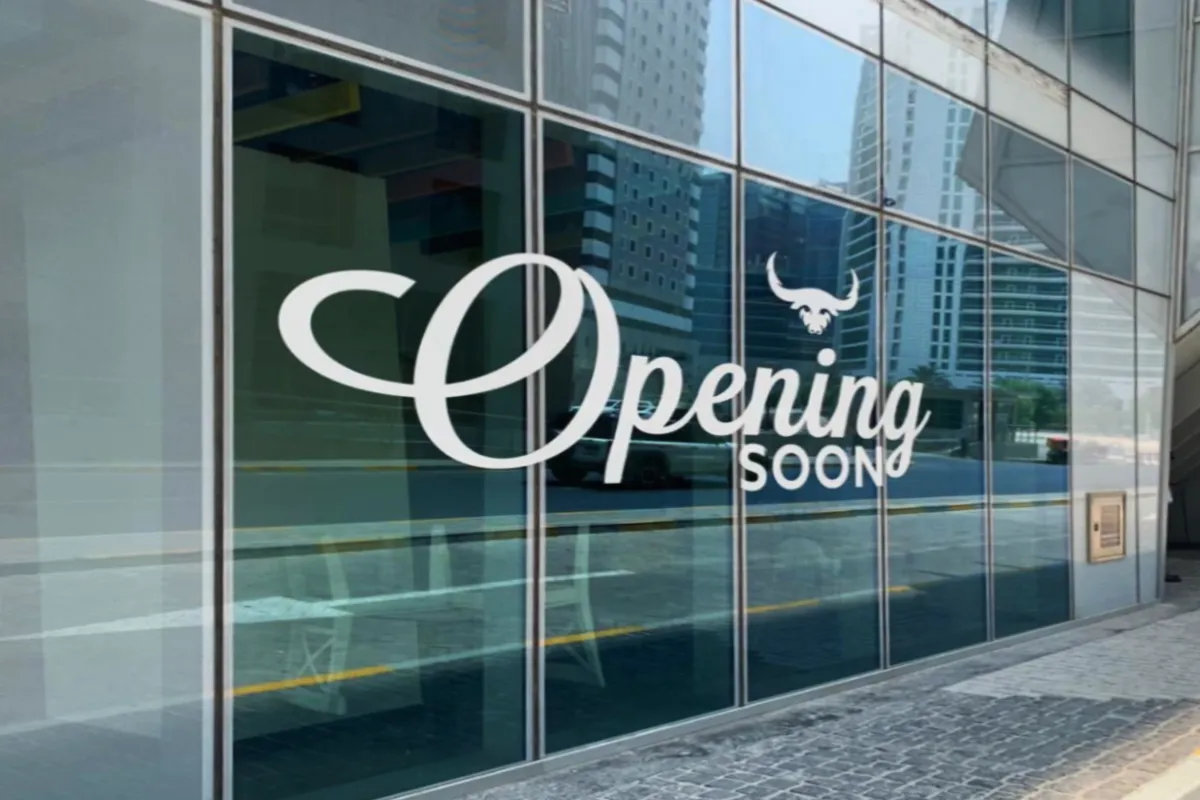
Clear window stickers — sometimes called optical clear vinyl or clear window film — are the second tool. They're used when you need more than type: a logo, a monogram, artwork, a gradient, a detailed graphic. The vinyl itself is transparent enough that the design reads as if it's painted directly onto the glass.
The difference between clear stickers and regular printed stickers is the edge. Regular printed vinyl leaves a visible frosted or milky outline around your design where the film meets the glass. Clear vinyl doesn't. For a premium-positioned shopfront, that edge difference is often the difference between looking built-in versus looking stuck-on. For the specific clear film options and where they work best, see the Optical Clear Window Vinyl page.
What you give up when you use less window sticker coverage
Covering less glass costs you three things: stopping power at distance, interior privacy, and the ability to hide behind-the-scenes areas of your shop from the street.
A passer-by at fifty metres doesn't read type. They register shape, colour, and contrast. Cut lettering and floating marks don't carry much at that distance — they work closer in, not across the street. If your shop depends on catching people from the opposite pavement, restraint gives up that reach.
You also give up interior privacy. If your glass is mostly empty, everyone sees everything. The clutter behind the till, the unused corner, the back-of-house door. Whether that's a problem depends entirely on what your interior currently looks like.
And you give up the option to hide. Operational areas, stock rooms, ugly back walls, temporary signage inside the shop — none of it disappears when your glass is mostly clear. The passer-by reads all of it as part of your brand.
These aren't arguments against restraint. They're the cost of restraint. If the cost is too high for your shop, coverage is the right answer.
When a full window sticker or wrap is the better call
A full window sticker or printed window wrap is the better call in three situations: when your interior works against your brand, when your street needs more visual weight than restraint can carry, or when your brand is built on bold rather than quiet.
The first situation is practical. If the passer-by sees operational clutter, empty shelves, awkward lighting, or a back wall that doesn't match your brand, covering the glass with a full printed window sticker or full-coverage wrap solves the problem. You don't need to fix the interior. You just need to stop people seeing it.
The second is competitive. If you're in a busy retail row where every neighbour is running full-print windows, restraint doesn't read as confident — it reads as invisible. You need visual weight to compete.
The third is brand. Some brands are built on loudness: discount retail, fast food, high-turnover fashion, seasonal sale-driven stores. A quiet shopfront sends the wrong signal for these brands. Full coverage is right, and printed opaque window vinyl handles it cleanly — full-surface print that blocks sightlines and carries heavy saturated colour. A later article in this series covers the decision in depth.

Window stickers in Abu Dhabi conditions
Window stickers in Abu Dhabi have to handle three conditions generic retail advice skips. Year-round direct sun on south and west-facing glass. Daily dust settlement on exterior surfaces. Landlord and mall design rules that limit what goes on the window in the first place.
Sun matters most. Printed vinyls with low-grade films fade fast on south-facing glass in UAE summer. Cut vinyl letters handle UV better than printed graphics because there's no printed ink to fade — the colour runs through the full thickness of the film. That's one reason premium shopfronts in Abu Dhabi default to cut lettering for permanent brand marks.
Dust matters too. A matte-finish film shows dust more visibly between cleans than a gloss finish does. For a shopfront on a dusty road — industrial-area retail, construction-adjacent locations, high-traffic street frontage — gloss or satin finishes stay looking fresh longer.
Mall and landlord rules matter more than most tenants realise. Mall design manuals in Abu Dhabi typically include constraints on window branding: how much glass can be covered, what illumination is permitted, whether printed film is allowed at all, and sometimes which colours are restricted. The specifics vary by mall and by fit-out zone. Check the tenant design manual before briefing any window sticker work — or ask your signage partner to check it on your behalf.
Abu Dhabi adds one more consideration that's easy to miss. High-street tenants often need to be visible to passing traffic, not just foot traffic. A design that reads well to a walker fifty metres away may disappear to a driver at forty kilometres per hour. For street-frontage shops outside malls, how much to cover is partly a traffic question, not just a pedestrian question.
When you're specifying window stickers for an Abu Dhabi shopfront, the Vinyl Lettering page details the material options Ninety Nine carries for high-UV and high-dust conditions.
What to bring when you're ready to brief a window sticker job
When you're ready to brief a window sticker job, bring six things to the conversation.
First, photos of your current shopfront from three angles: across the street, from the pavement in front, and from inside looking out. Those frame the decision better than any description.
Second, brand assets in their final form. Logo files, brand colours, any typography the brand uses. If the brand has a style guide, bring it.
Third, photos of your three or four nearest neighbour shopfronts. The decision of how much to cover depends partly on what the eye already sees around you.
Fourth, any landlord or mall design manual that applies. If you don't know whether one exists, ask your landlord or fit-out coordinator before the design conversation starts.
Fifth, a rough budget band. Shop window stickers cover a wide range — a simple set of cut vinyl letters sits at one end, a full designed window graphic at the other. A band, not a figure, is enough at this stage.
Sixth, a target timeline. Permit processing for exterior shopfront branding in Abu Dhabi has its own schedule, and the sticker work plugs into that schedule rather than driving it.
With those six pieces together, any design conversation moves faster and lands on better answers. Without them, the conversation stays abstract — and abstract conversations produce generic shopfronts.
Frequently asked questions
How long do shop window stickers last in Abu Dhabi sun?
Cut vinyl lettering generally outlasts printed window stickers on Abu Dhabi shopfronts, because solid-coloured cut vinyl has no printed inks to fade under UV. Exact lifespan depends on the film grade, the glass orientation (south and west faces see more direct sun), and whether the sticker sits on the exterior or interior face of the glass. The Vinyl Lettering page carries the grade-specific durability details.
Can I install shop window stickers myself?
Small vinyl lettering pieces can often be installed by the shop owner using the pre-mask applicator that comes with the order — suitable for a single word, short phrases, or opening-hours text. Larger graphics, logos with fine detail, clear window stickers, and anything larger than roughly a square metre usually need professional installation. Air bubbles and alignment errors are visible at street distance and harder to recover from once the film is down.
Can window stickers be removed without damaging the glass?
Vinyl window stickers can be removed from shopfront glass without damaging the glass itself in most cases. Fresh removals — stickers that have been in place for months rather than years — are routine. Older printed vinyl that has been exposed to direct UV for several years can leave adhesive residue that takes effort to clean, but the underlying glass is not harmed.
Do I need permission from my landlord or mall to put stickers on my shopfront?
Most Abu Dhabi landlords and almost all malls require tenant approval for exterior window branding, and the scope of what's allowed is set out in the tenant fit-out manual or shop design guide. Check with your landlord or mall tenant coordinator before designing the sticker — changing a design after approval costs time the fit-out timeline usually doesn't have.

Related Content

One-Way Vision Stickers in Abu Dhabi: Technical Specs & Storefront Applications
Read Full Article →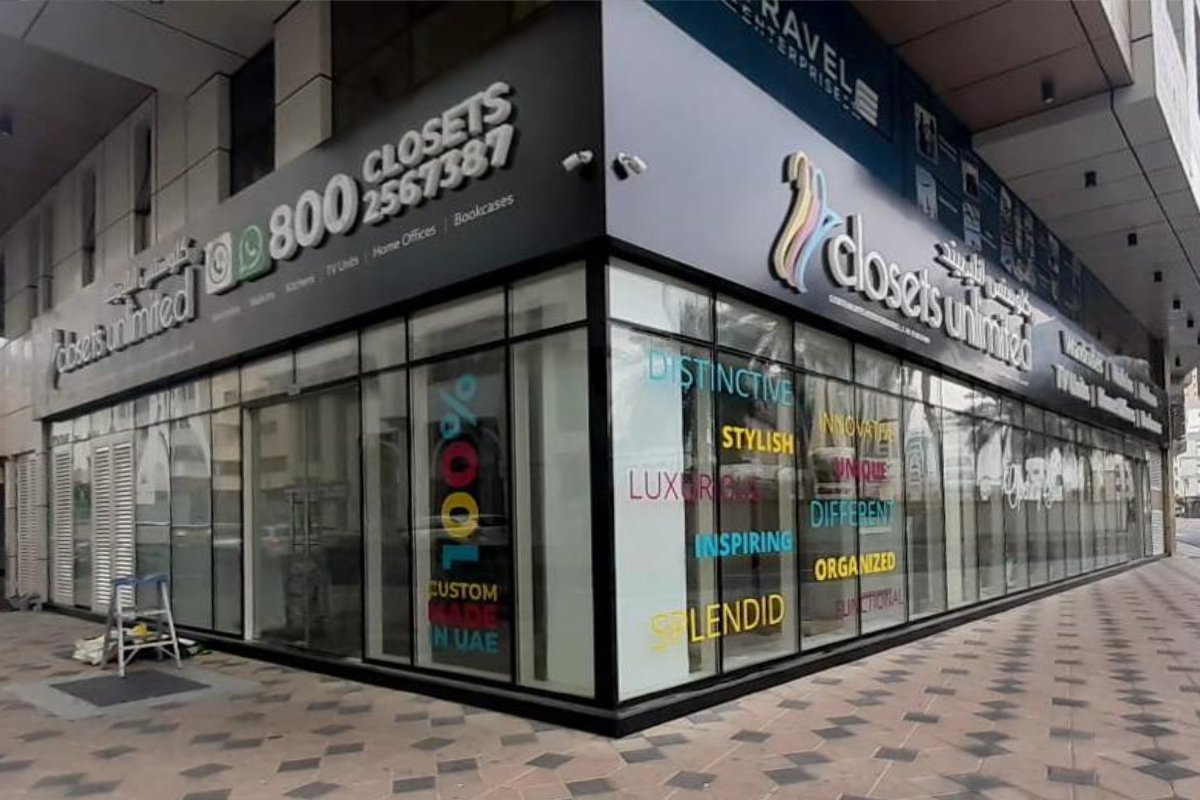
Shop Front Glass Stickers Abu Dhabi: The Ultimate Window Branding Guide
Read Full Article →
Office Glass Frosting & Etching Services in Abu Dhabi: The Technical Comparison
Read Full Article →